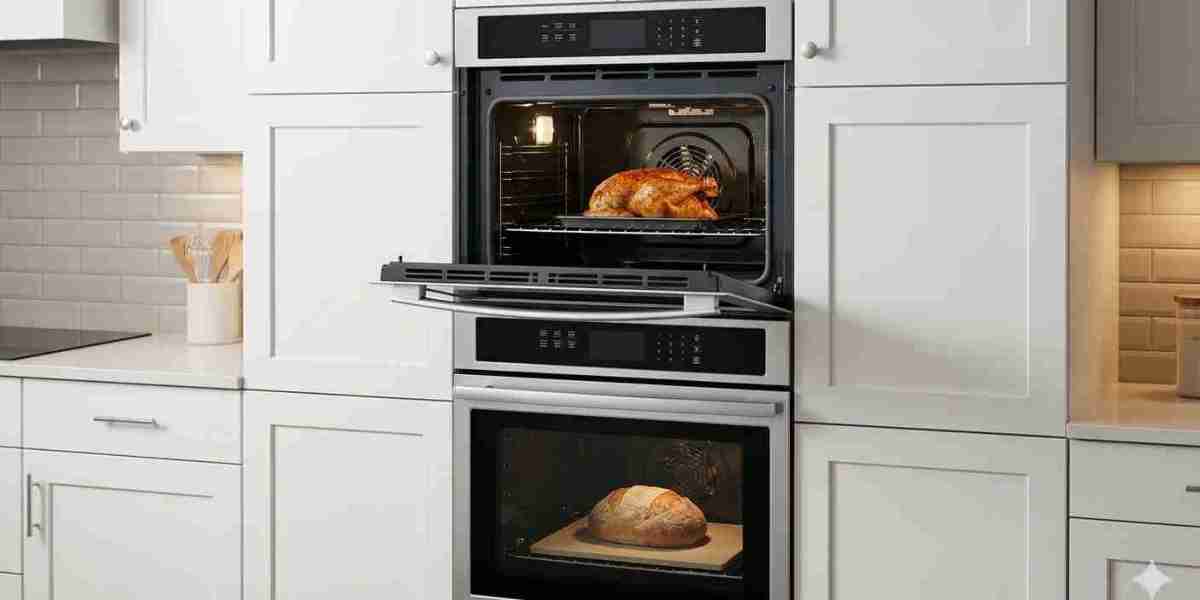
In the landscape of modern kitchen appliances, few questions cause as much confusion as the choice between a conventional oven and a convection oven. While they look nearly identical from the exterior, the technology they use to cook your food is fundamentally different. This difference impacts cooking time, energy efficiency, and, most importantly, the final texture and taste of your meals.
Whether you are remodeling your kitchen or simply trying to figure out why your cookies are baking unevenly, understanding how these two oven types manage heat is the key to unlocking better culinary results.
The Conventional Oven: Radiant and Reliable
The conventional oven—often referred to as a "standard," "radiant," or "thermal" oven—is the kitchen staple that has served cooks for generations.
How it Works: Conventional ovens rely on two primary heating elements to cook: one at the top (used for broiling) and one at the bottom. When you set the temperature, these elements cycle on and off to heat the air inside the chamber.
The Cooking Environment: The defining characteristic of a conventional oven is that the hot air inside remains relatively static. It relies on natural convection (the principle that hot air rises and cool air sinks) to slowly circulate the heat. Because of this static environment, conventional ovens often have "hot spots." The air near the top element is usually hotter than the center, which can lead to uneven cooking if you don't rotate your pans. This gentle, predictable environment is specialized and invaluable for:
Delicate Batters: Soufflés, angel food cakes, and sponge cakes benefit from the lack of airflow, which can disrupt their delicate structure before they set.
Roasting (with specific intent): Utilizing the top element for radiant browning can create a beautiful crust on a roast while the bottom element ensures a slow, succulent cook in the center.
The Convection Oven: Forced and Efficient
A convection oven (sometimes called a "forced-air" or "fan-assisted" oven) is engineered to solve the limitations of standard radiant heat.
How it Works: Convection ovens possess the same top and bottom heating elements as conventional ovens. Their crucial upgrade is a fan and an exhaust system. The fan, typically located at the back of the oven cavity, actively blows the hot air, circulating it throughout the entire chamber.
The Cooking Environment: The actively moving air does two powerful things:
Uniform Temperature: It eliminates hot spots, creating a virtually perfectly uniform temperature across all racks. This is why you can bake three trays of cookies simultaneously without worrying about uneven results.
Efficient Heat Transfer: Moving air actively strips away the boundary layer of cooler, moist air that naturally insulates the surface of food. This allows heat to transfer much more efficiently, leading to faster cooking times (often 25% faster) and superior, even browning (the Maillard reaction).
Making the Decision
Today, many high-quality modern ovens are actually both. They are conventional ovens featuring a 'Convection Bake' or 'Convection Roast' setting that allows you to activate or deactivate the fan. This hybrid approach gives you precise control over your cooking.
When deciding which tool is right for your kitchen, the choice is simple: if you prioritize batch baking, desire rapid crisping, or need accelerated browning for roasted dishes, a convection oven (or setting) is a mandatory upgrade. If your culinary focus is almost exclusively on delicate, gentle batters, the reliable, static environment of a conventional oven remains your greatest ally.