When it's time to upgrade your kitchen appliances, few choices generate as much debate—or as much confusion—as deciding between a conventional oven and a convection oven. While they may look nearly identical on the showroom floor, the technology hidden beneath the surface dictates how they cook your food, how quickly they do it, and the final texture of your culinary creations.
Choosing the right oven isn't just a matter of budget; it is about matching your kitchen’s capabilities to your cooking style. This guide will decode the crucial differences between conventional and convection heating, helping you make the most informed decision for your home.
The Conventional Oven: Mastering Static Radiant Heat
The conventional oven—often also referred to as a "standard," "thermal," or "radiant" oven—is the kitchen workhorse that has served cooks for centuries. Its design is relatively straightforward.
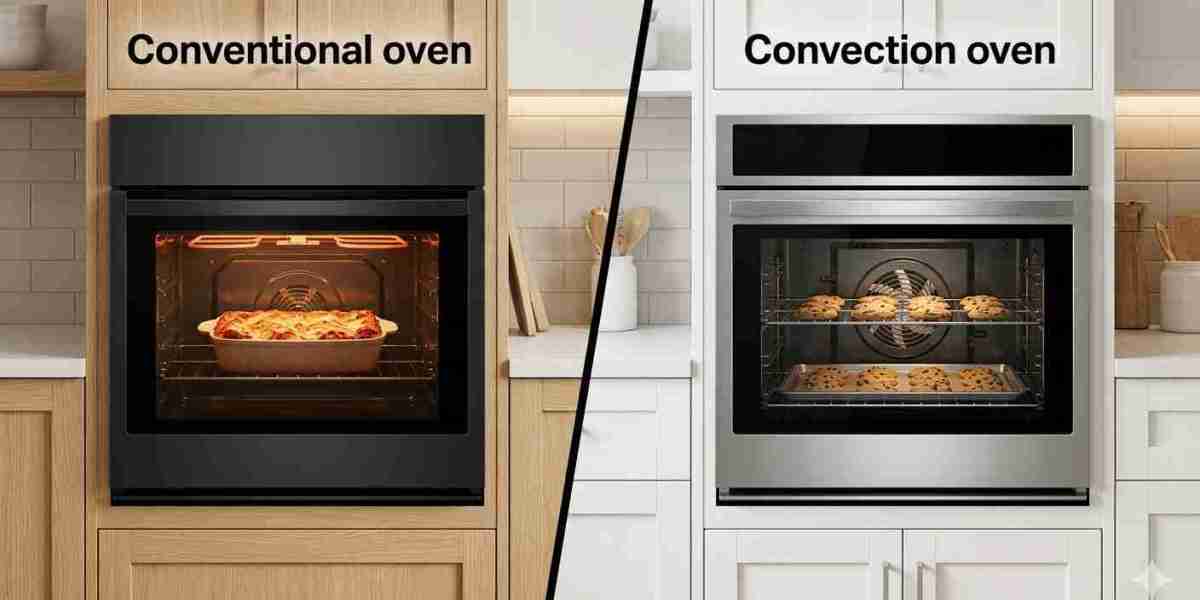
How it Works: Conventional ovens operate primarily through radiant heat. They feature two main heating elements: one located at the top (used for broiling) and another located at the bottom (used for baking and general heating). The key to understanding this system is knowing that the hot air inside remains relatively static. It relies on natural convection (hot air rising, cooler air sinking) to passively circulate heat.
The Cooking Environment: Because the air is static, conventional ovens have natural temperature zones. The air near the top heating element is almost always slightly hotter than the center, creating potential "hot spots." This can lead to uneven baking if you don't rotate your pans. This gentle, predictable, non-moving radiant heat environment is specialized and indispensable for specific, delicate techniques:
Delicate Batters: Soufflés, angel food cakes, and sponge cakes require a gentle, non-blowing atmosphere to rise properly. A strong, active fan can disrupt their delicate structure before they have a chance to set, causing them to collapse.
Specialized Roasting: Utilizing the top element for intensive browning toward the end allows for a beautiful crust on a roast, while the steady, gentle ambient heat from the bottom ensures the interior cooks slowly and remains succulent.
The Convection Oven: The Power of Forced Air
A convection oven (sometimes called a "forced-air" or "fan-assisted" oven) is engineered to solve the limitations of standard radiant heat.
How it Works: Convection ovens possess the identical top and bottom heating elements as conventional ovens. However, their critical upgrade is the addition of a powerful fan and an exhaust system, typically located at the back of the oven cavity. The fan actively blows the hot air, circulating it forcefully throughout the entire chamber.
The Cooking Environment: The actively moving air does two powerful things:
Eliminates Hot Spots: It creates a highly uniform temperature throughout the entire oven cavity. This uniformity is why you can bake multiple trays of cookies simultaneously on different racks without worrying about uneven results.
Accelerates Heat Transfer: Moving air actively strips away the boundary layer of cooler, moist air that naturally surrounds food. This allows heat to transfer much more efficiently, leading to faster cooking times (often 25% faster) and superior, accelerated browning (the Maillard reaction).
The Convection "Conversion"
Because heat transfer is more efficient, convection ovens cook more quickly than standard recipes dictate. As a result, you must typically follow two rules of thumb when converting standard recipes for convection use:
Lower the temperature by 25°F.
Check for doneness sooner (roughly 25% earlier than specified).
Best Applications: Convection is a champion of even cooking and rapid, superior browning. It excels when you want impeccably crispy chicken skin, deeply caramelized roasted vegetables, or a substantial crust on artisan breads.
Making the Decision
The modern reality is that you often don't have to choose just one appliance. Many mid-to-high-range ovens sold today (whether gas or electric) are actually conventional ovens featuring a 'Convection' setting that allows you to turn the fan on and off at will, offering the best of both worlds.
When decided which function to use, the decision is simple: Does this recipe require a gentle environment to rise, or does it need faster heat penetration and maximum browning? If you are making a delicate dessert, stick to standard/conventional mode. If you are roasting a turkey, baking two dozen cookies, or achieving rapid crisping, the power of convection is your greatest ally.