


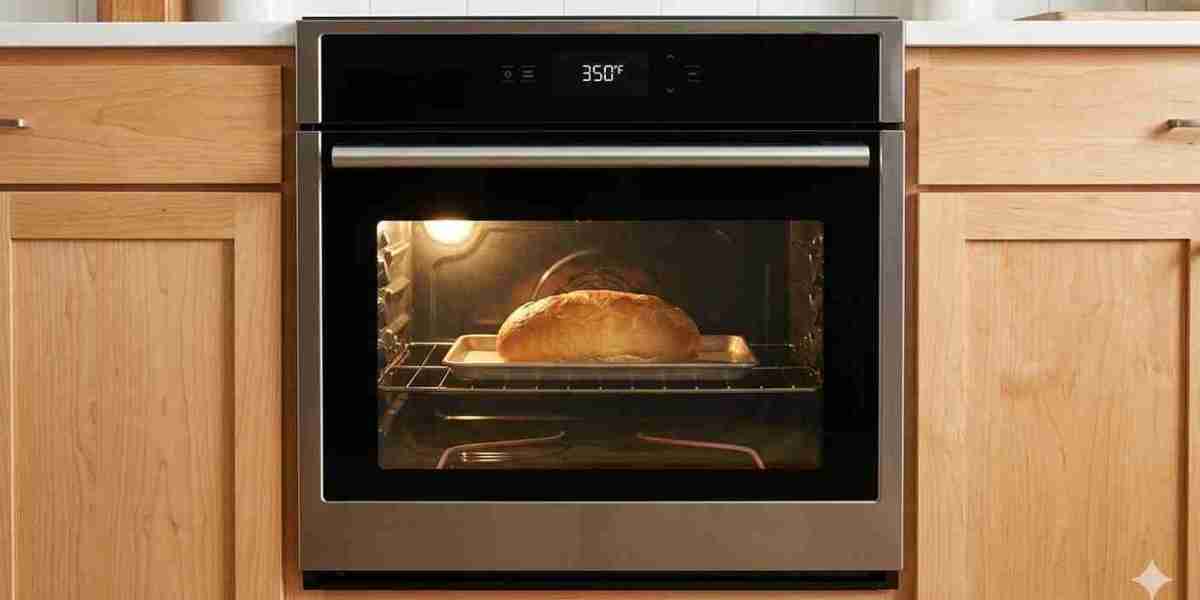
In today's culinary world, we are surrounded by a dizzying array of sophisticated kitchen technology. From smart precision cookers to ultra-fast air fryers, the modern kitchen can feel like a laboratory. Yet, despite these innovations, the cornerstone of almost every home kitchen—the appliance that generations have relied on—remains the conventional oven.
While flashier technology dominates the headlines, the humble conventional oven is the undisputed workhorse of baking, roasting, and countless comfort meals. But exactly how does this staple appliance operate, and why does it remain indispensable?
The Core Principle: Radiant Heat
The conventional oven—often referred to as a "standard," "thermal," or "radiant" oven—operates on the straightforward, fundamental principle of radiant heat.
How It Works: A conventional oven heats the air inside its insulated chamber using two primary sources: a bottom heating element (used for general baking) and a top heating element (primarily used for broiling). In a gas oven, these elements are intense burners. When you select your target temperature, these sources cycle on and off to warm the static air inside the chamber.
The Cooking Environment: The critical takeaway is that in a conventional oven, the hot air remains relatively still. It relies exclusively on natural, passive convection—the process where hot air naturally rises and cooler air sinks—to slowly circulate heat throughout the entire oven cavity. Because this circulation is passive, conventional ovens inherently possess "hot spots." The air near the top element is usually slightly hotter than the center, creating temperature zones.
Conventional vs. Convection: The Essential Difference
To truly grasp "what is a conventional oven," it is best to compare it to its main alternative: the convection oven.
A convection oven is a conventional oven, but with one critical, powerful addition: a fan and an exhaust system, usually located on the back wall. This fan actively blows the hot air, forcing it to circulate forcefully and continuously throughout the entire oven chamber. This active air movement does two powerful things that radiant heat cannot:
Eliminates Hot Spots: It creates a highly uniform temperature across all racks simultaneously, which means you can bake multiple trays of cookies without worrying about uneven results.
Accelerates Heat Transfer: It strips away the insulating layer of cooler, moist air that naturally surrounds food, causing it to cook about 25% faster than in a conventional oven (and typically at a 25°F lower temperature setting).
When the Conventional Oven is Your Best Tool
While convection excels at speed and uniformity, the quiet, gentle, static radiant heat of the conventional oven is specialized and irreplaceable for certain culinary techniques:
Delicate Baking: This is the supreme domain of the conventional oven. Batters that rely on aeration to rise—like sponge cakes, angel food cakes, and soufflés—require a gentle, predictable atmosphere. A powerful fan can disrupt their delicate structure before they have a chance to set, causing them to collapse. Conventional radiant heat provides exactly this gentle environment.
Roasting (Low-and-Slow): When slow-cooking large cuts of meat, the conventional oven provides a steady, surrounding heat source without accelerating browning, ensuring the interior cooks slowly and remains incredibly succulent. Toward the end of the cook, you can switch to the intensive top element (broil) to achieve perfect, targeted surface browning.
Casseroles and Slow Cooking: Conventional ovens are ideal for maintaining slow, steady, even heat sources when using covered Dutch ovens, ceramic bakers, or casserole dishes, making them the ultimate choice for braises and stews.
Conclusion
The conventional oven is not outdated; it is specialized. It provides the predictable, non-moving radiant heat environment necessary for precise, delicate baking. While it requires patience and rack rotation for even results, its quiet reliability makes it the backbone upon which countless culinary traditions are built. By understanding its strengths, you gain the precise control needed to ensure your culinary creations turn out exactly as intended.



