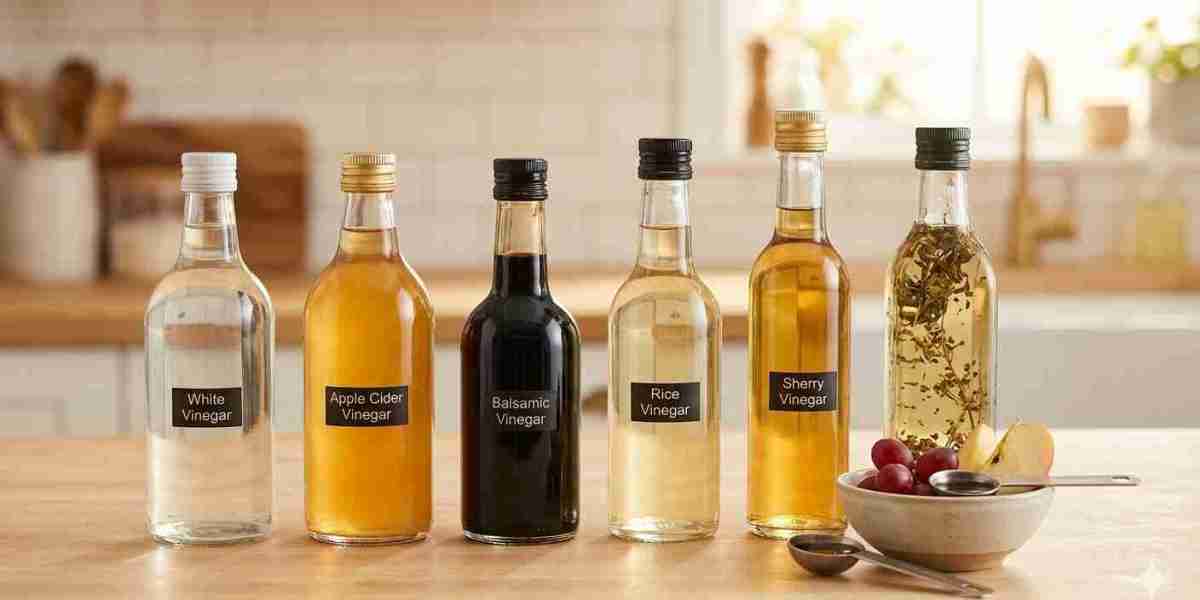
Vinegar is a staple in almost every kitchen around the world. However, many home cooks limit this versatile ingredient to simple salad dressings or basic cleaning tasks. The reality is that the term "vinegar" covers a vast and diverse spectrum of flavors, ranging from aggressively sharp to delicately sweet.
Each type of vinegar is defined by its source material (the original liquid that was fermented) and its production process. Understanding these profiles is the key to elevating your cooking, balancing flavors, and transforming ordinary dishes into extraordinary ones.
What Exactly Is Vinegar?
Before we dive into the varieties, let's establish what vinegar is. At its core, vinegar is an aqueous solution of acetic acid and trace compounds. The name itself comes from the Old French term, vin aigre, which literally means "sour wine."
All vinegars are produced through a two-step fermentation process. First, yeasts convert sugars from fruit, grains, or other sources into alcohol (this creates wine, beer, or cider). Next, acetic acid bacteria oxidize this alcohol into acetic acid. It is the original sugar source—the starting liquid—that defines the type and final flavor profile of the vinegar.
Navigating the Key Types of Vinegar
There is a vast world of vinegars to explore, but these six are the foundational types found in most global cuisines:
1. White Distilled Vinegar
This is the standard, aggressive, all-purpose vinegar found in almost every cleaning supply closet and salad dressing shaker.
Origin: Fermented grain alcohol (usually corn).
Flavor Profile: Extremely sharp, one-dimensional, and acidic.
Common Use: Its powerful acidity makes it ideal for heavy-duty household cleaning, pickling vegetables (where you need significant acidity but don't want a fruity flavor), or stabilizing delicate items like egg whites.
2. Apple Cider Vinegar (ACV)
A favorite in both the wellness community and the kitchen, ACV is lauded for its unique flavor derived from fermented apples.
Origin: Fermented apple cider.
Flavor Profile: Fruity, slightly sweet, with a softer, almost gentle acidity. Look for unfiltered ACV, which contains the cloudy "mother" (beneficial probiotics).
Common Use: Vinaigrettes for fruit-forward salads, complex marinades, sauces (like BBQ or warm potato salad), and adding a bright pop to slow-cooked dishes.
3. Balsamic Vinegar of Modena
A complex, aged vinegar that balances sweet and savory. Note: True traditional Balsamic (aged 12+ years) is thick, dark, and highly expensive. Commercial "of Modena" varieties are often red wine vinegar with caramel and coloring.
Origin: Concentrated grape must (whole pressed grapes), traditionally aged in specific wood barrels.
Flavor Profile: Intensely complex, sweet, rich, and syrupy, with deep molasses and caramel notes.
Common Use: Finishing delicate dishes like tomato-mozzarella caprese, drizzling over roasted fruits or vanilla ice cream, and making rich glazes for grilled meats.
4. Rice Vinegar
Essential to East and Southeast Asian cuisines, rice vinegar offers a delicate, subtle lift.
Origin: Fermented rice (or rice wine).
Flavor Profile: Exceptionally mild, subtle, clean, and slightly sweet. It is much less acidic than standard western vinegars. Look for colorless or pale yellow varieties.
Common Use: Sushi rice (essential for flavor and texture), quick pickles, subtle stir-fry sauces, and delicate dressings.
5. Sherry Vinegar
A Spanish specialty, this vinegar brings deep, sophisticated nuttiness.
Origin: Fermented sherry wine, aged using the traditional solera system (a dynamic blending and aging method).
Flavor Profile: Robust, rich, intensely complex, and deeply nutty (like caramel or almonds), with a smooth, refined acidity.
Common Use: Elevating classic sauces (like romesco or gazpacho), sophisticated vinaigrettes for complex greens, and adding depth to soups or slow-cooked beans.
6. Infused Vinegar (Herb or Fruit Vinegar)
This category allows you to customize flavor profiles for specific dishes.
Origin: Usually a light base vinegar (like white wine, champagne, or apple cider) infused with fresh ingredients.
Flavor Profile: Varies wildly depending on the infusion—e.g., bright lemon, robust tarragon, delicate raspberry, or spicy chili.
Common Use: Specific vinaigrettes, unique reductions, and adding targeted, nuanced flavor to marinades or cocktails.
Mastering Your Kitchen’s Vinegar Selection
The secret to success with vinegar lies in understanding how to use its diversity. When cooking, ask yourself: Does this dish need an aggressive, sharp bite (pickling)? A delicate, subtle sweetness (sushi rice)? Or a rich, complex depth (balsamic finishing glaze)? By experimenting with these foundational types of vinegar, you can unlock a world of dimension and balance in your cooking, proving that this simple bottle is truly one of your kitchen’s most powerful tools.