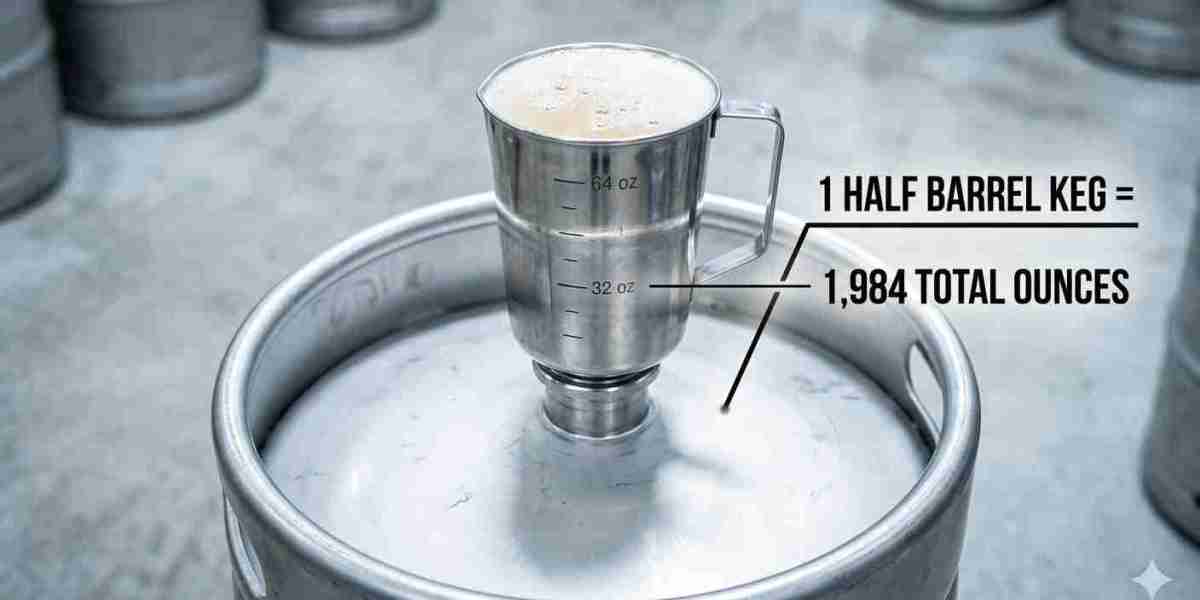
For anyone managing a bar, planning a large event, or setting up a serious home draft system, inventory management is the lifeblood of profitability and guest satisfaction. The standard stainless steel keg is a symbol of a good time, but it’s also a significant unit of stock that directly affects your bottom line. One of the most common, yet deceptively crucial questions we encounter is, "Exactly how many ounces are in a keg?"
While the math seems straightforward, the reality of running a commercial draft system involves standardized sizes and operational variables that can significantly impact your actual yield. Understanding these measurements is essential for proper stock rotation, procurement, and protecting your profit margins.
The Capacity Breakdown
In the United States, keg sizes are standardized based on their total volume in gallons. When discussing how many ounces are in a keg, we must first establish the specific type of keg we are using. While a standard full-size keg (the "Half Barrel") is ubiquitous, there are several common variations in use today.
Here is the quick reference guide to help you calculate your theoretical maximum yield based on standard sizes. Because one US gallon equals 128 fluid ounces, the math is consistent:
| Keg Type | Standard Industry Name | Total Volume (Gallons) | Total Beers (12 oz.) | Total Pints (16 oz.) | Total Ounces |
| Half Barrel | Full-Size Keg | 15.5 Gallons | ~165 Beers | ~124 Pints | 1,984 Ounces |
| Quarter Barrel | Pony Keg | 7.75 Gallons | ~82 Beers | ~62 Pints | 992 Ounces |
| Slim Quarter | Tall Quarter | 7.75 Gallons | ~82 Beers | ~62 Pints | 992 Ounces |
| Sixth Barrel | Sixtel / Torpedo | 5.16 Gallons | ~55 Beers | ~41 Pints | 660 Ounces |
| Homebrew Keg | Cornelius (Corny) Keg | 5.0 Gallons | ~53 Beers | ~40 Pints | 640 Ounces |
Note: The Slim Quarter and Sixth Barrel, despite having smaller volumes than a Pony Keg, have distinct tall, narrow form factors that require different spatial planning than the standard, squat Pony Keg.
The Real-World Variables: Why Your Actual Yield Will Be Less
The chart above gives you a perfect, theoretical baseline. However, in the chaotic environment of a busy bar, perfect math rarely holds up. If your sold quantity does not match your theoretical yield, you are likely losing profit to a few common operational pitfalls. Managing these effectively is where the real margin is made.
1. The Foam Thief
The single biggest "thief" of your beer inventory is excess foam. If your CO2 pressure is not perfectly balanced with the temperature of the keg, or if your beer lines are dirty, you will experience a high amount of foam. Staff will often pour this "bad beer" right down the sink, meaning it is inventory you paid for but did not sell. Proper draft system maintenance—including regular line cleaning and precise regulator calibration—is mandatory.
2. Spillage and Waste
Human error is inevitable. Spills during high-volume pushes, over-pouring, and testing the tap can all chip away at your totals. Tracking waste is just as important as tracking inventory. If your theoretical yield (based on the chart above) is significantly higher than your actual sales, you likely have an issue with staff training or equipment maintenance.
3. Glassware and Pour Techniques
Are you utilizing "beer clean" glassware? If a glass is not properly rinsed and sanitized, beer will release carbonation rapidly, creating excessive foam. Furthermore, the angle of the pour and the use of a flow-control faucet can dramatically improve the actual yield from each keg.
Storage and Logistics
When ordering inventory, don’t just consider the number of ounces; consider the logistics of the keg itself. Full-size kegs are heavy and require significant refrigerated floor space. If you have limited cooler capacity, switching to "Sixtels" (Sixth Barrels) can offer greater menu variety without occupying the same footprint as a full-size unit.
Final Thoughts
Knowing that a full-size keg holds roughly 1,984 ounces or 124 pints is a necessary starting point for planning. However, the true key to success lies in optimizing your draft system to reduce waste and maximize every drop. By maintaining a clean, balanced draft system and ensuring rigorous staff training on proper pouring techniques, you can ensure that your inventory math translates directly into improved profitability for your establishment.