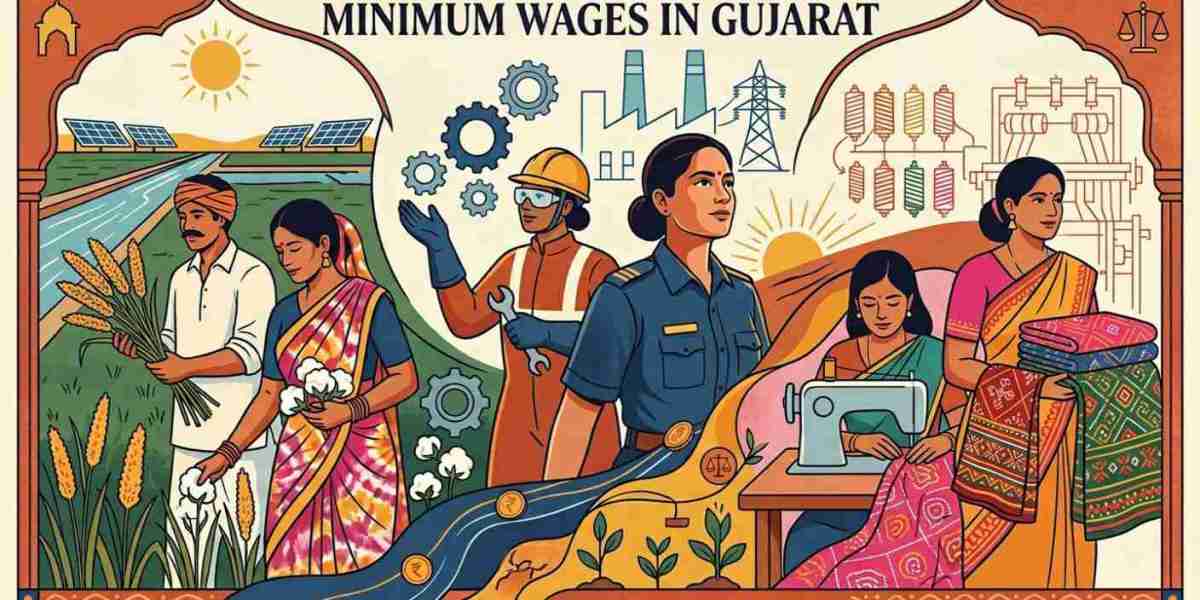
Fair compensation is essential for maintaining workforce stability and employee satisfaction. Minimum wage laws are designed to ensure that workers receive a basic level of income for their services. In Gujarat, these wage rates are reviewed and revised periodically by the Labour Department to align with inflation, cost of living, and economic conditions.
The 2026 update, along with revisions in Variable Dearness Allowance (VDA) and the implementation of Labour Codes, makes it important for businesses and HR professionals to stay updated. Non-compliance with these regulations can result in penalties and legal complications.
This article offers a detailed overview of minimum wages in Gujarat for 2026, including wage structure, updated rates, classifications, and compliance obligations.
Understanding the Minimum Wage System in Gujarat
Minimum wages in Gujarat represent the lowest amount that employers are legally required to pay their workers. These wages are set by the state government and revised regularly to ensure that employees can meet basic living expenses.
The wage structure in Gujarat includes:
- Basic Pay
- Variable Dearness Allowance (VDA)
VDA is revised twice a year, typically in April and October, based on changes in inflation and the Consumer Price Index.
Wages are determined using a structured framework that considers:
- Skill level of the worker
- Location (zone-wise classification)
- Nature of employment
This system ensures consistency and fairness across different sectors.
Revised Minimum Wages in Gujarat for 2026
The updated wage rates for the period April to September 2026 have been calculated by adding the revised VDA to the base wage.
Key Highlights:
- Effective from 1 April 2026
- VDA increased to ₹60.50 per day
- Applicable to 46 scheduled employments
- Monthly wages based on 26 working days
- Divided into two zones
Zone Classification:
- Zone I: Urban and developed regions
- Zone II: Semi-urban and rural areas
Updated Wage Rates:
Category | Zone I Daily (₹) | Zone I Monthly (₹) | Zone II Daily (₹) | Zone II Monthly (₹) |
Unskilled | 512.50 | 13,325 | 501.50 | 13,039 |
Semi-Skilled | 522.50 | 13,585 | 512.50 | 13,325 |
Skilled | 534.50 | 13,897 | 522.50 | 13,585 |
Factors Affecting Wage Determination
Location-Based Differences
Wage rates vary depending on the region. Zone I includes cities and urban areas with higher living costs, which results in higher wages. Zone II consists of smaller towns and rural areas where expenses are comparatively lower.
Skill-Level Classification
Workers are categorized based on their expertise and job requirements:
- Unskilled Workers: Perform simple tasks without formal training
- Semi-Skilled Workers: Have basic experience or training
- Skilled Workers: Possess technical knowledge or specialized skills
Higher skill levels correspond to higher wage rates.
Role of VDA in Wage Revision
The increase in VDA from ₹45.50 to ₹60.50 per day is the key factor behind the wage revision in 2026. This change results in an approximate monthly increase of ₹390, helping workers manage rising costs.
Wage Rates for Cleaning and Housekeeping Jobs
Roles related to cleaning, housekeeping, and maintenance are generally categorized under standard employment classifications.
In most cases, these roles fall under the unskilled category, unless they involve technical tasks or machinery.
Applicable Wage Rates:
- Zone I: ₹512.50 per day
- Zone II: ₹501.50 per day
Key Considerations:
- Use of equipment may classify workers as semi-skilled
- Contract workers must also be paid as per minimum wage regulations
Impact of Labour Code Changes
Recent labour reforms have introduced several changes to wage regulations:
Broader Coverage
Minimum wage laws now apply to a larger workforce, removing earlier restrictions related to specific industries.
National Floor Wage
The introduction of a national minimum benchmark ensures that state wages cannot fall below a certain level. Gujarat’s wages are currently above this threshold.
Updated Wage Definition
The revised wage structure includes:
- Basic Pay
- Dearness Allowance
- Retention Allowance
This affects statutory benefits such as Provident Fund, gratuity, and bonuses.
Overtime Rules
Employees must be paid double their regular wage rate if they work beyond:
- 8 hours per day
- 48 hours per week
New Compliance Approach
The inspector-cum-facilitator model has replaced the traditional inspection system, focusing on both enforcement and support.
Strict Penalties
Non-compliance with wage laws can result in fines and legal action, making adherence essential.
Compliance Requirements for Employers
Employers must follow specific guidelines to ensure compliance with minimum wage laws:
Wage Payment
- Pay wages according to government-notified rates
- Correctly classify employees based on skill and zone
Timely Salary Payments
- Salaries must be paid before the 7th of the following month
- Final settlements should be completed within two days
Record Maintenance
Employers must maintain:
- Attendance records
- Wage registers
- Overtime details
- Deduction records
Contractor Obligations
Employers must ensure that contract workers are paid minimum wages as required by law.
Payroll Impact of Wage Revision
The revised wage structure affects payroll management in several ways:
Increased Payroll Expenses
The rise in VDA leads to higher overall salary costs, especially for organizations with large workforces.
Changes in Statutory Contributions
Revised wages impact EPF and ESI contributions, requiring recalculations.
Higher Overtime Costs
As overtime is calculated at double the wage rate, increased wages result in higher overtime payments.
Need for Payroll Updates
Payroll systems must be updated to reflect the latest wage structure and ensure accurate processing.
Importance of Audit Preparedness
Maintaining accurate payroll records is essential to meet compliance requirements and avoid penalties during audits.
Conclusion
The minimum wage revision in Gujarat for 2026 reflects the state’s effort to improve worker income while maintaining economic balance. The increase in VDA provides additional financial support to workers, helping them manage rising living costs.
For employers, staying compliant with these changes is crucial. Manual payroll processes can lead to errors and compliance risks. Adopting automated HR and payroll solutions can simplify wage calculations and ensure adherence to labour laws.
By staying updated and implementing efficient payroll systems, organizations can maintain compliance while fostering a fair and transparent work environment.