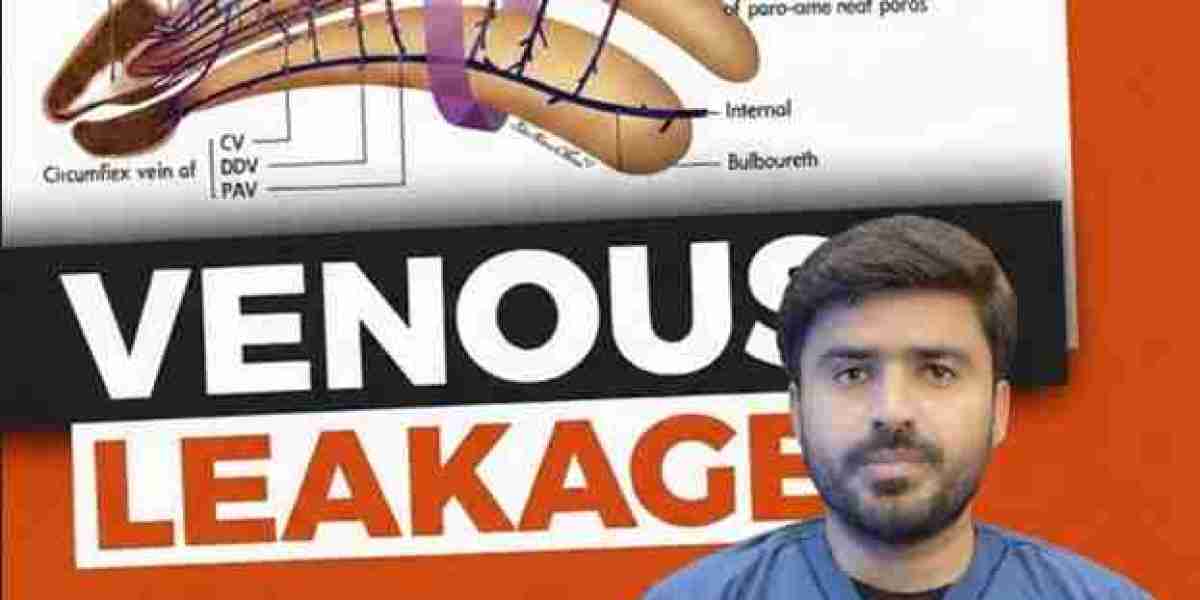
Venous leak, medically referred to as veno-occlusive dysfunction (VOD), is one of the less commonly understood but important causes of erectile dysfunction (ED). It occurs when the penile veins fail to adequately retain blood during sexual arousal, resulting in difficulty achieving or maintaining a firm erection.
Unlike erectile dysfunction caused primarily by reduced blood inflow, venous leak is fundamentally a blood retention problem. A man with this condition may achieve an initial erection, but it quickly subsides because blood escapes through the veins faster than it can be trapped inside the erectile tissues.
This condition can significantly impact sexual performance, confidence, relationships, and psychological well-being. Despite this, it is often underdiagnosed or misunderstood, leading many men to struggle silently.
This article provides a complete, detailed exploration of venous leak, including anatomy, physiology, causes, symptoms, diagnostic methods, and advanced treatment strategies.
1. Understanding Penile Erection Physiology
To understand venous leak, it is essential to first understand how a normal erection works.
The penis contains two main erectile structures:
- Corpora cavernosa (two chambers)
- Corpus spongiosum (surrounding urethra)
These structures are made of spongy tissue filled with blood vessels and smooth muscle.
Normal Erection Process
A healthy erection depends on a precise balance between arterial inflow and venous outflow:
- Sexual stimulation (physical or psychological) triggers nerve signals from the brain and spinal cord.
- The arteries supplying the penis dilate (expand).
- Blood rapidly flows into the corpora cavernosa.
- As these chambers fill, they expand and compress the veins against the tunica albuginea (a fibrous outer layer).
- This compression restricts blood from leaving the penis, maintaining rigidity.
This process is known as the veno-occlusive mechanism.
What Goes Wrong in Venous Leak?
In venous leak:
- Arterial inflow is often normal
- But the venous compression mechanism fails
- Blood escapes too quickly through penile veins
As a result:
- Erections are weak
- Erections collapse quickly
- Penetration may be difficult or impossible
2. What Exactly is Venous Leak?
Venous leak is a form of erectile dysfunction where the veins of the penis do not adequately constrict during erection, allowing blood to drain prematurely.
It is not a disease of the veins alone—it is often a combination of:
- Structural abnormalities in penile tissue
- Dysfunction of smooth muscle cells
- Weakening of the tunica albuginea
- Neurological or vascular impairment
This condition is sometimes classified as:
- Congenital (present from birth)
- Acquired (developed over time)
3. Causes of Venous Leak
Venous leak is multifactorial, meaning it can result from several overlapping causes.
3.1 Structural Damage to Penile Tissue
One of the primary causes is weakening of the smooth muscle and connective tissue inside the penis.
This leads to:
- Poor expansion of erectile chambers
- Inadequate compression of veins
- Reduced rigidity during erection
3.2 Aging-Related Changes
As men age:
- Elasticity of blood vessels decreases
- Smooth muscle tissue weakens
- Collagen structure changes
These natural changes increase the risk of venous leakage.
3.3 Diabetes Mellitus
Diabetes is one of the strongest risk factors for venous leak.
It causes:
- Nerve damage (neuropathy)
- Blood vessel damage (microangiopathy)
- Reduced nitric oxide production
This leads to poor erectile function and venous incompetence.
3.4 Cardiovascular Disease
Conditions such as:
- High blood pressure
- Atherosclerosis
- High cholesterol
can damage vascular integrity and reduce penile blood retention.
3.5 Pelvic or Penile Trauma
Injuries may include:
- Bicycle accidents
- Sports injuries
- Pelvic fractures
- Surgical complications
These can damage veins or supporting structures.
3.6 Smoking and Substance Use
Smoking causes:
- Blood vessel narrowing
- Reduced oxygen supply
- Endothelial damage
This directly weakens erectile function.
Alcohol and recreational drug use can also impair vascular and nerve function.
3.7 Congenital Abnormalities
Some men are born with:
- Weak tunica albuginea
- Abnormal venous drainage patterns
- Poor smooth muscle development
These cases often present at a younger age.
3.8 Psychological Influence (Secondary Factor)
Although venous leak is physical, psychological stress can worsen symptoms by:
- Increasing anxiety
- Reducing arousal signals
- Triggering sympathetic nervous system dominance
This may intensify erectile instability.
4. Symptoms of Venous Leak
The symptoms are often distinctive:
Primary Symptoms:
- Erection occurs but does not last
- Penis becomes soft during intercourse
- Difficulty maintaining rigidity
- Partial erections only
Secondary Symptoms:
- Reduced sexual confidence
- Anxiety before sexual activity
- Avoidance of intimacy
- Relationship stress
A key diagnostic clue is:
Morning or nocturnal erections may still occur but are weak or inconsistent.
5. Types of Venous Leak
5.1 Mild Venous Leak
- Partial erection achieved
- Sometimes sufficient for intercourse
- Responds to oral medication
5.2 Moderate Venous Leak
- Erection is inconsistent
- Requires mechanical or medical assistance
- Oral drugs have limited effect
5.3 Severe Venous Leak
- Inability to maintain erection at all
- Oral medications ineffective
- Often requires injection therapy or implants
6. Diagnosis of Venous Leak
Accurate diagnosis is critical because treatment depends on severity.
6.1 Medical History
Doctors assess:
- Onset of symptoms
- Lifestyle habits
- Medical conditions
- Psychological factors
6.2 Physical Examination
Includes evaluation of:
- Penile structure
- Testicular health
- Secondary sexual characteristics
6.3 Penile Doppler Ultrasound
This is the gold standard test.
It evaluates:
- Blood flow into the penis
- Blood retention capability
- Venous leakage rate
During the test, medication is often injected to induce an erection while imaging is performed.
6.4 Cavernosometry and Cavernosography
These advanced tests measure:
- Penile pressure
- Venous outflow rates
- Exact leak locations
They are used in complex cases.
6.5 Nocturnal Penile Tumescence (NPT)
This test checks:
- Natural erections during sleep
- Frequency and rigidity of nocturnal erections
If normal, psychological causes are more likely. If abnormal, physical causes like venous leak are suspected.
7. Treatment Options for Venous Leak
Treatment depends on severity, cause, and patient preference.
7.1 Lifestyle Modification (Foundational Treatment)
Essential steps include:
- Quitting smoking
- Regular exercise
- Healthy diet (rich in antioxidants)
- Weight management
- Blood sugar control
These improve endothelial health and vascular function.
7.2 Oral PDE5 Inhibitors
Medications include:
- Sildenafil
- Tadalafil
- Vardenafil
They work by:
- Increasing nitric oxide effect
- Enhancing blood inflow
However:
They may be less effective in venous leak because they do not fix blood retention issues.
7.3 Vacuum Erection Devices (VED)
A mechanical pump that:
- Draws blood into the penis
- Uses a constriction ring to trap blood
Advantages:
- Non-invasive
- Effective even in moderate cases
Disadvantages:
- May feel unnatural
- Requires planning
7.4 Intracavernosal Injection Therapy
Medications like alprostadil are injected directly into penile tissue.
Effects:
- Strong erection within minutes
- Bypasses vascular limitations
Highly effective for venous leak.
7.5 Penile Implants (Surgical Solution)
Used in severe cases.
Types:
- Inflatable implants
- Semi-rigid rods
Benefits:
- Reliable erections
- High satisfaction rates
Considered when all other treatments fail.
7.6 Venous Surgery (Selective Cases)
Surgical ligation of leaking veins aims to:
- Reduce venous outflow
- Improve rigidity
However:
- Success rates vary
- Not commonly performed today
7.7 Emerging Regenerative Therapies
New approaches include:
Shockwave Therapy
- Improves blood vessel formation
- Enhances tissue regeneration
PRP Therapy
- Uses platelet-rich plasma
- Promotes healing of erectile tissues
Stem Cell Therapy
- Experimental
- Aims to restore vascular and nerve function
8. Psychological and Emotional Impact
Venous leak often leads to:
- Performance anxiety
- Depression
- Loss of self-confidence
- Relationship strain
Psychological counseling, sex therapy, and partner support can significantly improve outcomes.
9. Prevention Strategies
While not all cases are preventable, risk can be reduced by:
- Maintaining cardiovascular health
- Avoiding smoking and alcohol excess
- Exercising regularly
- Managing diabetes and hypertension
- Reducing stress levels
Healthy blood vessels = healthy erections.
10. Living with Venous Leak
Men with venous leak can still maintain a fulfilling sexual life with proper management.
Key coping strategies:
- Early medical consultation
- Combination therapy (medication + devices)
- Open communication with partner
- Mental health support
- Consistent follow-up care
11. Myths About Venous Leak
Myth 1: It is rare
False—many ED cases involve venous dysfunction.
Myth 2: It only affects older men
False—young men can also be affected.
Myth 3: It is purely psychological
False—it is primarily a vascular disorder.
Myth 4: Medication always fixes it
False—many cases require combined therapy.
Conclusion
Venous leak (veno-occlusive dysfunction) is a complex but treatable form of erectile dysfunction caused by the inability of penile veins to retain blood during erection. It involves vascular, structural, and sometimes neurological factors that lead to loss of rigidity.
Although it can significantly impact sexual performance and confidence, modern medicine offers multiple effective treatment options—from lifestyle changes and medications to advanced surgical and regenerative therapies.
With accurate diagnosis and proper treatment, most men can regain satisfactory sexual function and improve quality of life.