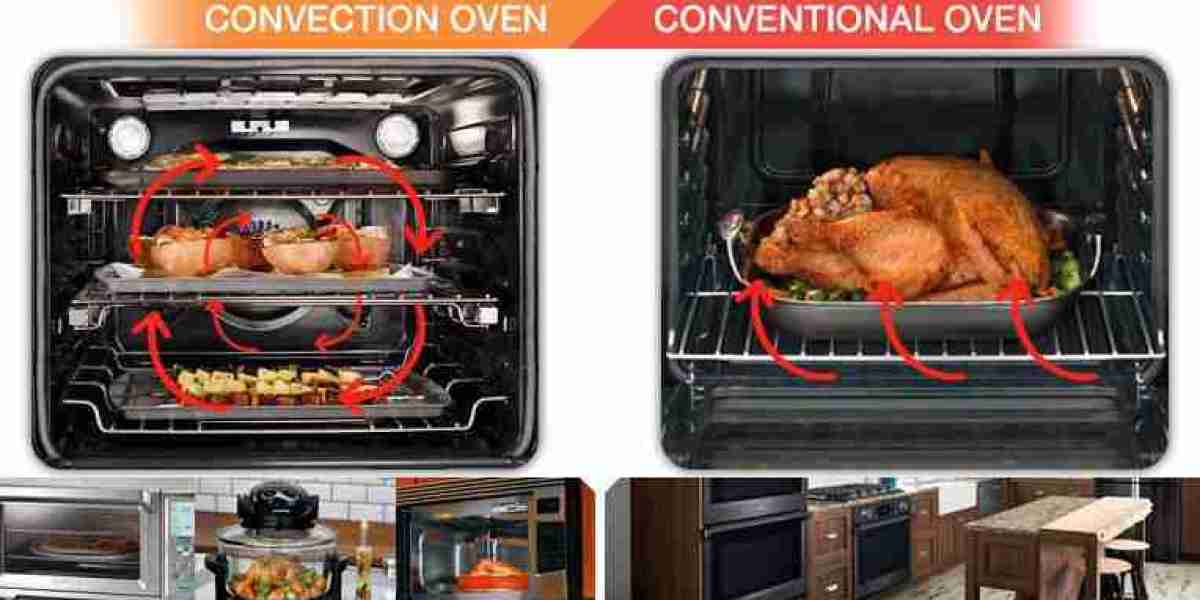
What Is a Conventional Oven?
A conventional oven uses stationary heating elements located at the top and bottom. Heat rises naturally, which can lead to uneven cooking. These ovens are commonly used for traditional baking and roasting where precise airflow is not required.
What Is a Convection Oven?
A convection oven includes a built-in fan and exhaust system that circulates hot air evenly throughout the cooking chamber. This airflow allows food to cook faster and more uniformly, making it a popular choice in commercial kitchens across the U.S.
Key Differences Between Conventional and Convection Ovens
Heat Distribution
Conventional ovens often have hot and cold spots due to static heat. Convection ovens distribute heat evenly using a fan.
Cooking Time
Convection ovens cook food about 20 to 25 percent faster than conventional ovens, improving kitchen efficiency.
Temperature Settings
Recipes in convection ovens typically require a lower temperature (about 25°F less) compared to conventional ovens.
Food Texture
Convection ovens create crispier exteriors, making them ideal for roasting meats and vegetables. Conventional ovens are better for delicate baking like cakes.
When to Use Each Oven
Use a conventional oven for baking cakes, bread, and dishes that need stable heat without airflow disruption.
Use a convection oven for roasting, baking multiple trays, and achieving even browning in less time.
Benefits for U.S. Food Businesses
Convection ovens help reduce cooking time and energy costs, which is valuable for high-volume kitchens. Conventional ovens are still preferred for specific recipes that require gentle, consistent heat. Many U.S. restaurants choose combination ovens to get the best of both technologies.
Conclusion
Both conventional and convection ovens serve important roles in commercial kitchens. The right choice depends on your menu, cooking style, and production volume. For efficiency and consistency, convection ovens are often preferred, while conventional ovens remain essential for certain baking needs.
Frequently Asked Questions
Q1: Can I use the same recipes in a convection oven?
Yes, but you should reduce the temperature by about 25°F and monitor cooking time.
Q2: Which oven is better for baking cakes?
A conventional oven is generally better because it provides stable heat without airflow that can affect delicate batters.
Q3: Do convection ovens use more electricity?
No, they are often more energy-efficient because they cook food faster.
Q4: Is a convection oven worth it for a small restaurant?
Yes, especially if you need faster cooking and consistent results.
Q5: Can one oven replace the other?
Many modern ovens offer both modes, allowing you to switch between conventional and convection settings as needed.