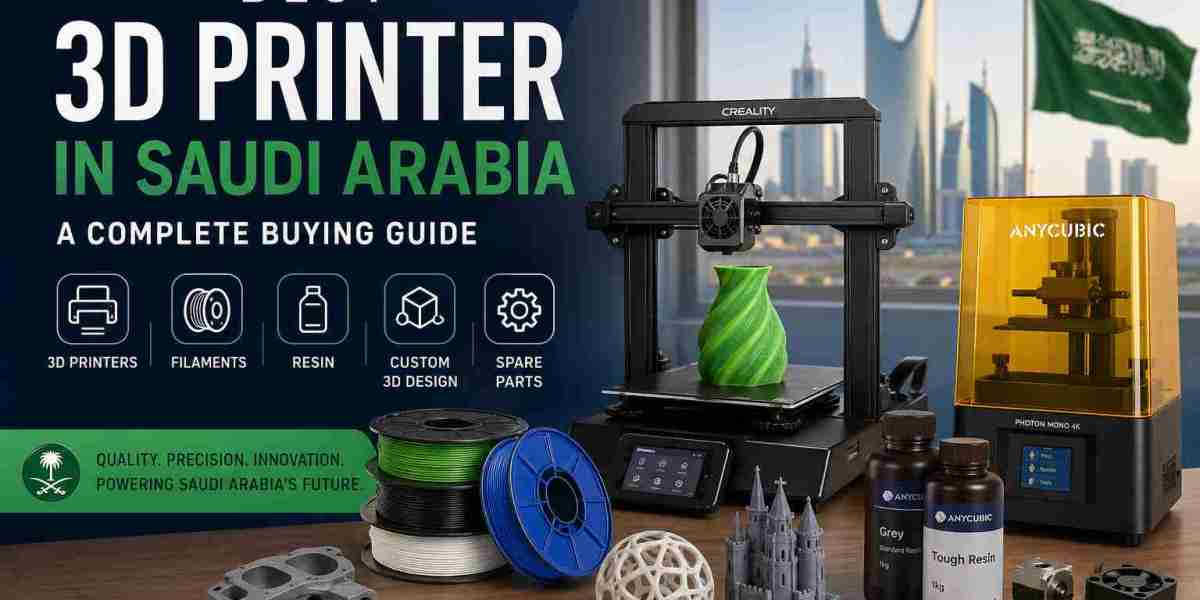
The demand for 3D printer technology is growing rapidly across industries, educational institutions, engineering firms, and creative businesses. What was once considered a niche manufacturing tool has become an essential solution for prototyping, product development, custom manufacturing, and hobby projects.
Whether you're a beginner exploring additive manufacturing or a business looking to invest in professional equipment, understanding 3D printer prices, material options, and local availability can help you make a smarter purchasing decision.
In this guide, we'll cover everything you need to know about 3D printers, including filament types, pricing factors, and how to choose the right machine for your needs.
What Is a 3D Printer?
A 3D printer is a machine that creates physical objects layer by layer from a digital design file. Unlike traditional manufacturing methods that remove material through cutting or machining, 3D printing adds material precisely where needed.
This process allows users to produce:
- Functional prototypes
- Engineering parts
- Architectural models
- Medical components
- Customized products
- Educational projects
- Decorative items
According to industry reports, the global 3D printing market is expected to exceed USD 80 billion by 2030, driven by advancements in manufacturing, healthcare, aerospace, and consumer applications.
Why 3D Printers Are Becoming Essential
Businesses and individuals are increasingly investing in 3D printing because it offers significant advantages.
Faster Product Development
Design iterations can be printed within hours instead of waiting weeks for outsourced manufacturing.
Cost Savings
Organizations can reduce tooling costs and produce prototypes without expensive molds.
Customization
Each printed object can be modified without changing production equipment.
Reduced Material Waste
Since material is added only where required, waste is significantly lower than traditional subtractive manufacturing.
Types of 3D Printers
Not all 3D printers are built for the same purpose.
FDM (Fused Deposition Modeling)
FDM printers are the most popular and affordable option.
They work by melting thermoplastic filament and depositing it layer by layer.
Best for:
- Beginners
- Schools
- Hobbyists
- Product prototyping
Advantages:
- Low operating costs
- Easy maintenance
- Wide material compatibility
Resin (SLA/MSLA) Printers
Resin printers use liquid photopolymer resin cured by UV light.
Best for:
- Jewelry
- Dental models
- Miniatures
- High-detail prototypes
Advantages:
- Exceptional detail
- Smooth surface finish
- Professional-quality output
Industrial 3D Printers
Industrial systems are designed for large-scale manufacturing and advanced engineering applications.
Best for:
- Aerospace
- Automotive
- Medical industries
- Production environments
Advantages:
- High precision
- Large build volumes
- Advanced materials support
Understanding 3D Printer Filament
One of the most important consumables in FDM printing is 3D printer filament.
Different materials offer unique properties for specific applications.
PLA Filament
PLA is the most beginner-friendly filament.
Benefits:
- Easy to print
- Environmentally friendly
- Low warping
- Excellent surface finish
Ideal for:
- Educational projects
- Decorative items
- Prototypes
PETG Filament
PETG combines strength with ease of printing.
Benefits:
- Durable
- Moisture resistant
- Chemical resistant
Ideal for:
- Functional parts
- Outdoor applications
ABS Filament
ABS is known for its toughness and heat resistance.
Benefits:
- High strength
- Impact resistant
- Post-processing friendly
Ideal for:
- Automotive parts
- Engineering components
TPU Filament
TPU is a flexible filament.
Benefits:
- Elastic
- Wear resistant
- Durable
Ideal for:
- Phone cases
- Gaskets
- Flexible components
Factors That Affect 3D Printer Price
The 3D printer price can vary significantly depending on features and intended use.
Build Volume
Larger printers generally cost more because they can produce bigger parts.
Print Resolution
Higher precision systems often command a premium price.
Material Compatibility
Printers capable of handling multiple materials tend to be more expensive.
Automation Features
Advanced features such as:
- Auto bed leveling
- Filament runout sensors
- AI monitoring
- Wi-Fi connectivity
can increase the overall cost.
Brand Reputation
Established manufacturers typically offer better support, software updates, and reliability.
Typical 3D Printer Price Ranges
| Printer Category | Approximate Price Range |
|---|---|
| Entry-Level FDM | $150 – $400 |
| Mid-Range FDM | $400 – $1,000 |
| Professional FDM | $1,000 – $5,000+ |
| Consumer Resin | $200 – $800 |
| Professional Resin | $800 – $10,000+ |
| Industrial Systems | $10,000 – $500,000+ |
Prices vary based on specifications, accessories, and regional availability.
Finding a Reliable 3D Printer in Jeddah
The market for 3D printer Jeddah solutions has expanded significantly as businesses embrace digital manufacturing technologies.
Customers in Jeddah can now access:
- Desktop 3D printers
- Professional-grade systems
- Industrial printers
- Printing materials
- Spare parts
- Technical support services
When selecting a supplier, consider:
Product Availability
Choose a supplier that maintains local inventory for faster delivery.
Technical Support
Reliable support is essential, especially for first-time users.
Spare Parts Access
Replacement components should be readily available.
Filament and Resin Supply
A consistent supply of consumables helps avoid production delays.
How to Choose the Right 3D Printer
Before making a purchase, ask yourself these questions.
What Will You Print?
Different applications require different technologies.
For example:
- Miniatures → Resin printer
- Functional prototypes → FDM printer
- Industrial production → Industrial system
What Is Your Budget?
Define both your initial budget and ongoing material costs.
How Much Space Is Available?
Larger printers require more installation space and ventilation.
Do You Need High Detail?
If surface quality and precision are critical, resin printers may be the better choice.
Common Mistakes to Avoid
Many first-time buyers make avoidable mistakes.
Buying Based Only on Price
The cheapest printer may require more maintenance and upgrades.
Ignoring Material Costs
Filament and resin expenses should be included in your total ownership calculation.
Overlooking Customer Support
Technical support can save considerable time and frustration.
Choosing the Wrong Technology
Match the printer to your intended application rather than following trends.
Chart/Table Idea for the Article
Comparison Chart: FDM vs Resin vs Industrial 3D Printers
Include columns for:
- Technology Type
- Average Price
- Print Quality
- Build Volume
- Material Options
- Best Applications
- Maintenance Requirements
This comparison helps readers quickly identify the most suitable printer category.
Frequently Asked Questions
FAQ 1: What is the best 3D printer for beginners?
FDM printers using PLA filament are generally the best option for beginners because they are affordable, easy to maintain, and simple to operate.
FAQ 2: How much does a 3D printer cost?
A basic desktop 3D printer typically costs between $150 and $400, while professional and industrial systems can range from thousands to hundreds of thousands of dollars.
FAQ 3: Which 3D printer filament is most commonly used?
PLA filament is the most widely used material due to its ease of printing, affordability, and environmentally friendly properties.
FAQ 4: Can I buy a 3D printer in Jeddah?
Yes. Jeddah has a growing market for 3D printing equipment, filaments, spare parts, and technical support services for both individuals and businesses.
FAQ 5: How long does a 3D print take?
Print times vary depending on model size, layer height, and printer settings. Small objects may take a few hours, while complex parts can require more than 24 hours.
Conclusion
A modern 3D printer is more than just a manufacturing tool—it is a gateway to innovation, rapid prototyping, customization, and cost-efficient production. Whether you're exploring hobby projects, educational applications, or professional manufacturing, choosing the right printer requires understanding technology types, 3D printer filament options, and realistic 3D printer price expectations.
For businesses and individuals looking for dependable 3D printer Jeddah solutions, working with a trusted supplier ensures access to quality equipment, consumables, spare parts, and technical support.
Ready to Start Your 3D Printing Journey?
Visit arkaki.com/shop/ to explore premium 3D printers, high-quality filaments, resin solutions, custom 3D design services, and genuine spare parts tailored for professionals, businesses, and enthusiasts across Saudi Arabia.