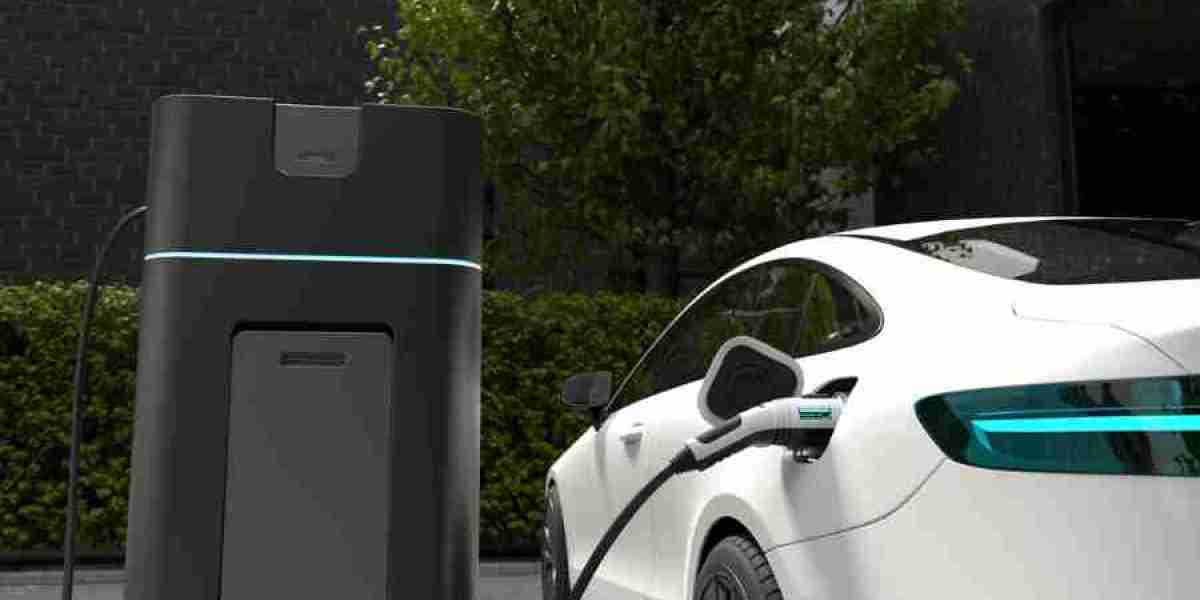
The electric vehicle battery market is becoming one of the most important parts of the global automotive transition. Batteries determine much of an electric vehicle's driving range, acceleration, charging performance, weight, cost, and ultimately its competitiveness against conventional vehicles. As automakers expand electric offerings, battery manufacturers are simultaneously scaling production, improving chemistry, and developing more resilient supply chains.
According to the market figures provided for this analysis, the global electric vehicle battery market reached approximately USD 76.72 billion in 2025. It is projected to expand at a 19.20% CAGR between 2026 and 2035, reaching approximately USD 444.29 billion by 2035.
The underlying demand trend is substantial. The International Energy Agency (IEA) reports that global EV battery deployment reached around 1.2 TWh in 2025, almost 30% higher than in 2024 and more than seven times its 2020 level. Light-duty vehicles remained the largest source of deployment, while electric trucks recorded particularly rapid growth.
Battery technology is also changing rapidly. Lithium-ion remains the dominant technology, but the chemistry mix is evolving. Lithium iron phosphate (LFP) has gained considerable share because of its cost and material advantages, while sodium-ion and solid-state technologies are attracting investment for specific future applications.
The market consequently involves much more than cell production. It includes raw materials, cathode and anode materials, cell manufacturing, battery packs, thermal management, battery-management systems, recycling, second-life applications, and integration into passenger and commercial vehicles.
Battery Technology Is Moving Toward Lower Cost and Better Performance
Lithium-ion batteries dominate the electric vehicle battery market because they offer a strong combination of energy density, efficiency, cycle life, and manufacturing maturity. However, the technology is not static, with different lithium-ion chemistries increasingly being optimized for particular vehicle requirements.
The market segmentation supplied for this analysis includes lithium-ion, lead-acid, nickel-metal-hydride, and other battery technologies. In practical terms, lithium-ion batteries have become the central technology for modern BEVs and PHEVs because they can store substantially more energy relative to their weight than older battery systems.
Within lithium-ion technology, the distinction between LFP and nickel-based chemistries such as NMC has become increasingly important. NMC batteries provide higher energy density, which can be advantageous for vehicles where range, packaging, and performance are priorities. LFP, by contrast, generally offers lower material costs and does not require nickel or cobalt in its cathode.
The IEA reported that LFP accounted for more than 55% of EV batteries deployed globally in 2025, up from nearly half in 2024. Its adoption remains particularly strong in China and is also expanding in emerging markets.
This chemistry shift has direct implications for automakers. A vehicle designed around an LFP battery may achieve a lower battery cost, supporting more competitive pricing. A premium long-range vehicle may instead prioritize a higher-energy-density chemistry despite its greater cost.
Lead-acid batteries remain relevant for auxiliary functions, including low-voltage vehicle systems, but they are not generally competitive with lithium-ion for primary propulsion in modern passenger EVs. Nickel-metal-hydride technology continues to have a role in some hybrid vehicles, particularly because of its established reliability and durability.
The longer-term technology landscape is broader. Sodium-ion batteries are attracting attention because they reduce dependence on lithium and can offer potential advantages in certain cost-sensitive or cold-weather applications. Solid-state batteries are being developed to potentially improve energy density and safety, although commercial-scale performance and manufacturing economics remain important hurdles.
Passenger Cars Continue to Anchor Battery Demand
Passenger cars account for the largest share of electric vehicle battery demand, but commercial vehicles and two-wheelers are becoming increasingly important sources of future growth.
Battery requirements vary considerably by vehicle type. A compact urban electric car may prioritize affordability and efficiency, while a large SUV requires a significantly larger battery to achieve comparable range. Electric buses and trucks can require much larger packs because of their weight, duty cycles, payload requirements, and operating distances.
The market segmentation includes passenger cars, commercial vehicles, and two-wheelers. Passenger cars remain the primary market because electric vehicle adoption has advanced most rapidly in this segment.
According to the IEA, light-duty vehicles represented more than 85% of global EV battery deployment in 2025. At the same time, electric truck battery demand more than doubled during the year, pushing trucks to approximately 8% of global EV battery deployment.
Commercial electrification could therefore become an increasingly significant growth engine. Fleets can have predictable routes, centralized charging, and high annual mileage, which can make the economic case for electrification compelling in suitable applications.
The challenge is battery size. Long-haul trucks require substantial energy storage, potentially increasing vehicle weight and charging requirements. Battery developers and vehicle manufacturers consequently have strong incentives to improve energy density, charging speed, durability, and thermal management.
Two-wheelers present a different opportunity. Smaller batteries reduce upfront costs and can be practical for motorcycles, scooters, and other urban mobility applications. In countries where two-wheelers represent a large share of transportation, electrification can create substantial battery demand even though individual battery packs are relatively small.
Battery manufacturers therefore increasingly need to design products around different duty cycles rather than pursuing a single technology for every vehicle.
Battery Costs Are Falling, but Supply Chains Remain Concentrated
Declining battery prices have been one of the most important factors supporting EV adoption, but the industry's supply chain remains highly concentrated geographically. Manufacturing scale, raw-material access, technology, and industrial policy are consequently central to market competition.
The IEA reported that average battery prices declined by 8% in 2025, following a much larger decline in 2024. It also found that battery pack prices in China were substantially lower than those in North America and Europe in 2025.
Lower costs can directly improve EV economics because the battery is one of the most expensive components of an electric vehicle. As battery costs decline, automakers gain more flexibility to reduce vehicle prices, increase range, or allocate more resources to other features.
However, the supply chain remains exposed to fluctuations in lithium, nickel, cobalt, graphite, and other materials. Mineral prices can influence battery economics, while geopolitical developments and trade policies can affect access to components and manufacturing equipment.
China has an especially strong position. According to the IEA, China accounted for more than 80% of global battery-cell production in 2025, while also representing approximately 85% of cathode active material production and more than 90% of anode active material production for electric-car batteries.
This concentration creates both an advantage and a risk. Chinese manufacturers benefit from scale, integrated supply chains, established production expertise, and intense domestic competition. For other regions, however, reliance on imported cells and materials can create strategic vulnerabilities.
North America and Europe are consequently investing in local battery manufacturing, mineral processing, and supply-chain development. These investments are intended not only to create jobs but also to improve supply security and reduce exposure to geopolitical disruptions.
Battery Electric Vehicles Remain the Core Propulsion Segment
Battery electric vehicles represent the central application for advanced propulsion batteries, while plug-in hybrids and conventional hybrids create additional demand for smaller and differently optimized battery systems.
The market is segmented into battery electric vehicles (BEVs), plug-in hybrid electric vehicles (PHEVs), and hybrid electric vehicles (HEVs). BEVs generally require the largest battery packs because their batteries provide all propulsion energy.
PHEVs use batteries alongside internal combustion engines. Their packs are typically smaller than BEV batteries but may have demanding power requirements because the battery must support electric driving and acceleration within a smaller energy-storage package.
The IEA notes that battery costs per kilowatt-hour can be higher for PHEVs than for BEVs because smaller packs spread fixed components such as battery-management systems across fewer cells and require designs optimized for power.
HEVs generally use even smaller batteries because the internal combustion engine remains the primary power source. Their batteries support regenerative braking, electric assistance, and efficient engine operation.
This creates different technology priorities across the three segments. BEVs place greater emphasis on energy density, range, fast charging, thermal management, and long-term degradation. Hybrids may prioritize power delivery, compact packaging, durability, and cost.
For battery suppliers, these differences create opportunities to develop specialized cells and pack architectures rather than relying on a single standardized product.
Battery architecture is also changing. Cell-to-pack and cell-to-chassis approaches can reduce unnecessary structural components and increase the proportion of vehicle volume devoted to energy storage. Such approaches can improve packaging efficiency but also introduce new engineering and repair considerations.
Battery Innovation Is Extending Beyond Lithium-Ion
The next phase of the EV battery market will be shaped by improvements to existing lithium-ion chemistries as well as emerging technologies such as sodium-ion and solid-state batteries.
LFP is already demonstrating that battery innovation does not necessarily mean replacing lithium-ion altogether. Improvements in cell design, manufacturing efficiency, charging capability, and pack integration have made LFP increasingly suitable for mainstream EV applications.
NMC and related nickel-rich chemistries remain relevant where energy density is particularly important. Their continued development focuses on reducing material requirements, improving stability, increasing usable energy, and managing costs.
Sodium-ion technology represents a different pathway. Because sodium is more abundant than lithium, the chemistry could provide supply-chain diversification. However, lower energy density means sodium-ion batteries are unlikely to replace lithium-ion across every vehicle segment in the near term.
Solid-state batteries are potentially more transformative. By replacing conventional liquid electrolytes with solid materials, developers aim to achieve improvements in energy density, safety, and potentially charging performance.
Yet commercial viability depends on more than laboratory results. Batteries must be manufactured consistently at high volumes, maintain performance across different temperatures and charging conditions, and achieve acceptable cost levels.
The IEA reported that major companies and research organizations continued investing in solid-state prototypes and manufacturing during 2024 and 2025, but emphasized that the technology's claimed advantages still need to be demonstrated at scale under realistic and standardized conditions.
Consequently, near-term market growth is likely to remain dominated by improved lithium-ion technologies, while alternative chemistries gradually establish positions where their specific characteristics provide an economic or technical advantage.
Asia Pacific Leads the Battery Manufacturing Landscape
Asia Pacific is the dominant regional center for EV battery production and demand, while North America and Europe are expanding domestic manufacturing capacity to strengthen supply security and support their vehicle industries.
Asia Pacific benefits from China's enormous battery ecosystem, which spans mineral processing, materials, cells, packs, electric vehicles, and associated components. China is also the world's largest EV market, creating a powerful feedback loop between vehicle demand and battery manufacturing.
The IEA estimates that China represented about 60% of global EV battery deployment in 2025.
Japan and South Korea also remain important battery technology and manufacturing centers. Companies from both countries have significant relationships with global automakers and continue to invest in advanced battery production.
India and Southeast Asia are becoming increasingly relevant as EV adoption grows and manufacturers diversify production. The IEA reports that emerging markets and developing economies outside China represented about 6% of global EV battery deployment in 2025, with their share continuing to increase.
Europe is pursuing battery manufacturing as part of its broader automotive and industrial strategy. The region has strong automotive engineering capabilities but remains more dependent on imported battery materials and cells than China.
North America is similarly developing domestic battery capacity. The objective is to create closer links between vehicle manufacturing, battery production, raw materials, and recycling.
Latin America has strategic relevance because several countries possess important mineral resources and rapidly expanding EV markets. Brazil, for example, has seen growing penetration of Chinese EVs and LFP battery technology.
The Middle East and Africa currently represent smaller portions of global EV battery demand, but opportunities are developing around electric mobility, renewable energy integration, commercial fleets, and mineral resources.
The regional competitive picture is therefore changing from a highly concentrated manufacturing model toward greater geographic diversification, although China is expected to remain the leading battery production hub for years to come.
Recycling and Second-Life Applications Are Becoming More Important
Battery recycling will become increasingly important as the installed base of electric vehicles grows and large numbers of batteries eventually reach the end of their automotive service life.
Recycling can recover valuable materials such as lithium, nickel, cobalt, copper, and other components. This can reduce dependence on primary extraction over the long term, although recycling alone cannot immediately replace the need for new mining because today's EV battery stock is still relatively young.
The IEA notes that recycling could eventually help moderate demand for primary minerals, but because the availability of end-of-life batteries depends on the existing vehicle fleet, its substantial effect on primary mineral demand is likely to take time.
Before recycling, some batteries may also have potential for second-life applications. A battery that no longer provides the required range or power for a vehicle may still be useful in stationary energy storage, depending on its condition and economics.
Battery-health monitoring is consequently becoming increasingly important. Manufacturers and fleet operators need reliable information about state of health, degradation, temperature history, charging behavior, and remaining useful life.
The development of standardized testing and battery-health data could support stronger used-EV markets and make battery reuse more practical.
Recycling economics, however, vary by chemistry. LFP batteries contain no cobalt or nickel, which can reduce the economic value of recovering their materials compared with some older nickel- and cobalt-containing chemistries. This increases the importance of efficient processing, regulation, collection networks, and potentially direct-recycling technologies.
The emerging circular battery economy will therefore involve more than recycling plants. It will connect vehicle manufacturers, battery producers, dealerships, fleet operators, dismantlers, recyclers, energy-storage companies, and regulators.
Competition Is Increasing Among Global Battery Manufacturers
The competitive landscape includes large battery specialists, diversified electronics companies, automotive manufacturers, and vertically integrated EV producers. Scale, technology, cost, manufacturing yield, customer relationships, and supply-chain control are increasingly determining competitive strength.
The companies identified in the supplied market scope include BYD Company Ltd., Samsung SDI Co. Ltd., Contemporary Amperex Technology Co., Limited (CATL), Mitsubishi Electric Corporation, and Panasonic Corporation, among others.
CATL and BYD have become particularly influential because of their scale in China and their extensive involvement in EV battery technology. Their competitive position reflects not only cell manufacturing but also battery chemistry expertise, supply-chain integration, manufacturing efficiency, and relationships with vehicle manufacturers.
Samsung SDI and Panasonic have longstanding positions in advanced battery manufacturing and partnerships with global automotive companies. Their strategies increasingly involve improving energy density, manufacturing efficiency, safety, and next-generation chemistry.
The competitive environment is not limited to cell prices. Automakers are increasingly evaluating suppliers based on production reliability, quality control, local manufacturing capabilities, intellectual-property strength, recycling strategies, and the ability to support new vehicle platforms.
Vertical integration is also becoming more important. The IEA notes that upstream investment can help battery manufacturers reduce production costs and protect against volatility in critical mineral prices.
At the same time, intense competition can compress margins. The market's rapid expansion has encouraged substantial manufacturing investment, potentially creating periods of excess capacity in some regions or technology categories.
The winners will therefore not necessarily be the companies that produce the most cells. Long-term competitiveness will depend on achieving high yields, controlling costs, developing differentiated chemistry, securing materials, and adapting production to regional market requirements.
The EV Battery Market Is Entering a More Competitive and Diversified Phase
The electric vehicle battery market is transitioning from an early growth industry into a strategically important global manufacturing sector. Falling costs, expanding EV adoption, new chemistries, increasing commercial-vehicle electrification, and investment in local supply chains are all reshaping the competitive landscape.
Based on the market figures supplied for this analysis, the market is projected to increase from USD 76.72 billion in 2025 to approximately USD 444.29 billion by 2035, representing a 19.20% CAGR from 2026 to 2035.
The strongest near-term growth is likely to remain centered on lithium-ion batteries, particularly LFP and advanced nickel-based chemistries. Meanwhile, sodium-ion and solid-state technologies could become more important as their performance and manufacturing economics mature.
The industry's strategic importance extends beyond automotive manufacturing. Batteries connect transportation with mining, chemicals, electronics, renewable energy, recycling, industrial policy, and international trade.
The IEA's latest outlook illustrates the scale of this transformation: EV battery deployment is expected to approach 5 TWh by 2035 under its Stated Policies Scenario, compared with approximately 1.2 TWh in 2025.
For automakers, the key challenge will be securing competitive batteries without compromising range, safety, reliability, or affordability. For battery manufacturers, success will depend on technology leadership, manufacturing efficiency, supply-chain resilience, and the ability to operate across increasingly diverse regional markets.
Ultimately, the future of electric mobility will be shaped not by one universal battery technology but by a portfolio of chemistries and architectures matched to different vehicles and use cases. The companies that can combine cost efficiency, technological innovation, responsible sourcing, and reliable large-scale production will be best positioned to capture the market's long-term expansion.