
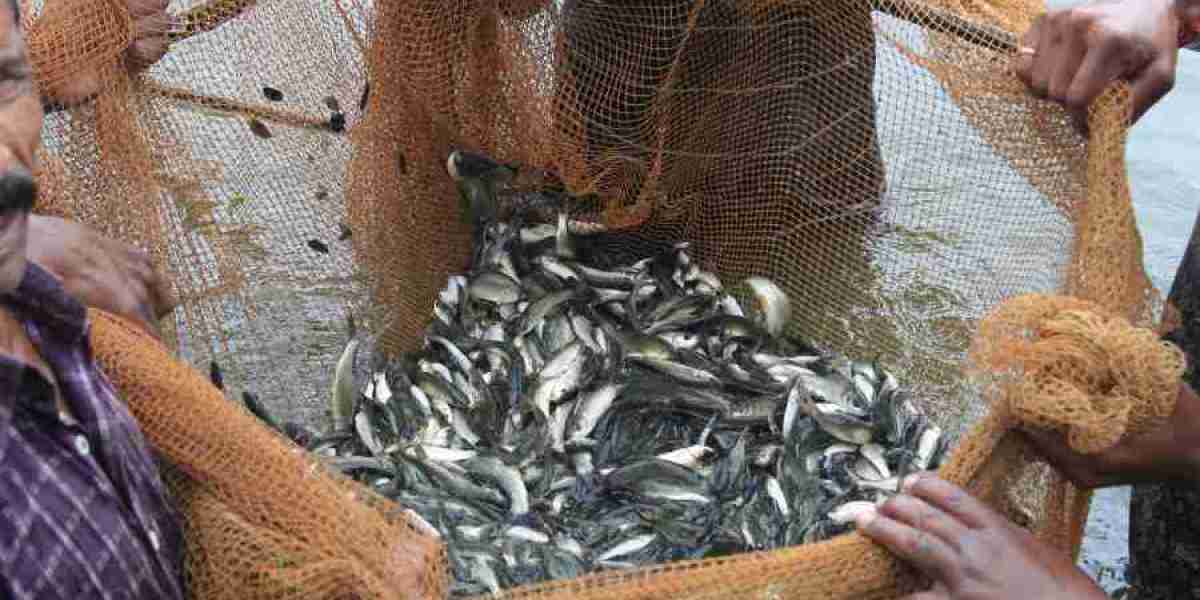
Fish farming has become a strategically important part of the global food system, supplying protein while helping meet rising seafood demand and reducing pressure on some wild fish stocks. The industry spans everything from small freshwater ponds to sophisticated marine aquaculture operations using automated feeding, water-quality monitoring and disease-management technologies.
The global fish farming market reached approximately USD 342.86 billion in 2025 and is projected to grow at a CAGR of 5.70% from 2026 to 2035, reaching around USD 596.85 billion by 2035, according to Expert Market Research. This expansion is being supported by population growth, urbanization, changing diets, rising disposable incomes and greater consumer interest in seafood as a source of high-quality protein.
Fish farming is also becoming more technologically advanced. Modern producers increasingly use sensors, automated feeders, recirculating aquaculture systems, selective breeding, vaccines, water-treatment equipment and data analytics to improve yields and reduce biological and environmental risks.
What Is Driving the Expansion of the Fish Farming Market?
Growing seafood consumption, limited growth in wild fisheries, population expansion and improvements in aquaculture technology are the principal forces supporting the fish farming market. Producers are increasingly focused on achieving higher output with better feed efficiency, stronger fish health and more responsible resource use.
Aquaculture has become essential because capture fisheries alone cannot satisfy indefinitely rising demand for aquatic foods. The Food and Agriculture Organization has highlighted aquaculture's growing contribution to global aquatic-animal production, with farmed aquatic animals surpassing capture fisheries in production volume for the first time in 2022.
This structural shift creates opportunities throughout the fish farming value chain. Demand is not limited to farms themselves; it supports businesses involved in feed, hatcheries, genetics, vaccines, water-treatment systems, farm equipment, processing, cold-chain logistics and seafood distribution.
Dietary preferences are another important factor. Fish provides protein along with nutrients such as omega-3 fatty acids, vitamins and minerals, making seafood attractive as consumers look for nutritious alternatives to some conventional animal proteins. However, the commercial opportunity varies substantially by species and geography.
The market is also benefiting from improvements in farming efficiency. Better feeds can increase growth rates while reducing the amount of feed required per kilogram of fish produced. Selective breeding and improved genetics can enhance disease resistance and growth performance, while automated monitoring can help farmers respond earlier to changes in dissolved oxygen, temperature, salinity and other water conditions.
Sustainability is simultaneously becoming a commercial consideration. Retailers, foodservice companies and consumers increasingly want traceability and evidence of responsible production. This is encouraging farms to improve resource efficiency, manage waste and adopt recognized certification or environmental-management practices.
How Do Different Fish Farming Environments Shape Production?
Fish farming is generally conducted in marine water, freshwater or brackish water, and each environment determines which species can be raised, what infrastructure is required and how producers manage biological and environmental conditions.
Freshwater farming is particularly important for species such as tilapia and catfish. Production can take place in ponds, cages, tanks or more advanced recirculating systems. Freshwater farming is often accessible to producers in inland areas and can be integrated with agriculture through approaches that make productive use of water and nutrients.
Marine-water farming is more capital intensive and is closely associated with species such as salmon and sea bass. Marine farms can use floating cages or other offshore and coastal infrastructure. The environment provides access to large volumes of water, but producers must manage exposure to storms, temperature changes, parasites, disease and interactions with surrounding ecosystems.
Brackish-water farming occupies the middle ground where freshwater and seawater mix. Estuarine environments can support species adapted to changing salinity and provide valuable locations for aquaculture. The challenge is maintaining appropriate environmental conditions while managing potential interactions with natural habitats.
The choice of environment has direct implications for farm economics. A producer needs to consider water availability, temperature, salinity, infrastructure, feed logistics, energy requirements, biosecurity and proximity to processing facilities. This means that farming models cannot simply be transferred from one region to another without adaptation.
Technology is increasingly reducing some of these environmental constraints. Recirculating aquaculture systems, for example, treat and reuse water within controlled facilities. These systems can reduce dependence on large volumes of fresh or marine water and allow production closer to major consumer markets, although energy use and capital expenditure remain important considerations.
Which Fish Species Are Driving Market Demand?
Salmon, tilapia, catfish, milkfish, tuna and sea bass represent important commercial species, but their roles differ considerably according to consumer preferences, production technology, geography and biological characteristics.
Salmon farming is among the most technologically advanced segments of aquaculture. Atlantic salmon production is strongly associated with countries such as Norway and Chile, where marine farming infrastructure, specialized feed and sophisticated fish-health management support large-scale production.
Salmon also illustrates the importance of value rather than simply volume. A farmed fish does not need to have the highest production volume to generate substantial market value. Species with strong consumer demand and established premium supply chains can support sophisticated farming economics.
Tilapia has a different profile. It is widely farmed in tropical and subtropical regions and is valued for relatively efficient production, adaptability and broad consumer acceptance. Its comparatively mild flavor and versatility make it suitable for foodservice and retail applications.
Catfish is an important freshwater species, particularly in markets where affordable farmed fish is in demand. Its established farming systems demonstrate how regional consumption habits can shape species specialization.
Milkfish is particularly important in Southeast Asian aquaculture, while sea bass is farmed extensively in several marine and brackish-water production regions. Tuna presents a more complex case because traditional tuna supply is strongly associated with capture fisheries, although efforts to develop commercial tuna aquaculture and ranching systems continue.
Species selection ultimately depends on biology as much as consumer demand. Farmers must evaluate growth rates, feed requirements, water conditions, disease susceptibility, stocking density, market prices and availability of juvenile fish. A species that performs well biologically may still be commercially unattractive if feed costs are high or local demand is weak.
How Is Technology Transforming Modern Fish Farming?
Technology is moving fish farming from experience-driven production toward increasingly measured and automated operations. Sensors, artificial intelligence, automated feeding, underwater cameras, robotics, improved genetics and recirculating systems are helping producers improve productivity and fish welfare.
Feed is one of the most important operating costs in aquaculture, so precision feeding can have a direct economic impact. Automated feeders can distribute feed according to programmed schedules, while camera-based systems can increasingly monitor feeding behavior and help determine whether fish are consuming feed efficiently.
Water-quality monitoring is equally important. Dissolved oxygen, temperature, pH, salinity, ammonia and other parameters influence fish growth and survival. Continuous sensors can provide information much more frequently than manual sampling, allowing farmers to identify unfavorable conditions before they become serious.
Recirculating aquaculture systems are another major technological development. They filter and treat water so that it can be reused, allowing fish production in controlled indoor environments. RAS can reduce water consumption and provide greater control over temperature and biosecurity, although filtration, pumping and heating can require considerable energy.
Genetics is also transforming productivity. Selective breeding programs can produce fish with desirable characteristics such as faster growth, disease resistance or tolerance to specific environmental conditions. Over multiple generations, these improvements can have significant effects on farm economics.
Digitalization is bringing these technologies together. A modern farm can combine environmental sensors, feeding data, biomass estimates, mortality records and health information into a centralized management system. The result is a more data-driven production model in which decisions can be based on real-time operating conditions rather than periodic observation.
What Role Does Sustainability Play in Aquaculture Growth?
Sustainability has become a central commercial issue because fish farming must expand while managing water use, feed inputs, waste, disease risks and ecosystem impacts. Responsible aquaculture increasingly depends on measurable environmental performance rather than simply increasing production volume.
Feed is one of the most important areas. Traditional aquaculture feeds have historically relied partly on marine ingredients such as fishmeal and fish oil, creating concerns about dependence on wild-caught fish. The industry has responded with alternative ingredients, including plant proteins, algae, insect-based ingredients and other emerging feed technologies.
The challenge is to develop feeds that maintain growth and fish health without creating new environmental problems. Ingredient sourcing, nutritional quality, digestibility and cost all matter. The most successful feed innovations therefore need to work biologically and economically.
Farm location and management are equally important. Marine operations must consider waste accumulation, interactions with wild species, disease transmission and local ecosystem conditions. Land-based systems can offer greater environmental control but may require substantially more energy.
Certification and traceability are becoming more relevant as international seafood supply chains become more sophisticated. Buyers increasingly want to know where fish originated, how it was produced and whether the producer meets environmental and social standards.
Climate change adds another layer of complexity. Rising water temperatures, changing ocean conditions, extreme weather and shifting disease patterns can affect aquaculture productivity. Producers are consequently investigating more resilient species, improved genetics, alternative production locations and closed or controlled farming environments.
The industry's long-term growth will therefore depend not only on producing more fish but on producing it efficiently and responsibly. Environmental performance is increasingly tied to access to premium markets, brand reputation and long-term operating resilience.
How Are Regional Markets Evolving Across the World?
Asia-Pacific is the dominant center of global aquaculture, while Europe and North America emphasize technologically advanced and higher-value production. Latin America has strong opportunities in salmon and other species, while the Middle East and Africa are expanding aquaculture as governments and businesses seek greater domestic food production.
Asia-Pacific is the industry's most important region by scale. China is the world's largest aquaculture producer, while India, Indonesia, Vietnam, Bangladesh and other countries have extensive freshwater and coastal farming industries. FAO data show that Asia accounted for the overwhelming majority of global aquaculture production in recent years.
China's market is particularly diverse, covering freshwater species, shellfish and marine fish. Its enormous domestic consumer base provides a major advantage, while its extensive aquaculture infrastructure supports both domestic consumption and international trade.
India has significant potential because of its large population, extensive coastline and established freshwater farming sector. The country is a major producer of species such as carp and shrimp, while investment in cold chains, processing and aquaculture infrastructure can create opportunities for further value addition.
Europe has a more specialized profile. Norway dominates farmed Atlantic salmon production and has developed a sophisticated ecosystem encompassing hatcheries, feed, genetics, marine farming, processing and export logistics. Other European countries contribute to production of trout, sea bass, sea bream and other species.
North America combines commercial aquaculture with growing interest in domestic seafood production. The United States remains a major seafood consumer but imports a large share of its seafood, creating a strategic incentive to develop domestic aquaculture capacity. Canada has an established salmon-farming sector, particularly on the Pacific and Atlantic coasts.
Latin America is particularly important for salmon and other export-oriented aquaculture. Chile has developed into a major global salmon producer, supported by favorable marine conditions and an established processing and export infrastructure.
In the Middle East and Africa, aquaculture is increasingly relevant to food security and import substitution. Egypt has a particularly significant freshwater aquaculture industry, while other countries are exploring marine and land-based systems. Growth will depend on infrastructure, water availability, feed supply, technical skills and access to investment.
Who Are the Major Companies in the Fish Farming Market?
The competitive landscape includes vertically integrated aquaculture companies, specialized seafood producers and regional operators. Scale, species expertise, biological performance, feed efficiency, processing capabilities, market access and sustainability credentials increasingly determine competitive strength.
The companies identified in the supplied market scope include Alpha Group Ltd., Cermaq Group AS, Cooke Aquaculture Inc., and Leroy Seafood Group ASA, along with other producers.
Cermaq Group is a major salmon-farming company with operations across several important salmon-producing markets. Its scale allows it to integrate farming expertise, fish health, processing and international seafood distribution.
Cooke Aquaculture has built a broad seafood business encompassing salmon and other aquaculture activities. Its competitive position reflects its ability to operate across production, processing and distribution rather than relying exclusively on farm-level economics.
Lerøy Seafood Group has a significant presence in salmon and trout farming and a broader seafood value chain. Vertical integration can provide important advantages because producers can coordinate farming with processing, logistics, product development and customer relationships.
Other competitors range from regional fish farms to specialized hatchery, feed, genetics, equipment and technology companies. This wider ecosystem is critical because aquaculture competitiveness depends on more than the farming company itself.
The industry is also becoming increasingly consolidated in some mature markets. Large producers can spread investments in genetics, automation, biosecurity, processing and R&D across greater production volumes. Smaller farms, however, can remain competitive by focusing on regional species, premium products, direct markets or specialized production methods.
What Challenges Could Restrain Fish Farming Market Growth?
Disease, feed costs, environmental concerns, climate variability, fish mortality, regulatory requirements and market-price volatility remain major challenges. Aquaculture is a biological production system, so technical improvements cannot completely eliminate the uncertainty associated with living organisms and changing environments.
Disease is among the most serious risks. Outbreaks can cause mortality, reduce growth, increase treatment costs and restrict movement or sales. Biosecurity, vaccination, selective breeding, monitoring and responsible stocking practices are therefore essential to commercial operations.
Feed represents another major expense. Prices can fluctuate with commodity markets and the availability of key ingredients. Improving feed conversion and developing cost-effective alternative proteins can therefore have a direct impact on profitability.
Environmental regulation can also affect expansion, particularly in marine farming. Producers may face restrictions concerning farm density, waste discharge, disease management, escape prevention and interactions with wild ecosystems. These requirements can increase costs but also encourage better long-term industry practices.
Climate change could make some traditional production locations more challenging. Changes in temperature, oxygen levels, storms and ocean conditions can affect fish health and growth. Producers may need to invest in resilient infrastructure and diversify production strategies.
Finally, seafood prices can fluctuate substantially. A farm can achieve excellent biological performance but still struggle financially if market prices decline while feed, energy and logistics costs rise. Effective aquaculture management therefore requires close integration of biological, operational and commercial decision-making.
What Is the Future Outlook for the Fish Farming Market?
The fish farming market is positioned for sustained expansion as aquaculture becomes increasingly central to global seafood supply. Future growth will depend on improving biological efficiency, adopting technology, developing alternative feeds and expanding production in ways that are environmentally and economically sustainable.
The supplied forecast projects the market to rise from USD 342.86 billion in 2025 to approximately USD 596.85 billion by 2035, representing a CAGR of 5.70%. This growth reflects a structural shift toward aquaculture as a dependable source of aquatic protein.
One of the most significant opportunities is the expansion of land-based and recirculating systems. These technologies can bring production closer to consumers, increase biosecurity and reduce exposure to some environmental variables. Their commercial success, however, will depend heavily on energy efficiency and capital costs.
Offshore aquaculture could also become more important. Moving farms farther from coastal areas can potentially provide access to greater water exchange and new production space, although offshore systems require substantial engineering investment and must withstand challenging environmental conditions.
AI and automation are likely to improve productivity further. Computer vision can estimate biomass and monitor fish behavior, while predictive models can help optimize feeding and identify potential health problems. Over time, farms could increasingly operate as connected biological production systems rather than manually monitored facilities.
Sustainability will remain a defining competitive factor. Companies able to demonstrate efficient feed use, responsible sourcing, effective waste management, strong fish health and transparent traceability should be better positioned to serve premium markets.
The long-term opportunity is therefore not simply to produce more fish. It is to build more predictable, efficient, resilient and environmentally responsible production systems that can meet rising seafood demand while adapting to changing climate and resource constraints.
Conclusion
The fish farming market is becoming a cornerstone of the global seafood economy. With the market projected to expand from approximately USD 342.86 billion in 2025 to USD 596.85 billion by 2035, aquaculture has significant opportunities to address rising demand for nutritious aquatic protein.
Freshwater, marine and brackish-water systems each serve different production requirements, while salmon, tilapia, catfish, milkfish, sea bass and other species create a diverse commercial base. Technology is increasingly connecting these production systems through automated feeding, sensors, genetics, recirculating water systems and data-driven management.
Asia-Pacific will remain the industry's largest regional center, supported by enormous production capacity and consumer demand. Europe, North America and Latin America will continue to play important roles in technologically advanced and export-oriented aquaculture, while Africa and the Middle East offer opportunities linked to food security and domestic production.
The industry's greatest challenge is balancing growth with biological and environmental responsibility. Disease, feed costs, climate change and regulatory pressures will remain difficult issues, but advances in genetics, nutrition, automation and controlled-environment farming can improve resilience.
Ultimately, the strongest fish farming businesses will be those that combine biological expertise, operational efficiency, technology, sustainability and access to reliable markets. As wild fisheries face natural and regulatory limits, efficient aquaculture is likely to become even more important to how the world produces and consumes seafood.