


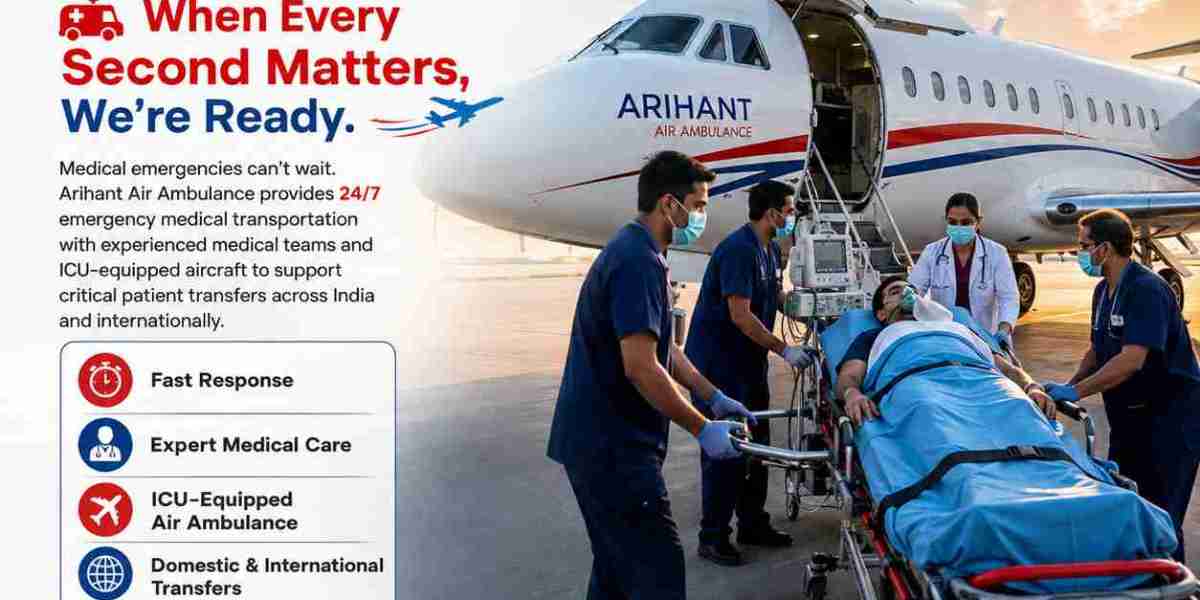
Air travel for a critically ill patient is never just about moving someone from one city to another. When a person depends on a ventilator to breathe, every second in the sky becomes a medical operation of its own. Families often ask the same question when a loved one is being shifted for advanced treatment: what actually happens if the patient's breathing support is needed while the aircraft is airborne? This blog breaks down the entire process in simple terms, so you know exactly what to expect if you or someone close to you ever needs this kind of care.
What Does Ventilator Support Mean During Air Transport?
A ventilator is a machine that helps a patient breathe when their lungs cannot do the job on their own. During flight, this isn't a simple hospital-style ventilator plugged into a wall socket. It is a compact, battery-powered, aviation-certified device designed to work at changing cabin pressures and altitudes. The machine pushes air, often mixed with extra oxygen, into the patient's lungs at a set rate and volume, keeping their oxygen levels stable even as the aircraft climbs, cruises, and descends.
The medical team on board continuously checks blood oxygen saturation, heart rate, and airway pressure through connected monitors. Any deviation triggers an immediate adjustment, whether that means changing the oxygen flow, altering the breathing rate, or intervening manually with a bag-valve mask if the machine has technical trouble.
Why Is Mid-Air Ventilator Support More Complex Than on Ground?
Cabin pressure at cruising altitude is lower than at sea level, even in a pressurized aircraft. This affects how much oxygen actually reaches a patient's bloodstream, a concept called hypoxia risk. For a healthy traveller, this barely registers. For a patient already struggling to breathe, it can be dangerous if not managed correctly.
This is why medical flight crews calculate oxygen reserves well before departure, factoring in flight duration, potential diversions, and backup power needs. Turbulence adds another layer of difficulty, since it can dislodge tubing or affect ventilator readings, so equipment is secured with medical-grade restraints and the flight path is planned, where possible, to avoid rough weather.
How Is the Patient Prepared Before Boarding?
Preparation begins hours, sometimes days, before departure. A pre-flight assessment is done by doctors and paramedics to confirm the patient is stable enough for transport, or to identify exactly what support will be required throughout the journey. This includes checking airway status, sedation levels if the patient is intubated, and existing oxygen dependency.
The medical team also arranges backup oxygen cylinders, spare ventilator batteries, suction equipment for airway clearance, and emergency medications. Every device is tested on the ground first. Nothing is left to chance because once the aircraft doors close, options for outside help become limited.
Air Ambulance Services in Mumbai typically coordinate closely with hospital ICU teams during this stage, ensuring that the handover from ground medical staff to the flight crew is smooth and that no critical detail about the patient's condition is missed.
Who Manages the Patient During the Flight?
A dedicated critical care team travels with the patient. This usually includes a flight doctor trained in emergency and critical care medicine, along with a flight paramedic or critical care nurse experienced in managing ventilators, cardiac monitors, and infusion pumps in a moving aircraft.
Their responsibilities go beyond just watching machines. They track the patient's vital signs minute by minute, adjust ventilator settings as needed, manage pain or sedation, and communicate with the receiving hospital so that the medical team on the ground knows exactly what to expect on arrival. If the patient's condition worsens, this crew is trained to perform advanced life support interventions right there in the cabin.
What Equipment Is Used for In-Flight Breathing Support?
Modern air ambulances carry transport ventilators built specifically for aviation use. These machines are lightweight, resistant to vibration, and capable of running on internal batteries for extended periods. Alongside the ventilator, the aircraft is stocked with pulse oximeters, capnography monitors to measure carbon dioxide levels, portable oxygen concentrators or cylinders, suction devices, and airway management kits.
Redundancy is the key principle here. There is always a backup for critical equipment, because a single point of failure at 30,000 feet is not an option. Air Ambulance Services in Delhi generally maintain strict maintenance schedules and pre-flight checklists for this exact reason, making sure every ventilator and monitor is functioning at full capacity before wheels leave the ground.
When Do Emergencies Happen Mid-Flight, and How Are They Handled?
Even with careful planning, complications can arise. A patient's oxygen saturation might drop suddenly, the endotracheal tube could shift, or equipment might malfunction. The flight medical team is trained to respond within seconds. They may manually ventilate the patient using a bag-valve mask while troubleshooting the ventilator, or adjust the flight altitude in consultation with the pilot to reduce pressure-related strain if possible.
Communication protocols are also in place. The medical team stays in contact with a ground-based physician or the receiving hospital's ICU, relaying real-time updates so that specialists are ready to act the moment the patient lands. This layered support system, aircraft crew, medical team, and hospital coordination, is what makes mid-air emergency management possible even in unpredictable situations.
Why Choose Specialized Air Ambulance Providers for Critical Transport?
Not every air charter service is equipped to handle ventilator-dependent patients. It takes specialized training, certified equipment, and experience in aeromedical evacuation to do this safely. Families should always confirm that the service provider has ICU-equipped aircraft, qualified critical care staff, and a track record of handling similar cases.
Air Ambulance Services in Mumbai and other major metro-based providers often have an advantage here, since they operate near large multi-specialty hospitals and can arrange faster ICU-to-ICU transfers with minimal ground transit time. Similarly, Air Ambulance Services in Delhi benefit from proximity to major medical hubs in North India, allowing quicker coordination between referring and receiving hospitals for time-sensitive cases involving ventilator support.
How Does the Patient Get Handed Over After Landing?
Once the aircraft lands, the transition to ground care is just as carefully managed as the flight itself. A ground ambulance, often ICU-equipped, is arranged to meet the aircraft so the patient can be moved without any gap in ventilator support. The flight medical team hands over a detailed report to the receiving hospital's ICU staff, covering everything from oxygen levels during flight to any interventions performed on board.
This handover ensures continuity of care, meaning the hospital team picks up exactly where the flight crew left off, without having to reconstruct what happened during transport.
Final Thoughts
Ventilator support mid-air is a highly coordinated medical process built on preparation, redundancy, and constant monitoring. From pre-flight assessments to specialized equipment and trained critical care teams, every step is designed to keep a breathing-dependent patient stable throughout the journey. Knowing what goes into this process can bring some reassurance to families facing a medical evacuation, understanding that this is far from a simple flight, it is a moving intensive care unit built around one goal: keeping the patient alive and stable until they reach definitive care.
Frequently Asked Questions (FAQs)
- Can a patient on a ventilator safely travel by air?
Yes, with proper planning. Specialized air ambulances use aviation-certified ventilators, trained critical care teams, and backup equipment to manage ventilator-dependent patients safely throughout the flight.
- How long can ventilator battery backup last during a flight?
This depends on the equipment, but most transport ventilators are designed with battery reserves that exceed the expected flight duration, plus additional buffer time for delays or diversions.
- What happens if the ventilator malfunctions mid-flight?
The onboard medical crew is trained to manually ventilate the patient using a bag-valve mask while troubleshooting or switching to backup equipment, ensuring no interruption in oxygen supply.
- Do all air ambulance services offer ventilator support?
No. Only specialized providers with ICU-configured aircraft and trained critical care staff can safely manage ventilator-dependent patients. It's important to verify this before booking.
- Is cabin pressure adjusted for patients needing extra oxygen support?
In some cases, yes. Flight altitude and cabin pressure settings can be discussed with the pilot to minimize strain on the patient, depending on aircraft capability and the patient's specific condition.



