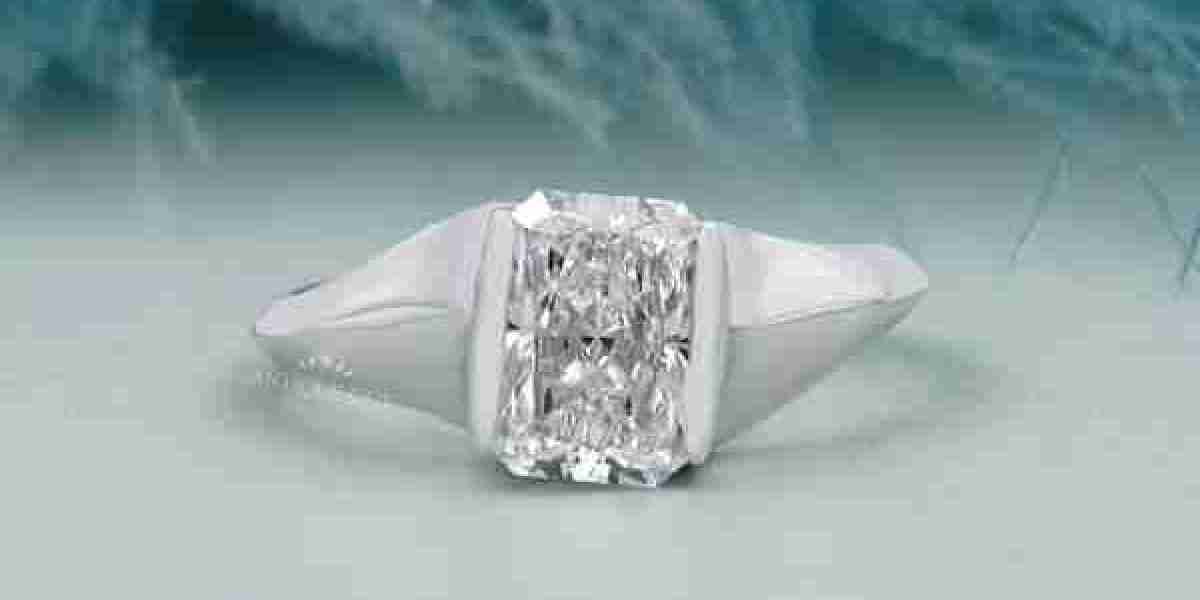
A radiant diamond has a personality of its own. Its straight sides, clipped corners, and brilliant faceting create a look that can feel both structured and lively. Yet the diamond does not exist visually on its own once it becomes part of an engagement ring. The setting surrounding it can change the way its proportions, edges, and brilliance are perceived.
A bezel setting offers one of the clearest examples of this effect. Rather than holding the diamond with several individual prongs, the metal forms a continuous frame around its perimeter. That frame creates a defined boundary between the center stone and the rest of the ring.
This can make a radiant diamond appear more architectural, polished, or contemporary. The setting may also influence how large the center appears, how strongly its corners are emphasized, and how the metal interacts with the stone.
The change is subtle in some designs and dramatic in others. A slim bezel can almost disappear visually, allowing the diamond to remain the main attraction. A broader metal border can become an important design feature in its own right.
Understanding this relationship between stone and setting is useful when choosing an engagement ring because the same radiant diamond can create a very different impression depending on how it is framed.
The Bezel Creates a Clear Border Around the Diamond
One of the most noticeable effects of a bezel setting is the defined outline it creates around the center stone.
Radiant diamonds have a rectangular or square silhouette with clipped corners. When a metal border follows those edges, the shape becomes especially easy to see.
With a traditional prong setting, portions of the diamond's perimeter remain visually open. The eye can move from the stone directly into the surrounding space.
A bezel creates a more complete transition. The metal traces the diamond's outline, giving the center a framed appearance.
This can make the radiant cut feel more deliberate and geometric.
The effect depends greatly on the width of the bezel. A narrow border tends to keep the emphasis on the diamond. It provides definition without dominating the center.
A wider bezel introduces more metal into the visual composition. The contrast between the diamond and its frame becomes stronger, which can give the ring a more distinctive personality.
The metal color can further change this effect.
White gold or platinum can create a subtle transition around a bright diamond, making the border appear relatively seamless.
Yellow gold produces greater contrast. The warm metal outlines the diamond and can make its rectangular shape stand out more clearly.
Rose gold creates another interpretation, combining the structured outline of the radiant with a softer color.
These differences demonstrate why the setting should not be treated as a secondary decision. It is part of how the center diamond is presented.
How a Bezel Can Influence Perceived Size
The actual dimensions of a diamond do not change when it is placed into a setting, but its perceived size can. The width and color of the surrounding metal can influence how the eye interprets the center stone.
A slim bezel can create a narrow visual boundary, allowing more attention to remain on the diamond itself. Because the surrounding frame is restrained, the center can feel especially prominent.
A broader bezel introduces a stronger visual border. This can make the overall center section appear more substantial, even though the diamond itself remains the same size.
If the border is disproportionately heavy, it may visually compete with the center. If it is too delicate for the proportions of the stone, the ring may feel unbalanced.
The goal is not necessarily to make the bezel as thin as possible. Instead, the frame should complement the dimensions and character of the radiant diamond.
The length-to-width ratio of the center stone matters here as well. An elongated radiant has a longer rectangular appearance. A bezel following that outline can emphasize the length and create a graceful visual direction across the finger.
The Setting Changes the Character of the Radiant Cut
The radiant cut can work with many different jewelry styles because its shape sits between traditional elegance and modern geometry. A bezel can push that character in a particular direction.
A clean, polished bezel may make the ring feel contemporary and minimalist. The absence of visible prongs creates a smooth surface around the stone and allows the diamond's outline to take center stage.
A more substantial bezel can give the ring a bold, architectural quality. The metal becomes an important part of the design rather than simply a support structure.
The band can reinforce this effect. A plain metal band keeps the overall appearance restrained. This allows the center stone and its bezel to do most of the visual work.
A diamond-accented band introduces additional sparkle and can create a more elaborate appearance. A tapered band can direct the eye toward the radiant diamond, while a straight band creates a more consistent visual width.
This is one reason the setting is so important when shopping for an engagement ring. The diamond's shape provides the foundation, but the surrounding design determines how that foundation is interpreted.
See more options of radiant cut bezel ring designs by comparing the relationship between the center stone, bezel width, metal color, and band style. Looking at these details together makes it easier to identify which combination matches a preferred aesthetic.
The Clipped Corners Become More Noticeable
The clipped corners of a radiant diamond are one of its defining visual characteristics. These corners distinguish the radiant from a standard rectangular shape and contribute to its softened geometric appearance.
A bezel can make these corners more visually prominent because the metal follows their angles. Instead of allowing the corners to blend into the surrounding space, the bezel creates a visible outline around them.
This can make the center stone look more structured. The precision of the setting is particularly important here. The metal should follow the diamond's perimeter consistently. Uneven corners or irregular spacing can disrupt the symmetry of the design.
A carefully constructed bezel should appear to belong naturally to the stone. The corners also contribute to the practical profile of the setting. Because the metal surrounds the outer edge, the center can have a smooth transition from diamond to metal.
This creates a different tactile experience from settings where individual prongs extend outward. For people who prefer clean lines, this can be one of the most appealing aspects of a bezel design.
The visual effect is understated but recognizable. The ring does not need additional decorative elements to establish its character because the radiant diamond and surrounding frame already create a strong geometric composition.
Metal Color Can Transform the Overall Appearance
The same radiant diamond can look surprisingly different depending on the metal used for its bezel. White metals provide a bright, coordinated appearance. When paired with a diamond that has a crisp color, the bezel can visually blend into the center and create a clean transition.
Yellow gold creates more contrast. The warm frame can make the diamond appear brighter by comparison and emphasize the geometric outline. Rose gold offers a warmer, softer alternative. It can reduce the starkness of the geometric shape without eliminating its structure. Metal choice should also take existing jewelry into account.
Someone who regularly wears yellow gold may prefer an engagement ring that coordinates naturally with those pieces. Another person may prefer white metals for their cooler appearance. There is also the question of finish.
Highly polished metal reflects light and creates a bright appearance. A matte or brushed finish is more understated and can make the diamond itself appear to carry more of the visual sparkle. The finish can also affect how noticeable everyday marks become. Precious metals naturally develop signs of wear, especially when a ring is worn regularly.
This does not necessarily detract from the design. Some people enjoy the subtle character that develops over time, while others prefer periodic professional polishing. The important thing is to select a finish that suits the wearer's expectations.
The Band Completes the Visual Transformation
Although the bezel surrounds the center stone, the band determines much of the ring's overall silhouette. A narrow band can create a delicate appearance and make the center setting feel more prominent.
A tapered shank becomes gradually narrower as it approaches the center, naturally directing attention toward the radiant diamond. A straight band provides a more uniform appearance and can work particularly well for minimalist designs.
Adding smaller diamonds along the band introduces additional points of light. This can create a more glamorous effect while keeping the radiant as the central focal point.
A plain band, by contrast, allows the geometric qualities of the bezel and center stone to remain the primary visual feature. The choice should also consider a future wedding band.
Some bezel settings pair easily with straight bands, while others may require a curved or contoured design to sit neatly beside the center setting.
The goal is to create a combination where the engagement ring and wedding band complement each other rather than compete for attention.
Why Proportion Matters More Than Decoration
A beautiful ring does not necessarily need numerous decorative elements. With a radiant diamond and bezel setting, proportion can provide much of the visual interest.
The diamond's length and width should relate naturally to the bezel. The bezel should relate to the band. The band should provide appropriate visual weight for the center.
When these relationships work, the ring can look refined without appearing overly complicated. If one element is dramatically out of proportion, the result can feel less balanced.
For example, a very delicate band beneath a large, wide bezel may make the center appear excessively heavy. Conversely, a very wide band can reduce the visual prominence of a smaller radiant diamond.
These are not strict rules. Personal taste can always override conventional proportions. Someone may intentionally want a dramatic contrast between a substantial center and a delicate band.
The key is to make the choice deliberately. The strongest designs often look simple because every component has been considered carefully.
Choosing a Radiant Diamond for a Bezel Setting
When selecting a radiant diamond, it is useful to think about the intended setting from the beginning. The diamond's length-to-width ratio should suit the desired appearance. Its clipped corners should have a pleasing relationship with the overall outline.
Cut quality is also important because the radiant's faceting contributes to its brilliance. Color and clarity can influence the overall appearance, but they should be considered alongside how the actual stone looks.
For shoppers considering lab-grown diamonds, the same principles apply. The diamond should be evaluated for its proportions, faceting, color, clarity, and overall appearance before being paired with a particular setting.
The bezel should then be designed around the specific stone. This approach is preferable to choosing a generic setting first and expecting every diamond to look identical within it.
The center stone is unique, so the frame should respond to its measurements and shape. That attention to detail can make the finished ring feel more intentional.
Antiquecut can be a useful reference for those exploring radiant-cut diamond designs and considering how different setting choices affect the final appearance.
Everyday Appeal of a Framed Radiant Diamond
Beyond visual style, a bezel can influence how the ring feels during everyday wear. The continuous metal border creates a smooth outline around the center stone. This can appeal to people who prefer jewelry without multiple exposed prongs.
It may also create a streamlined profile that works well with casual and formal clothing alike. Engagement rings are still exposed to everyday friction, impacts, cosmetics, and environmental conditions.
Regular cleaning can help keep the diamond and metal looking their best. Professional inspections can also help identify signs of wear before they become more significant.
Removing the ring during heavy manual work or activities involving strong impact is sensible regardless of the setting style. The value of a bezel lies in its design and construction, not in the idea that the ring cannot be damaged.
Conclusion
A radiant diamond already has a strong visual identity, but its setting can significantly influence how that identity is presented. A bezel creates a continuous frame around the center, emphasizing the straight sides and clipped corners that make the radiant cut distinctive.
The width of the bezel, the choice of metal, the stone's length-to-width ratio, and the style of the band can all change the overall impression. A slim frame can create a subtle, diamond-focused appearance, while a wider border can give the ring a stronger architectural character.
The setting can also influence perceived size and visual balance without changing the actual dimensions of the diamond. When the bezel, center stone, and band are proportioned thoughtfully, the result can feel polished and cohesive.
For someone looking for an engagement ring with defined geometry, a smooth profile, and plenty of room for personal styling, this combination offers a distinctive way to showcase the radiant diamond.