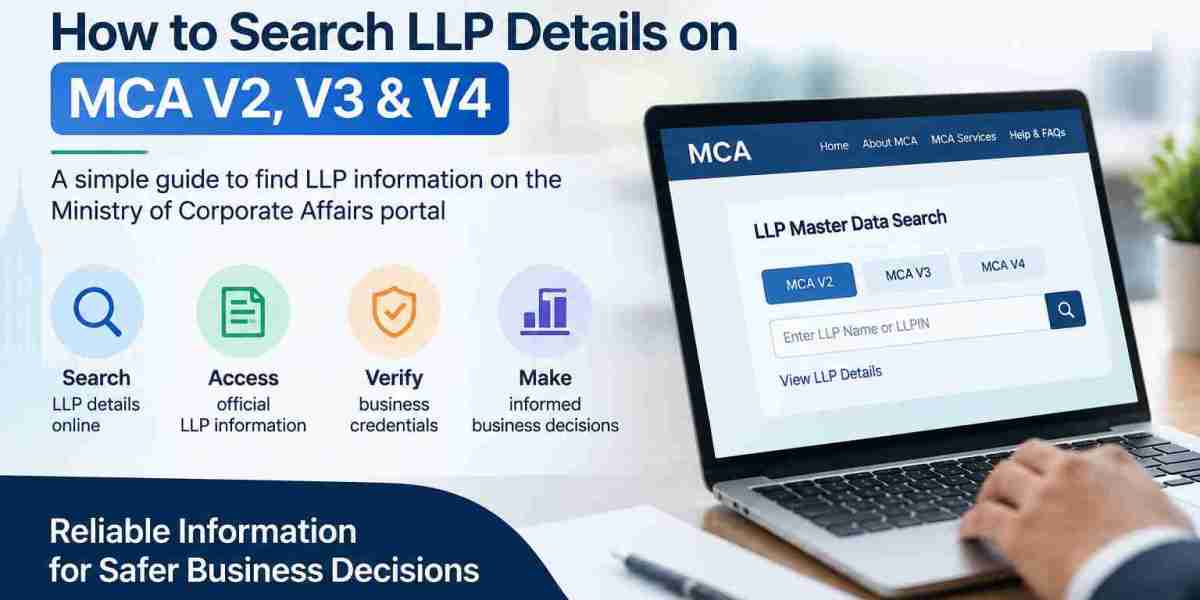
Before entering into a business relationship, investing in a company, extending credit, or signing an important agreement, it is essential to know who you are dealing with. Basic information provided on a company website or business profile may not always be enough to make an informed decision. This is where MCA Company Master Data can be valuable.
The Ministry of Corporate Affairs (MCA) maintains corporate information relating to companies registered in India. Company master data provides access to important registration and corporate details that can help businesses, professionals, investors, and other stakeholders conduct preliminary company verification.
Understanding how to use this information can help improve transparency, strengthen due diligence, and reduce potential business risks.
What Is MCA Company Master Data?
MCA Company Master Data refers to key corporate information available through the records maintained by the Ministry of Corporate Affairs. It provides essential details about companies registered under the applicable corporate laws in India.
Rather than relying entirely on information supplied by a business itself, users can refer to MCA records to cross-check important company details.
Depending on the entity and information available, company master data may include details such as the company's Corporate Identification Number (CIN), company name, registration information, registered office details, company status, category, sub-category, class of company, authorized capital, paid-up capital, and other corporate particulars.
These details can provide a useful starting point when evaluating the legal identity and registration status of a company.
Why Is MCA Company Master Data Important?
Business decisions often involve financial and operational risks. Whether a company is selecting a new supplier, evaluating a customer, considering an investment, or extending credit, having reliable information can make the decision-making process more informed.
MCA Company Master Data helps users verify whether the corporate information presented by a business is consistent with official records. For example, if a prospective business partner provides a company name and CIN, those details can be checked against MCA information.
This additional layer of verification can be especially useful when dealing with an unfamiliar company or entering into a significant commercial transaction.
However, company master data should generally be viewed as one component of broader due diligence. Registration information alone does not establish a company's financial strength, operational performance, or creditworthiness.
Key Information Available in MCA Company Master Data
One of the main advantages of MCA records is that several important pieces of corporate information can be reviewed in one place.
The Corporate Identification Number (CIN) is particularly important because it serves as a unique identification number for a company. It can help distinguish between businesses with similar names and make company verification more precise.
The registered company name is another essential detail. Comparing the official name with invoices, contracts, quotations, and other business documents can help identify inconsistencies.
Company status is also useful because it provides information regarding the company's recorded status in MCA records. Users should understand the meaning of the particular status displayed before drawing conclusions from it.
Other details, including registered office information and capital-related data, can provide additional context about the company.
How to Check MCA Company Master Data
Company information can be searched through the official MCA portal using the available company or LLP information services.
Users generally need identifying information such as the company name or CIN to locate the correct entity. Once the appropriate company is identified, available master data can be reviewed and compared with the information provided by the business.
When conducting a search, it is important to ensure that the correct entity has been selected. Businesses can sometimes have similar or nearly identical names, so relying only on the name may lead to confusion. Checking identifiers such as the CIN can provide greater accuracy.
It is also advisable to note the date on which the information is accessed, particularly when the data is being used for due diligence or internal business documentation.
MCA Company Master Data for Business Verification
Business verification is one of the most practical applications of MCA data.
Suppose your company is considering working with a new supplier that claims to have been operating for several years. Reviewing its MCA details can help verify its registered identity and other available corporate information.
Similarly, before extending significant credit to a corporate customer, a business may use MCA records as part of its initial verification process. The information can then be supplemented with financial documents, credit reports, references, litigation checks, and other relevant due diligence.
This approach can help organizations establish stronger onboarding procedures and avoid relying solely on information supplied by prospective customers or vendors.
Role of MCA Data in Corporate Due Diligence
Corporate due diligence involves collecting and assessing relevant information before making an important business decision. MCA Company Master Data can contribute to this process by providing an official reference point for corporate registration details.
Legal professionals may use MCA information while reviewing companies involved in transactions. Financial institutions and credit teams may refer to corporate records during onboarding and risk assessment. Suppliers may check potential customers before offering substantial credit terms, while investors may use the information as part of a broader company review.
MCA data can therefore support multiple stages of business verification, although the depth of due diligence required will depend on the nature and value of the transaction.
How MCA Company Master Data Can Help Reduce Business Risk
Reliable information does not eliminate business risk, but it can help organizations identify potential concerns earlier.
For example, inconsistencies between a company's official details and the information appearing on its commercial documents may warrant further investigation. Similarly, unexpected information about the company's recorded status could indicate that additional checks are necessary before proceeding with a transaction.
Using MCA information as part of a structured verification process can help businesses make more informed decisions regarding credit limits, supplier onboarding, partnerships, contracts, and investments.
For companies managing numerous customers or vendors, incorporating corporate verification into standard onboarding procedures can also create a more consistent approach to risk management.
MCA Data and Credit Risk Assessment
Credit decisions require more than simply confirming that a company exists. Nevertheless, MCA Company Master Data can serve as an important first step in the credit assessment process.
A credit team can use company data to verify basic corporate details before moving on to financial analysis. Additional checks may include financial statements, payment history, credit reports, banking information, outstanding liabilities, and industry-specific risks.
Combining corporate verification with financial and commercial information provides a more complete picture than relying on any single source.
This can be particularly useful for businesses that regularly offer payment terms to customers and need to manage the risk of delayed payments or bad debts.
Limitations of MCA Company Master Data
Although MCA records are useful, they should not be treated as a complete assessment of a company.
Company master data primarily provides corporate and registration-related information. It does not necessarily tell you whether a business is profitable, financially stable, trustworthy, or capable of meeting future payment obligations.
Information may also depend on filings made by companies and updates recorded in the relevant systems. Therefore, important decisions should not be based solely on a single data point or database.
For higher-value transactions, businesses should consider combining MCA information with financial due diligence, credit assessment, legal checks, document verification, and professional advice where appropriate.
Conclusion
MCA Company Master Data is a valuable resource for businesses and professionals seeking reliable corporate information about companies registered in India. From checking a company's registered identity and CIN to reviewing its status, office information, and other available corporate particulars, MCA data can support more informed business verification.
Its real value becomes even greater when it is incorporated into a broader due diligence process. Combining official corporate records with financial, legal, credit, and commercial checks can help businesses better understand prospective customers, suppliers, partners, and investment opportunities.
In an environment where reliable information plays an important role in managing commercial risk, using MCA Company Master Data as part of a structured verification process can contribute to better decision-making, stronger business relationships, and more effective risk management.