


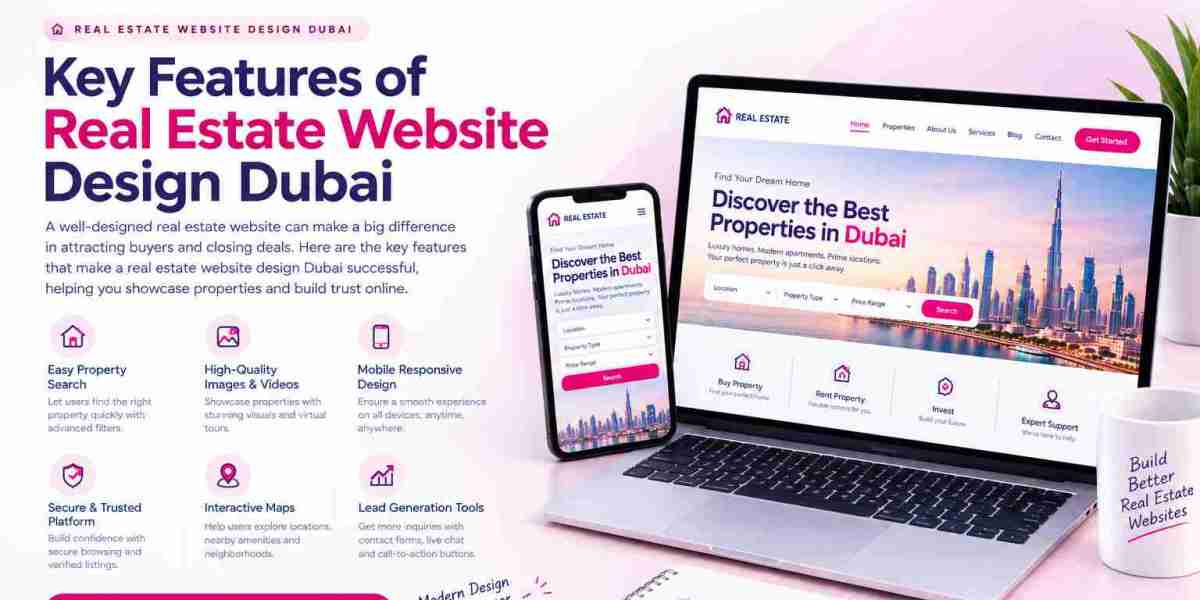
Dubai's property market is one of the most dynamic and international in the world. Buyers, investors, and renters from dozens of countries browse listings online long before they speak to an agent, so a real estate website is often the first and most important point of contact. A well-designed site builds trust, showcases properties beautifully, and turns visitors into qualified leads.
This article covers the key features that set high-performing Dubai real estate websites apart.
Why Dubai Real Estate Websites Need Specialized Design
A Global Audience
Dubai attracts local residents, expatriates, and overseas investors. Your website must serve people with different languages, currencies, expectations, and levels of market knowledge.
A Highly Competitive Market
Agencies, developers, and brokerages compete fiercely for attention. A generic template rarely stands out. Distinctive branding, fast performance, and a smooth user experience give you a real edge.
Luxury Expectations
Dubai is synonymous with premium living. Visitors expect a website that reflects the quality of the properties it lists, with polished visuals, refined typography, and effortless navigation.
Essential Features of a Dubai Real Estate Website
1. Advanced Property Search and Filters
Search is the heart of any property website. Visitors should be able to narrow results quickly by:
- Location, community, or building name (Downtown Dubai, Dubai Marina, Palm Jumeirah, Dubai Hills Estate, and so on)
- Property type (apartment, villa, townhouse, penthouse, commercial)
- Price range, bedrooms, bathrooms, and size
- Status (ready, off-plan, rent, or buy)
- Amenities such as sea view, private pool, or maid's room
Features like auto-suggest, saved searches, and instant results help users find the right property with minimal effort.
2. High-Quality Photography, Video, and Virtual Tours
Visuals sell property. Professional photography, drone footage, 3D walkthroughs, and 360-degree virtual tours let international buyers explore a home without visiting in person. Fast-loading galleries, full-screen image viewers, and embedded video keep visitors engaged without slowing the page.
3. Mobile-First Responsive Design
A large share of property searches happen on smartphones. Your site should adapt seamlessly to every screen size, with thumb-friendly buttons, readable text, simplified menus, and click-to-call options. A mobile-first approach also supports better search engine rankings.
4. Multilingual and Multi-Currency Support
Dubai's buyer base includes English, Arabic, Russian, Chinese, Hindi, and French speakers, among others. Offering multiple languages, including full right-to-left (RTL) support for Arabic, makes visitors feel welcome. A currency switcher (AED, USD, EUR, GBP, and more) lets international investors judge prices in familiar terms.
5. Off-Plan and Developer Project Pages
Off-plan properties are a major part of Dubai's market. Dedicated project pages should include:
- Developer information and project overview
- Floor plans, unit types, and pricing
- Payment plans and handover dates
- Construction progress updates
- Brochure downloads and registration forms
Clear, structured presentation helps investors compare projects with confidence.
6. Interactive Maps and Neighborhood Guides
Location drives property decisions. Integrated maps showing nearby schools, hospitals, metro stations, beaches, malls, and business districts add valuable context. Short community guides covering lifestyle, amenities, and typical prices help visitors understand each area and keep them on your site longer.
7. Investment Tools and Calculators
Many Dubai buyers are investors. Useful tools include:
- Mortgage calculators
- Rental yield and ROI calculators
- Service charge and fee estimators
- Property comparison features
These tools position your brand as a knowledgeable advisor rather than just a listing portal.
8. Lead Capture and Instant Communication
Every page should make it easy to get in touch. Effective options include:
- WhatsApp chat buttons, which are especially popular in the UAE
- Click-to-call and callback request forms
- Property enquiry forms with minimal fields
- Live chat or AI chatbot support
- Viewing appointment schedulers
Fast response paths reduce lead drop-off and improve conversion rates.
9. Fast Loading Speed and Performance
Slow websites lose visitors, especially when image-heavy. Optimize performance with compressed images, modern formats such as WebP, lazy loading, caching, a content delivery network (CDN), and clean code. Speed improves both user experience and SEO.
10. Strong SEO Foundations
Dubai property searches are highly competitive, so SEO should be built into the design. Key elements include:
- Clean URLs and logical site structure
- Dedicated pages for communities, property types, and developers
- Optimized meta titles and descriptions
- Schema markup for listings
- Blog and market insight content
- Local SEO through Google Business Profile integration
11. Trust Signals and Regulatory Compliance
Trust is crucial in real estate. Display agency credentials, RERA registration details, and agent profiles with photos and experience. Listings should include the required permit numbers, such as the Trakheesi permit, in line with Dubai Land Department and RERA advertising regulations. Client testimonials, awards, and transparent contact information further strengthen credibility.
12. Secure and Reliable Infrastructure
Visitors share personal details through forms, so security matters. Use SSL encryption, secure hosting, regular backups, spam protection, and privacy policies that align with applicable data protection requirements.
13. CRM and Third-Party Integrations
A modern real estate website should connect with your tools, such as a CRM, email marketing platform, listing portal feeds, analytics, and advertising pixels. Automation ensures leads reach the right agent quickly and nothing falls through the cracks.
Design and User Experience Considerations
Luxury-Inspired Visual Identity
Choose a refined color palette, elegant typography, generous white space, and large hero imagery. Consistent branding across the site creates a premium, memorable impression.
Intuitive Navigation
Keep menus simple and logical. Visitors should reach key sections, such as Buy, Rent, Off-Plan, Communities, and Contact, within one or two clicks. Sticky headers and clear calls to action guide users naturally toward enquiry.
Accessibility
Good contrast, readable fonts, alt text for images, and keyboard-friendly navigation make your site usable for everyone and improve overall quality.
Future-Ready Features Worth Considering
Forward-thinking agencies in Dubai are adopting:
- AI-powered property recommendations
- Virtual and augmented reality showings
- Personalized user dashboards with saved favorites
- Progressive web app (PWA) functionality
- Digital documentation and e-signature workflows
These features can set your brand apart as the market becomes more technology-driven.
Conclusion
A successful real estate website in Dubai combines beautiful design with practical functionality. Advanced search, rich visuals, multilingual support, investment tools, fast communication channels, strong SEO, and clear trust signals work together to attract and convert a diverse, international audience.
By investing in these features, real estate businesses can strengthen their brand, generate higher-quality leads, and compete effectively in one of the world's most exciting property markets.



