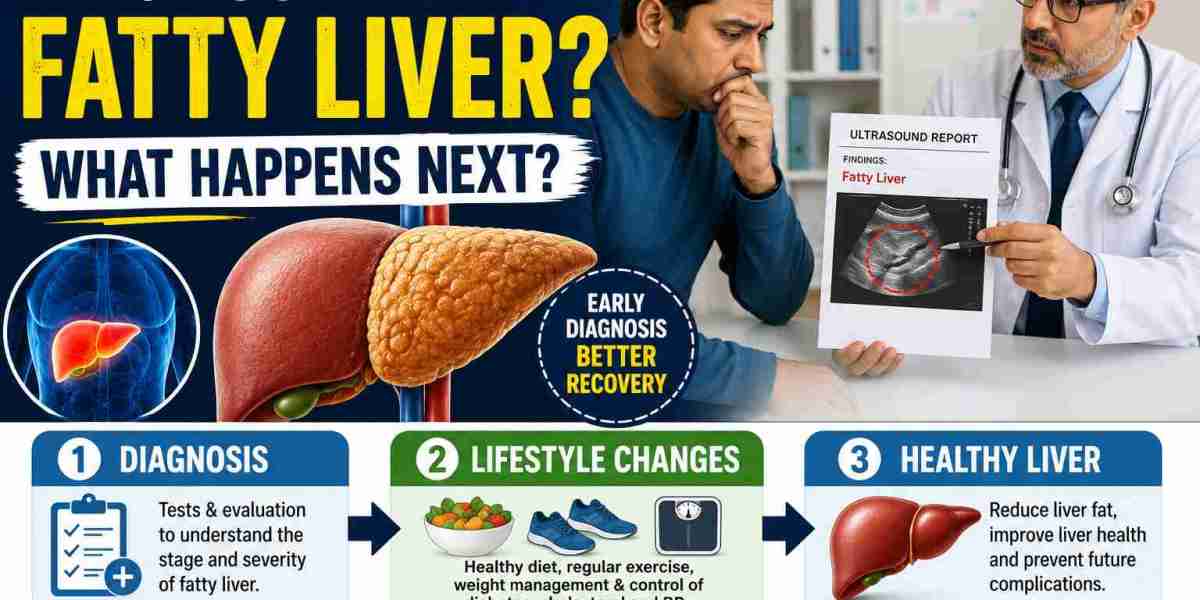
Hearing the words "nonalcoholic fatty liver" after a routine health check can be unsettling. Many patients feel confused because they often have no symptoms at all. Others immediately worry about liver failure, cirrhosis, or lifelong medication. The reality is usually much less alarming.
A diagnosis of nonalcoholic fatty liver disease means excess fat has accumulated inside the liver cells. In many cases, this condition develops gradually over several years and is often discovered accidentally during an ultrasound scan or blood test.
The good news is that early-stage nonalcoholic fatty liver disease is often manageable and, in many patients, reversible. Understanding what happens after diagnosis can help patients focus on the right steps rather than unnecessary fear.
What Does a Non-Alcoholic Fatty Liver Diagnosis Actually Mean?
The liver naturally contains a small amount of fat. Problems arise when fat makes up more than normal levels within liver tissue.
Non-alcoholic fatty liver disease develops in people who drink little or no alcohol and is commonly linked to obesity, diabetes, insulin resistance, high cholesterol, and metabolic syndrome.
A fatty liver diagnosis does not automatically mean permanent liver damage.
Many patients are diagnosed during the earliest stage when inflammation and scarring have not yet developed.
According to research published in The Lancet Gastroenterology & Hepatology , approximately 25% of adults worldwide are affected by fatty liver disease.
Why Do Doctors Order More Tests?
Most patients are surprised when additional testing is recommended after diagnosis.
The reason is simple.
Doctors need to determine:
How much fat is present in the liver
Whether inflammation exists
If any liver scarring has developed
What underlying health conditions may be contributing
Common investigations may include:
Blood tests
Liver function tests
Ultrasound imaging
FibroScan (liver stiffness assessment)
Additional metabolic health evaluations
The goal is not just to confirm fatty liver but to understand its stage and severity.
Is Medication Usually Required?
Many patients expect a prescription immediately after diagnosis.
In reality, medication is not always the first step.
For most individuals with early-stage non-alcoholic fatty liver disease, doctors focus on treating the underlying causes rather than the liver itself.
This may involve:
Managing blood sugar levels
Improving cholesterol levels
Supporting weight loss
Controlling blood pressure
Addressing insulin resistance
According to the American Association for the Study of Liver Diseases (AASLD), lifestyle modification remains the cornerstone of treatment for most patients with fatty liver disease.
Why Weight Loss Becomes So Important?
One of the first discussions after diagnosis often centers around body weight.
That is because excess fat stored around the abdomen is strongly linked to fat accumulation inside the liver.
Research published in Hepatology has shown that losing 7% to 10% of body weight can significantly improve liver fat and inflammation in many patients.
Even modest weight reduction can produce measurable improvements in liver health**.**
This surprises many people who assume dramatic weight loss is necessary.
What Dietary Changes Are Commonly Recommended?
After diagnosis, patients often ask what foods should be avoided first.
Doctors frequently recommend reducing:
Sugary beverages
Processed foods
Refined carbohydrates
Excessive fast food consumption
Foods high in saturated fats
At the same time, greater emphasis is placed on:
Vegetables
Fruits
Whole grains
Lean protein sources
Healthy fats such as nuts and olive oil
Small sustainable changes generally produce better long-term results than extreme diets.
Can Exercise Really Make a Difference?
Exercise plays a larger role than many patients realize.
Physical activity helps reduce liver fat even before significant weight loss occurs.
Walking, cycling, swimming, and resistance training can all contribute to improved metabolic health.
According to the World Health Organization, adults should aim for at least 150 minutes of moderate-intensity physical activity each week.
Regular movement helps the liver process fat more efficiently and improves insulin sensitivity.
What Happens If Fatty Liver Is it ignored?
Most patients diagnosed early do very well.
Problems arise when the condition remains untreated for years.
Some individuals may progress from simple fatty liver to non alcoholic steatohepatitis (NASH), a more advanced form involving inflammation and liver injury.
Over time, this can increase the risk of:
Liver fibrosis (scarring)
Cirrhosis
Liver-related complications
This progression does not happen in every patient. However, it explains why regular monitoring remains important.
How Often Will Follow-Up Be Needed?
The frequency of follow-up depends on individual risk factors and liver health.
Many patients undergo periodic:
Blood tests
Weight assessments
Liver imaging
Diabetes monitoring
Cholesterol evaluations
Doctors use these reviews to monitor improvement and identify any signs of disease progression.
Most patients feel reassured when follow-up testing shows liver health improving over time.
What Do Doctors Commonly See After Diagnosis?
Many patients arrive feeling anxious after reading alarming information online.
Clinical experience shows that most individuals diagnosed in the early stages can achieve significant improvement through lifestyle changes and management of associated health conditions.
Patients frequently report increased energy levels, improved blood sugar control, and better overall health after implementing recommended changes.
The diagnosis often becomes an opportunity to improve long-term wellness rather than a sign of inevitable liver disease.
Conclusion
A diagnosis of non alcoholic fatty liver disease can feel overwhelming at first, particularly when it appears unexpectedly during routine testing. Fortunately, most patients are diagnosed long before serious liver damage occurs. The condition is often manageable, and many people successfully reduce liver fat through lifestyle changes and proper medical follow-up.
The most important step after diagnosis is not panic. It is action. Early evaluation, healthy daily habits, weight management, and ongoing monitoring give the liver the best chance to recover. For many patients, the diagnosis serves as an early warning sign that creates an opportunity to improve overall health before more serious complications develop.
Patients seeking reliable guidance, advanced diagnostics, and personalized treatment support can explore comprehensive healthcare and minimally invasive treatment services to better understand their options and take proactive steps toward long-term liver health.
FAQs
Can non alcoholic fatty liver disease be cured?
Early-stage fatty liver disease can often improve significantly and may become reversible when contributing factors such as obesity, insulin resistance, and unhealthy lifestyle habits are addressed.
How serious is non-alcoholic fatty liver disease?
Many cases remain mild. However, untreated disease can progress to inflammation, scarring, and advanced liver damage in some individuals.
Will I need medication after diagnosis?
Not necessarily. Many patients are initially managed through lifestyle changes, weight loss, and treatment of related conditions such as diabetes or high cholesterol.
How long does it take to improve fatty liver?
Improvement varies between individuals. Some patients show measurable changes within several months after making consistent lifestyle modifications.
Can a person live a normal life with non-alcoholic fatty liver disease?
Yes. Most patients continue to live normal lives, especially when the condition is identified early and managed appropriately.
Medical Disclaimer: This article is written for general informational purposes only and does not constitute medical advice. Always consult a qualified medical professional for diagnosis and treatment specific to your condition.