


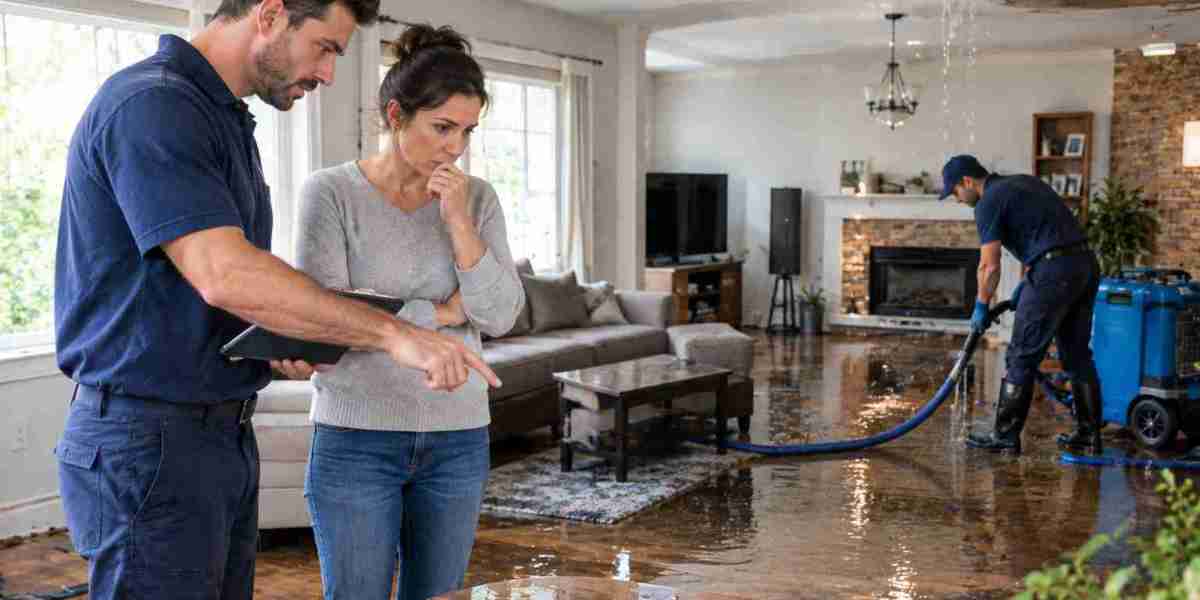
Immediately after water damage, shut off the source, cut power if water reached any outlets, remove standing water, photograph everything before cleanup, start drying with fans and a dehumidifier, and contact your insurance provider along with a professional water damage restoration company if the damage goes beyond what you can handle alone. Getting this sequence right in the first few hours makes a real difference in both the final repair cost and whether mold becomes part of the story later.
The Short Answer Before the Full Breakdown
1. The First Priority Isn't Cleanup, It's Safety
It's natural to want to grab a mop the second you spot water, but safety has to come first. Water near electrical outlets, a sagging ceiling, or contaminated water from a sewer backup all present risks that matter more than how fast the floor gets dry.
2. Why the Next Few Hours Matter So Much
Materials start absorbing water the moment they're exposed, and that absorption compounds the longer it goes unaddressed. What happens in the first few hours after water damage often determines whether you're looking at a simple drying job or a full replacement of flooring, drywall, and padding.
Step One: Stop the Water and Secure the Area
1. Shutting Off the Source
If a pipe burst or an appliance failed, shut off the main water valve immediately. This single step does more to limit damage than almost anything else you can do in the first few minutes.
2. Cutting Power if Needed
If water has reached any outlets, cords, or nearby appliances, cut power to that area at the breaker before doing anything else. This takes priority over cleanup since water and electricity together are genuinely dangerous.
Avoiding Contaminated Water
Not all water is the same. Water from a clean supply line is very different from water involved in a sewer backup or storm flooding, which can carry contaminants. Avoid wading through unknown water sources until you're sure what you're dealing with.
Step Two: Remove Water and Document Everything
1. Getting Standing Water Out Quickly
Once it's safe, start removing standing water using a wet vac, buckets, or towels depending on the volume. For larger amounts, getting help from water damage restoration services sooner rather than later means industrial extraction equipment arrives faster than continued DIY effort could manage.
2. Photographing the Damage Before Cleanup
Take photos and video of everything before moving or discarding a single item. This documentation becomes essential for insurance purposes, and once things are cleaned up or thrown away, that proof is gone for good.
3. Moving Belongings to a Dry Area
Move furniture, electronics, and valuables out of the wet area as soon as it's safe to do so. Items sitting in standing water absorb damage quickly, so relocating them limits how much actually needs replacing later.
Step Three: Start Drying and Assess the Scope
1. Setting Up Fans and a Dehumidifier
Position fans to blow air across wet surfaces rather than into open space, and run a dehumidifier continuously to pull moisture out of the air. This combination dries materials far faster than relying on natural airflow alone.
2. Removing Materials That Won't Dry Properly
Carpet padding, soaked drywall, and saturated insulation rarely dry out completely once fully absorbed, and leaving them in place just invites mold. Pulling these out early, even if it feels drastic, usually prevents a bigger problem down the line.
3. Recognizing When the Damage Is Bigger Than It Looks
If water has spread into more rooms than expected, or clearly seeped into wall cavities, that's the point where DIY effort starts hitting real limits. Catching this early saves time compared to continuing to work on something that's already outgrown a household fix.
Step Four: Contact Insurance and Professional Help
1. Reporting the Claim Promptly
Contact your insurance provider as soon as possible, referencing the photos and documentation already gathered. Prompt reporting matters for most policies and tends to make the rest of the claims process go more smoothly.
2. Knowing When to Call for Water Damage Restoration
If standing water covered a significant area, sat for several hours, or reached drywall and subflooring, it's time to bring in equipment beyond what most households have access to. Gateway Water and Mold provides water damage restoration that uses moisture mapping to determine exactly what needs drying versus replacement, protecting you from both underestimating the damage and paying for unnecessary demolition. Choosing professional water damage restoration services within the first day, rather than waiting to see how things look, gives your home the best possible chance at a full recovery without mold setting in behind the scenes.
Conclusion
What you do in the hours right after water damage genuinely shapes how the rest of the story plays out. Address safety first, stop the source, remove standing water, document everything before cleanup, start drying properly, and know the moment a situation has grown beyond what you can manage alone. Following this order, even while stressed, is what keeps a manageable situation from turning into something far more expensive than it ever needed to be.
Frequently Asked Questions
- What's the very first thing to do when water damage happens?
Address safety first, shutting off the water source and cutting power to any affected area before anything else, especially if water has reached electrical outlets. - How soon should photos be taken after discovering water damage?
Before any cleanup begins. Document the damage thoroughly, since insurance typically requires proof of the original condition before anything is moved or discarded. - Should I try drying everything myself before calling for help?
For small, contained spills, yes. For anything involving standing water or materials soaked for several hours, professional water damage restoration services are usually necessary. - How do I know if my situation needs professional water damage restoration?
If water covered a large area, sat for several hours, or reached drywall and subflooring, professional testing and equipment are typically needed to fully address the damage. - Is it still worth calling a water damage restoration provider if I've already dried most of the area myself?
Yes. Hidden moisture often remains in subflooring or wall cavities even when the surface feels dry, and professional testing can confirm whether the area is actually fully dried out.



