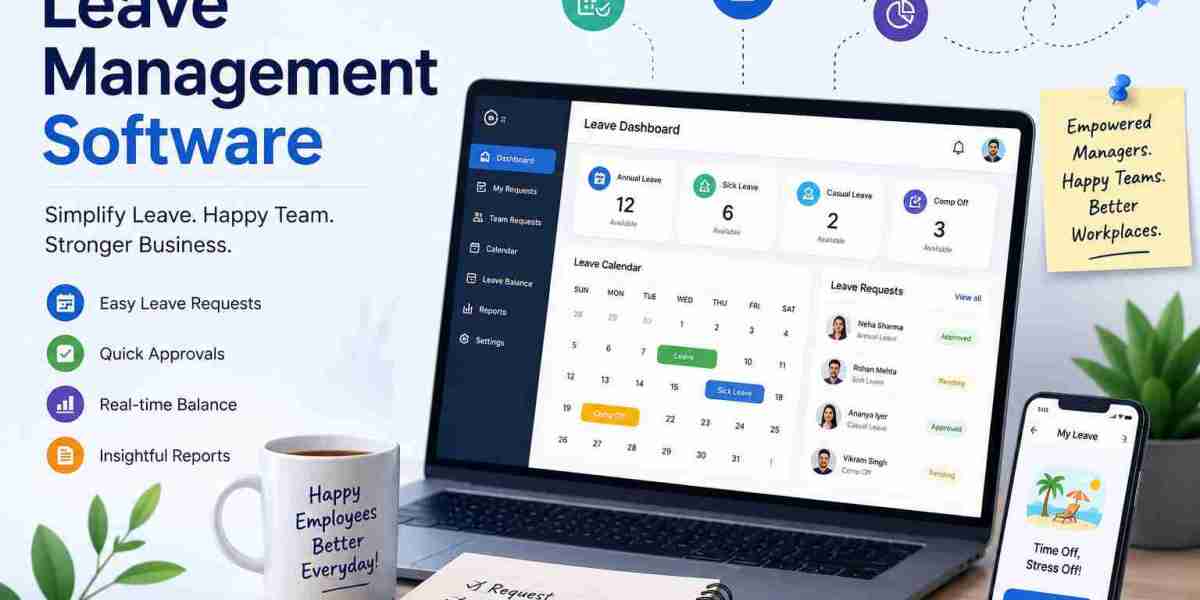
Managing employee leave may seem simple, but as organizations grow, tracking different leave types, approval workflows, carry-forward rules, and compliance requirements becomes increasingly complex. Relying on spreadsheets, emails, or manual records often leads to errors, confusion, and unnecessary administrative work.
This is where leave management software becomes essential. A well-designed leave management system automates the entire leave process, making it easier for employees, managers, and HR teams to stay organized and productive.
In this article, we will explore the key features, benefits, and reasons why businesses are rapidly adopting automated leave management solutions.
What Is Leave Management Software?
Leave management software is a digital system that helps organizations manage employee leaves efficiently. It enables employees to apply for leave online, allows managers to approve or reject requests, and automatically updates leave balances in real time.
Instead of maintaining manual records, companies can centralize the entire leave process on a single platform, reducing errors and improving transparency.
Modern leave management solutions also integrate with attendance and payroll systems, ensuring accurate salary calculations and compliance with company policies.
Why Manual Leave Management Creates Challenges
Many businesses still rely on spreadsheets and emails to track employee leave. While this approach may work for small teams, it becomes difficult as organizations expand.
Common challenges include:
- Errors in leave calculations.
- Delays in approvals.
- Lack of visibility into team availability.
- Difficulty managing multiple leave policies.
- Payroll discrepancies due to inaccurate leave records.
- Increased administrative workload for HR teams.
- Compliance risks arising from incorrect leave tracking.
These issues can negatively impact productivity and employee satisfaction.
Key Features of Leave Management Software
1. Employee Self-Service Portal
Employees can:
- Apply for leave online.
- View available leave balances.
- Check approval status.
- Access leave history anytime.
Self-service functionality reduces dependency on HR and offers a better employee experience.
2. Multiple Leave Types
Organizations often offer various leave categories such as:
- Casual Leave
- Sick Leave
- Earned Leave
- Maternity Leave
- Paternity Leave
- Compensatory Off
- Work-from-Home Requests
- Unpaid Leave
Leave management software allows businesses to configure these leave types according to their policies.
3. Automated Approval Workflows
Managers receive notifications whenever employees submit leave requests. Approvals can be customized across multiple levels based on departments or hierarchy.
Automated workflows help eliminate delays and ensure faster decision-making.
4. Customizable Leave Policies
Every organization has unique requirements. Modern leave management systems support:
- Monthly or yearly accruals.
- Pro-rata leave calculations.
- Carry-forward policies.
- Leave encashment rules.
- Sandwich leave policies.
- Leave eligibility criteria.
This flexibility helps organizations adapt the system to their business needs.
5. Real-Time Leave Balance Tracking
Employees and managers can instantly view:
- Available leave balance.
- Approved leaves.
- Pending requests.
- Leave history.
Real-time visibility promotes transparency and minimizes disputes.
6. Mobile Accessibility
Remote and hybrid work environments demand flexibility.
Mobile-enabled leave management software allows employees to:
- Apply for leave from anywhere.
- Receive notifications instantly.
- Track approvals on the go.
- Check leave balances through mobile apps.
Managers can approve requests without logging into a desktop system.
7. Notifications and Alerts
Automated alerts ensure that everyone stays informed.
Notifications can be sent for:
- Leave requests.
- Approval or rejection status.
- Balance updates.
- Carry-forward reminders.
- Upcoming holidays.
These reminders improve communication and reduce missed approvals.
8. Leave Encashment Management
Many organizations provide leave encashment facilities. A leave management system simplifies:
- Year-end encashment.
- Full and final settlement calculations.
- Customized encashment policies.
- Maximum encashment limits.
Automation reduces calculation errors and saves time.
9. Reporting and Analytics
Advanced reporting capabilities help HR teams monitor:
- Department-wise leave trends.
- Monthly leave statistics.
- Employee absenteeism.
- Leave registers.
- Balance summaries.
Analytics provide insights that support workforce planning and resource allocation.
Benefits of Using Leave Management Software
1. Improved Accuracy
Manual calculations are prone to errors. Automated systems calculate leave balances accurately, reducing payroll discrepancies and administrative mistakes.
2. Saves HR Time
HR professionals spend considerable time handling leave-related queries and approvals. Automation eliminates repetitive tasks, allowing HR teams to focus on strategic initiatives.
3. Better Employee Experience
Employees appreciate transparency and convenience. Easy access to leave balances and quick approvals improve overall employee satisfaction.
4. Enhanced Productivity
Managers gain visibility into team availability, making it easier to allocate work and avoid disruptions caused by unexpected absences.
5. Reduced Paperwork
Digital records replace spreadsheets and paper forms, creating a more organized and environmentally friendly workplace.
6. Improved Compliance
Organizations must follow labor laws and maintain accurate leave records. Automated systems ensure policy adherence and simplify audits.
7. Faster Payroll Processing
Integration with attendance and payroll systems ensures accurate salary calculations and reduces manual intervention.
8. Scalability
Whether a company has 50 employees or 10,000, leave management software can easily accommodate growing workforce requirements.
How Leave Management Software Supports Hybrid Workforces
The rise of remote and hybrid work models has transformed workforce management.
Employees today work from different locations and often require flexible leave arrangements. A cloud-based leave management system enables organizations to:
- Manage remote teams effectively.
- Approve requests from any location.
- Maintain centralized records.
- Ensure seamless collaboration between departments.
- Support work-from-home requests and flexible schedules.
This flexibility helps businesses adapt to modern workplace expectations.
Integration with HR and Payroll Systems
Leave management works best when connected with other HR functions.
Integration with payroll and attendance systems provides several advantages:
- Accurate salary calculations.
- Automatic leave deductions.
- Better attendance tracking.
- Streamlined full and final settlements.
- Centralized employee records.
An integrated HR ecosystem reduces manual work and improves operational efficiency.
How to Choose the Right Leave Management Software
Now let's move forward on how to choose the right solution for your orgnanization:
1. Ease of Use
The software should offer an intuitive interface that makes it easy for employees, managers, and HR teams to apply, approve, and track leaves without extensive training.
2. Customization Options
Choose a solution that allows you to configure leave types, accrual rules, approval workflows, and policies according to your organization's specific requirements.
3. Mobile Accessibility
A mobile-friendly platform enables employees and managers to submit, approve, and monitor leave requests anytime and from any location conveniently.
4. Integration Capabilities
The leave management software should integrate seamlessly with payroll, attendance, and HR systems to ensure accurate records and streamlined processes.
5. Reporting Features
Comprehensive reporting and analytics help HR teams monitor leave trends, absenteeism patterns, and workforce availability for better planning and decision-making.
6. Scalability
Select software that can accommodate your organization's future growth and evolving workforce requirements without requiring frequent system upgrades or changes.
7. Security
Strong security features and role-based access controls help protect sensitive employee data while ensuring compliance with organizational policies and regulations.
Conclusion
Managing employee leave manually can create unnecessary complexity, especially as organizations grow. Leave management software simplifies the process through automation, transparency, and real-time visibility.
From customizable policies and automated approvals to mobile access and payroll integration, modern leave management systems empower HR teams to work more efficiently while providing employees with a better experience.
As businesses continue embracing digital transformation and hybrid work environments, investing in a reliable leave management solution is no longer a luxury; it is a necessity for maintaining productivity, compliance, and employee satisfaction.