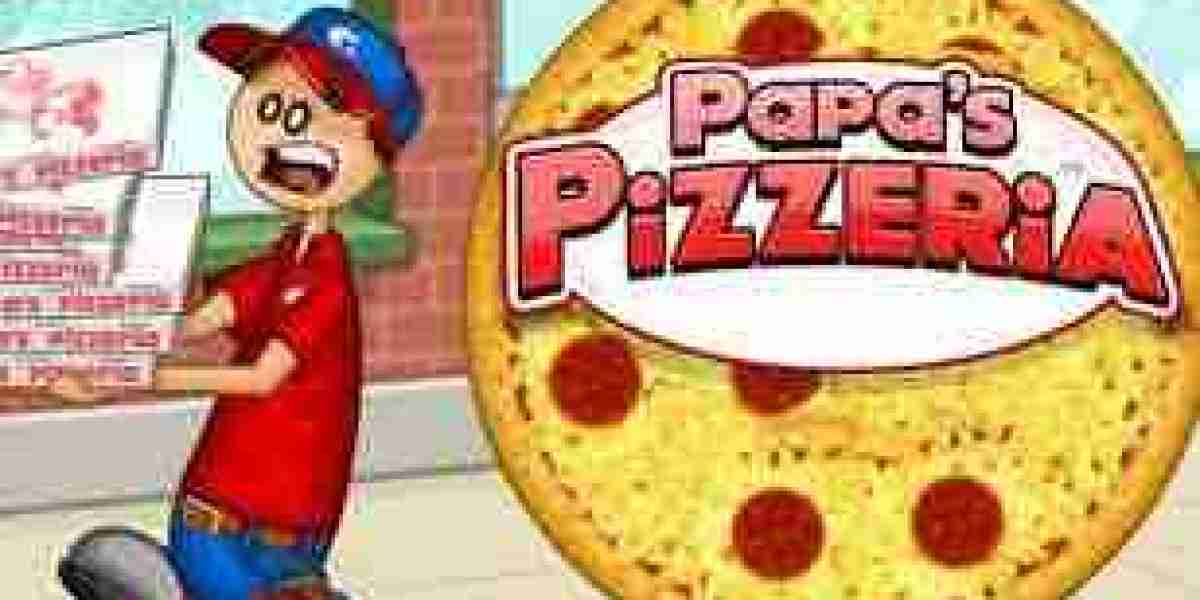
The era of browser games produced thousands of titles.
Some were entertaining for a weekend. Others disappeared from memory almost as quickly as they appeared. Players jumped from one game to another, rarely staying with a single experience for very long.
Yet a handful of games managed to leave a lasting impression.
Papa's Pizzeria is one of them.
What's remarkable is that it achieved this without relying on cutting-edge graphics, massive content updates, or complicated progression systems. It was a simple restaurant-management game that asked players to take orders, prepare pizzas, monitor baking times, and keep customers satisfied.
That premise doesn't sound particularly extraordinary.
And yet, years later, people still remember it.
I think the reason comes down to how effectively the game balanced challenge, routine, and satisfaction.
It Was Easy to Understand
One advantage Papa's Pizzeria had from the beginning was accessibility.
Players didn't need to read lengthy tutorials.
The basic idea made sense immediately.
A customer arrives.
They order a pizza.
You make the pizza.
You serve the customer.
The simplicity of the premise allowed players to start having fun almost instantly.
Many games create barriers between the player and the enjoyable part of the experience.
Papa's Pizzeria removed most of those barriers.
Within minutes, players understood what they needed to do.
The challenge came later.
The Difficulty Grew Naturally
One of the smartest aspects of the game is how gradually it increases pressure.
Early shifts feel calm.
Customers arrive at a manageable pace.
Orders are relatively easy to handle.
Players have time to learn.
Then the restaurant becomes busier.
More customers appear.
More pizzas require attention.
Waiting times become increasingly important.
The game never suddenly becomes difficult.
Instead, it slowly asks players to manage more responsibilities at once.
This gradual escalation keeps the experience engaging because players always feel capable of improvement.
Challenges feel earned rather than forced.
Every Station Has a Purpose
The gameplay loop revolves around several simple stations.
There's the order station where customer requests are recorded.
The topping station where pizzas take shape.
The baking station where timing becomes critical.
The cutting station where final presentation matters.
Individually, none of these activities are especially complicated.
Together, they create a satisfying workflow.
Every station contributes to the final result.
Every mistake affects customer satisfaction.
Every success feels connected to player effort.
That structure helps even routine tasks feel meaningful.
The Game Rewards Attention
One thing I appreciate more now than when I first played is how strongly the game rewards focus.
Many casual games allow players to succeed with minimal concentration.
Papa's Pizzeria requires something more.
Not intense concentration.
Just consistent attention.
You need to remember what's baking.
You need to monitor waiting customers.
You need to prepare orders accurately.
The game constantly asks players to stay engaged with what they're doing.
As a result, successful shifts feel satisfying because they reflect genuine effort.
Customer Satisfaction Creates Emotional Stakes
At its core, Papa's Pizzeria is built around a simple idea: customers have expectations.
Everything revolves around meeting those expectations.
A correctly prepared pizza earns approval.
A delayed order earns frustration.
A perfectly managed shift produces excellent ratings.
These outcomes may seem minor, but they create emotional investment.
Players begin caring about results.
They want customers to leave happy.
They want strong scores.
They want proof that their work was effective.
The game transforms ordinary restaurant tasks into meaningful objectives through feedback alone.
The Routine Becomes Comforting
Many people assume repetition automatically leads to boredom.
Papa's Pizzeria proves that's not always true.
The gameplay loop remains largely unchanged throughout the experience.
Orders arrive.
Pizzas are prepared.
Customers are served.
The cycle repeats.
Yet the repetition becomes comforting rather than tedious.
Players learn the rhythm of the restaurant.
They become familiar with the systems.
They develop routines that help everything run smoothly.
That familiarity creates a sense of comfort that encourages players to keep playing.
The Best Moments Are Often Unplanned
Some of my strongest memories of Papa's Pizzeria involve situations the game never explicitly scripted.
A lunch rush that nearly became overwhelming.
Several pizzas finishing at the same time.
A shift where everything somehow worked perfectly.
These moments emerge naturally from gameplay.
The game's systems interact in ways that create unique situations every session.
That's part of why the experience remains memorable.
Players don't just follow a script.
They create stories through their own decisions.
For readers interested in similar examples, our feature on [emergent gameplay in casual games] explores how simple mechanics can generate memorable experiences.
It Captured the Spirit of Browser Gaming
Part of Papa's Pizzeria's lasting popularity comes from its connection to a specific era.
Browser games were accessible in a way that many modern games aren't.
You didn't need expensive hardware.
You didn't need massive downloads.
You simply opened a browser and started playing.
That convenience helped countless players discover games they otherwise might have ignored.
Papa's Pizzeria benefited from that environment, but it also stood out within it.
The game wasn't memorable merely because it was accessible.
It was memorable because the gameplay justified returning.
Why People Still Talk About It
Years after its release, Papa's Pizzeria continues to appear in conversations about classic browser games.
That's a difficult achievement.
Most games eventually fade from collective memory.
This one didn't.
I think that's because it delivered a very specific kind of satisfaction.
It allowed players to become more organized.
More efficient.
More capable.
Every shift offered opportunities for improvement.
Every mistake taught something useful.
Every successful day felt earned.
Those experiences remain meaningful regardless of how much technology changes.
At the end of the day, Papa's Pizzeria isn't remembered because it was the largest game of its era.
It's remembered because it understood something simple: players enjoy mastering a system that consistently rewards their attention and effort.
What browser game from the past do you still remember not because of nostalgia alone, but because the gameplay genuinely held up over time?