


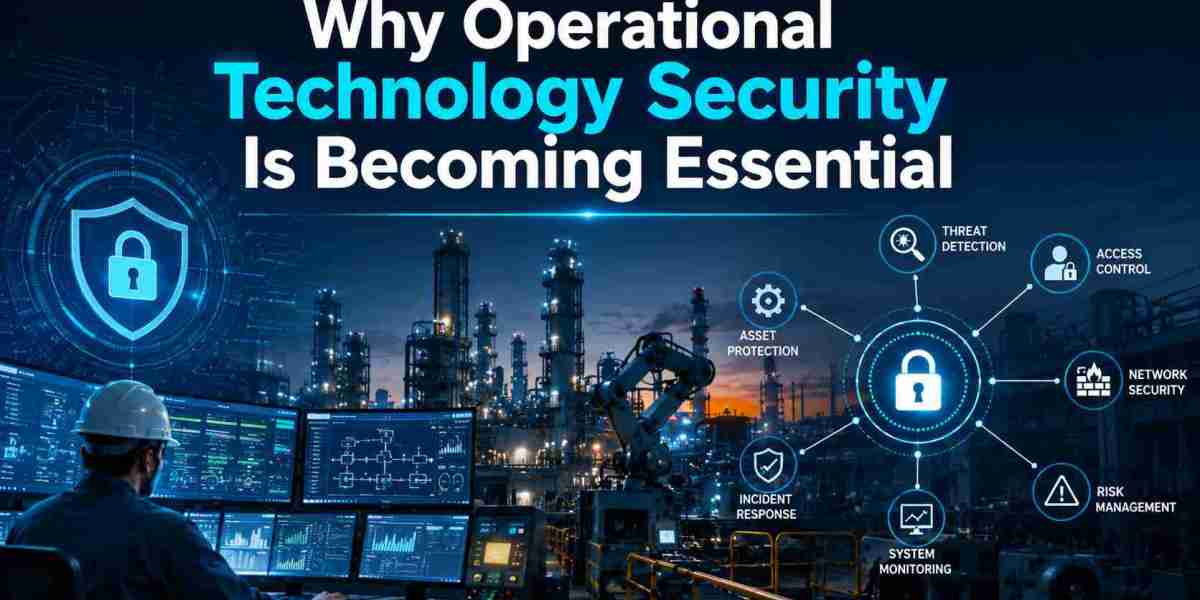
Operational technology security has emerged as a critical priority for organizations that rely on industrial control systems, supervisory control and data acquisition (SCADA) networks, and connected operational assets. As manufacturing facilities, utilities, transportation systems, and energy infrastructure become increasingly digitalized, the need to protect operational environments from cyber threats continues to grow.
Unlike traditional IT security, operational technology (OT) security focuses on safeguarding systems that directly control physical processes and industrial operations. According to the Operational Technology Security industry analysis, organizations worldwide are strengthening cybersecurity frameworks to address rising risks associated with connected industrial ecosystems.
Rising Cyber Threats Are Driving OT Security Investments
Cyberattacks targeting critical infrastructure have become more frequent and sophisticated in recent years. Industrial sectors such as energy, utilities, manufacturing, and transportation are increasingly exposed to ransomware, malware, and advanced persistent threats that can disrupt essential operations. As a result, organizations are allocating greater resources to securing operational environments.
As per a study published by MarkNtel Advisors, the Operational Technology (OT) Security sector was valued at USD 19.84 billion in 2023 and is projected to reach USD 58.45 billion by 2030, growing at a CAGR of 14.93% during the forecast period. The report identifies rising cybersecurity threats as a major factor supporting adoption across industrial sectors.
The increasing convergence of information technology and operational technology environments has further expanded the attack surface. Organizations are now integrating cloud platforms, remote monitoring systems, and industrial IoT devices into production processes, creating new security challenges that require specialized protection strategies.
Industrial Digital Transformation Expands Security Requirements
Digital transformation initiatives are reshaping industrial operations across the globe. Smart factories, connected equipment, predictive maintenance systems, and automated production lines deliver efficiency gains but also introduce new cybersecurity vulnerabilities. Every connected asset becomes a potential entry point for attackers if not properly secured.
Operational technology environments differ significantly from conventional IT systems because downtime can directly impact production, safety, and revenue generation. Consequently, organizations must deploy security solutions that protect critical assets without disrupting operational continuity.
The adoption of Industrial Internet of Things (IIoT) technologies is accelerating this transition. Sensors, controllers, and intelligent devices continuously exchange operational data, improving visibility and efficiency while requiring advanced monitoring and threat detection capabilities. According to the U.S. National Institute of Standards and Technology (NIST), the convergence of OT and IT systems is creating new cybersecurity challenges that demand specialized security frameworks and governance practices.
Artificial Intelligence Is Transforming Threat Detection
One of the most notable trends in the operational technology security landscape is the growing adoption of artificial intelligence-driven security solutions. AI technologies enable organizations to identify unusual network behavior, detect anomalies, and respond to potential threats more quickly than traditional monitoring approaches.
Machine learning algorithms can analyze large volumes of operational data and establish baseline patterns for industrial processes. When deviations occur, security teams receive alerts that may indicate unauthorized access attempts, malware activity, or operational disruptions.
AI-powered security tools are particularly valuable in complex industrial environments where thousands of connected devices generate continuous streams of data. These capabilities help organizations improve visibility across operational networks while reducing response times during security incidents.
Energy and Utilities Lead Adoption Across End Users
Among various industry segments, energy and utilities continue to represent one of the most significant adopters of operational technology security solutions. Power generation facilities, transmission networks, and utility operators manage critical infrastructure that requires continuous protection from cyber threats.
Industrial organizations increasingly recognize that cybersecurity is not only an IT concern but also an operational resilience requirement. Manufacturing companies, oil and gas operators, transportation providers, and public infrastructure organizations are implementing comprehensive security strategies to reduce risk exposure.
The growing dependence on digital infrastructure has also increased regulatory scrutiny. Governments worldwide are introducing cybersecurity requirements and critical infrastructure protection frameworks that encourage organizations to strengthen OT security capabilities and improve incident preparedness.
North America Maintains a Strong Position in Adoption
North America continues to demonstrate significant growth opportunities within the operational technology security ecosystem. The region benefits from advanced industrial infrastructure, strong cybersecurity awareness, and increasing investments in protecting critical assets.
Government initiatives focused on infrastructure protection, cybersecurity readiness, and industrial resilience have encouraged organizations to adopt modern security solutions. Regulatory compliance requirements are also influencing investment decisions across multiple industries.
At the same time, emerging economies are expanding their industrial cybersecurity capabilities as digital transformation initiatives gain momentum. Manufacturing modernization, smart infrastructure development, and industrial automation projects are creating new opportunities for OT security adoption worldwide.
The Future of Operational Technology Security
The future of operational technology security will likely be shaped by increasing industrial connectivity, expanding use of artificial intelligence, and growing integration between IT and OT environments. Organizations are expected to prioritize proactive security strategies that focus on prevention, detection, and rapid incident response.
As critical infrastructure becomes more interconnected, operational resilience will remain a key business objective. The continued adoption of industrial automation, cloud-enabled operations, and smart manufacturing technologies will reinforce the importance of comprehensive cybersecurity frameworks.
The International Energy Agency has highlighted the growing digitalization of energy systems and infrastructure, emphasizing the need for robust cybersecurity measures to ensure operational reliability and resilience in increasingly connected industrial environments.
Operational technology security is no longer a niche cybersecurity discipline. It has become an essential component of industrial risk management, helping organizations safeguard critical processes, maintain operational continuity, and support long-term digital transformation objectives.



