You've been practising for years. The idea of teaching has been sitting quietly in the back of your mind. And now, finally, you're ready to explore it. But the moment you search "yoga instructor course," you're hit with hundreds of options — different styles, durations, price points, and promises. How do you choose the one that's actually right for you?
The truth is, the best yoga instructor course isn't the most expensive one, the most famous one, or the one your favourite influencer completed. It's the one that aligns with your specific goals, your current lifestyle, and the kind of teacher you genuinely want to become.
Here's how to figure that out.
Start with the "why" before the "where"
Before comparing programmes, get honest with yourself about what you actually want from this training.
Are you looking to teach full-time and build a career? Are you hoping to deepen your personal practice first and maybe teach on the side? Do you want to work in studios, corporates, retreats, or online? Or are you drawn to a specialisation — prenatal, therapeutic, kids, or seniors?
Your answers to these questions will immediately filter out a large portion of the options available to you. A course built for trauma-informed therapeutic teaching looks nothing like a high-energy vinyasa certification — and that's exactly the point. Knowing your direction saves you months of second-guessing.
Understand what accreditation actually means
Most reputable yoga instructor courses are registered with Yoga Alliance, the internationally recognised body that sets standards for yoga teacher training. When a course is registered, it means the curriculum meets minimum requirements for hours, content, and faculty qualifications.
Look for programmes that lead to an RYT-200 (Registered Yoga Teacher with 200 training hours) or RYT-500 for advanced study. This matters practically — many studios, gyms, and wellness platforms require Yoga Alliance registration before they'll hire you or list your classes.
That said, accreditation is a baseline, not a guarantee of quality. A registered programme can still be underwhelming. Which is why what happens inside those hours matters just as much as the certification at the end.
Match the style to your practice
Yoga isn't one thing — and neither are instructor courses. The style you're trained in will shape the kind of teacher you become, so choose something you already love practising or feel genuinely curious about.
- Hatha — foundational, slower-paced, ideal for beginners and mixed-ability groups
- Vinyasa / Flow — dynamic, creative, and popular in studio settings
- Ashtanga — structured, physically rigorous, and rooted in traditional lineage
- Yin or Restorative — slower, therapeutic, great for stress and recovery-focused teaching
- Kundalini — breath, mantra, and energy-focused, with a strong spiritual dimension
Don't train in a style just because it's trending. Train in what genuinely moves you — your students will feel the difference.
Online vs in-person: an honest look
Both formats have genuine merit, and neither is universally better.
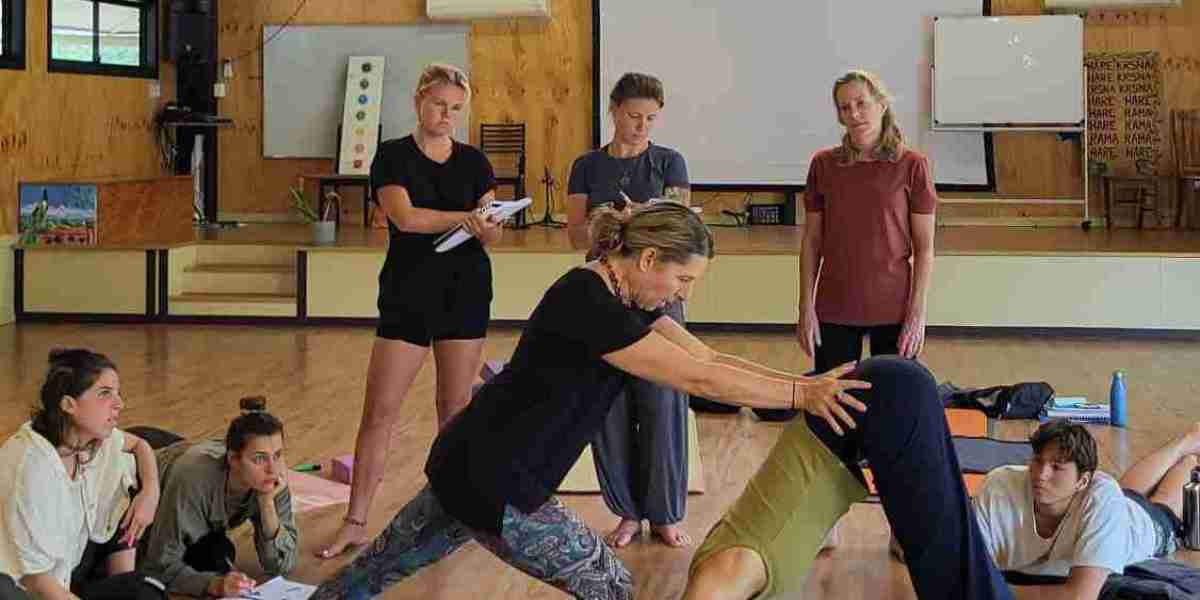
In-person training offers hands-on adjustments, real-time feedback, and the kind of community and immersion that's hard to replicate on a screen. Intensive residential programmes — like those run at a retreat setting — allow you to fully step away from daily life and drop into the training. At places like Krishna Village Retreat, the immersive residential environment means your entire day becomes part of the learning — morning practice, shared meals, evening discussions, and all.
Online training offers flexibility, affordability, and access to world-class teachers regardless of geography. If you have a demanding job, family commitments, or limited travel budget, an online programme could be the only realistic path — and many graduates go on to become outstanding teachers.
The honest question to ask yourself: Do I learn better through total immersion, or do I need the flexibility to go at my own pace?
Look closely at the curriculum
A high-quality yoga instructor course will cover far more than poses. Before enrolling, check that the programme includes:
- Anatomy and physiology — understanding the body protects your students
- Teaching methodology — how to cue, sequence, and manage a class
- Yoga philosophy — the ethical and philosophical foundations of the practice
- Pranayama and meditation — breath work and mindfulness are non-negotiable skills
- Practicum hours — you need actual teaching experience before you graduate
If a course skips any of these, treat that as a red flag.
Factor in your real life — not your ideal life
It sounds obvious, but many people enrol in a course based on the version of their life they wish they had, rather than the one they actually live.
Be realistic about your schedule, energy levels, finances, and support system. A 4-week intensive sounds transformative — but if you can't take a month off work, it becomes a source of stress rather than growth. A part-time weekend programme spread over six months might feel slower, but finishing it is infinitely better than abandoning the one that looked more impressive.
Trust your gut — after doing your homework
Once you've ticked the practical boxes — accreditation, curriculum depth, style match, format, and cost — pay attention to how a programme feels. Read real student reviews. Watch sample content if it's available. Notice how the school communicates with you before you've even enrolled.
The right yoga instructor course won't just give you a certificate. It will change the way you see your practice, your body, and your potential as a teacher.
That shift begins the moment you choose wisely.