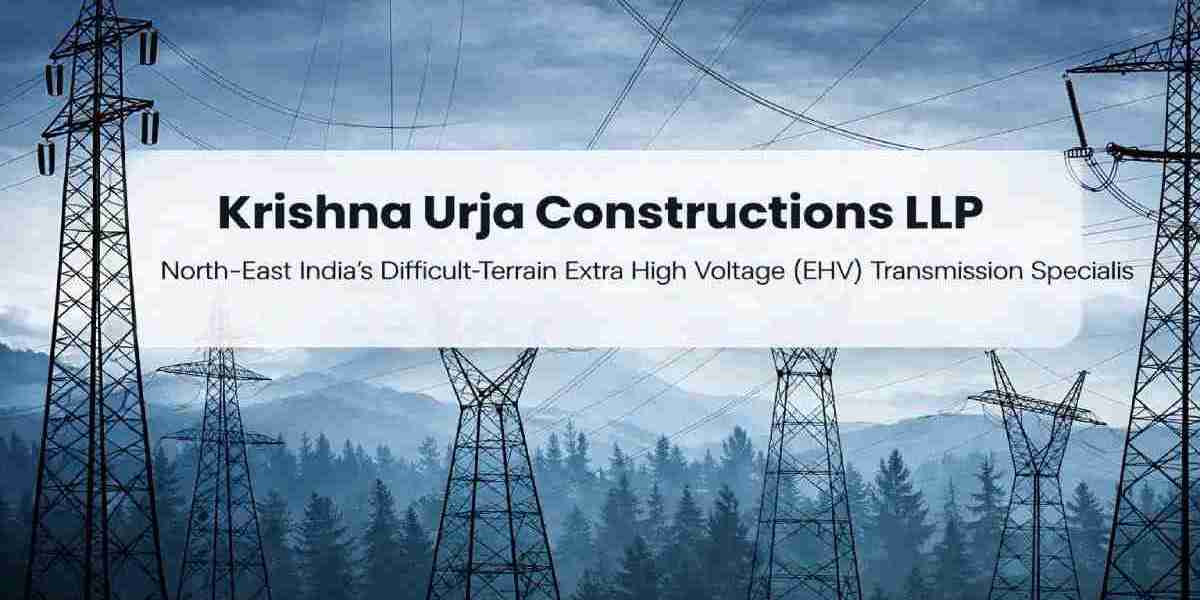
One of the most important parts of this network is 132 kV and 220 kV Overhead Lines. These transmission lines help transport electricity over long distances efficiently and reliably. They form the backbone of regional and national power transmission systems and ensure that electricity reaches substations and distribution networks without major losses.
As electricity demand continues to increase, utilities and infrastructure developers are investing heavily in high-voltage transmission systems. Understanding the key features of 132 kV and 220 kV overhead line systems helps explain why they are widely used in power transmission projects across many regions.
What Are Overhead Transmission Lines?
Overhead transmission lines are structures used to carry electrical power through conductors suspended above the ground. These conductors are supported by transmission towers or poles designed to withstand environmental and mechanical loads.
Unlike underground cables, overhead lines are visible and can cover long distances at a lower installation cost. They are commonly used for transmitting electricity from generating stations to substations and connecting different sections of the power grid.
Transmission voltage levels vary depending on the distance and amount of power being transferred. Among these voltage levels, 132 kV and 220 kV systems are widely used because they provide a good balance between efficiency, reliability, and cost.
Understanding 132 kV Transmission Lines
A 132 kV transmission line is designed to carry electricity at a voltage of 132 kilovolts. These lines are generally used for regional power transmission and interconnection between substations.
Main Characteristics of 132 kV Lines
- Suitable for medium to long-distance power transmission
- Supports reliable electricity supply to cities and industrial zones
- Requires fewer substations compared to lower voltage systems
- Helps reduce transmission losses
- Commonly used in state and regional power networks
132 kV lines are often found connecting power generation plants with substations that distribute electricity to local areas.
Understanding 220 kV Transmission Lines
A 220 kV transmission line carries electricity at a higher voltage level than a 132 kV line. Because of the higher voltage, it can transfer larger amounts of power over longer distances.
Main Characteristics of 220 kV Lines
- Designed for bulk power transmission
- Suitable for long-distance electricity transfer
- Reduces power losses significantly
- Supports growing industrial and urban power demand
- Strengthens grid reliability and stability
220 kV systems are frequently used to connect major substations and integrate different sections of the transmission network.
Key Components of 132 kV and 220 kV Overhead Line Systems
Every overhead transmission line system consists of several important components working together.
1. Transmission Towers
Transmission towers support the conductors and maintain safe clearances from the ground and surrounding structures.
Common tower types include:
- Suspension towers
- Tension towers
- Angle towers
- Terminal towers
The tower design depends on terrain, line route, wind conditions, and voltage level.
2. Conductors
Conductors carry electrical energy from one location to another.
Popular conductor materials include:
- Aluminum Conductor Steel Reinforced (ACSR)
- Aluminum Alloy Conductors
- High-performance conductors
The conductor selection affects efficiency, transmission capacity, and overall project cost.
3. Insulators
Insulators prevent electricity from flowing through the towers.
Common insulator types include:
- Disc insulators
- Composite insulators
- Porcelain insulators
These components ensure safe operation even under high voltage conditions.
4. Earth Wire
Earth wires are installed above conductors to protect transmission lines from lightning strikes.
They help direct lightning energy safely into the ground and reduce the risk of outages.
5. Foundations
Strong foundations support transmission towers and maintain stability throughout the structure's life.
Foundation design depends on:
- Soil conditions
- Tower weight
- Wind load
- Terrain characteristics
6. Hardware and Fittings
Various hardware components are used to connect conductors, insulators, and towers.
These include:
- Clamps
- Connectors
- Spacers
- Fasteners
- Suspension fittings
Proper hardware installation ensures long-term reliability.
Key Features of 132 kV and 220 kV Overhead Line Systems
High Transmission Efficiency
One of the biggest advantages of high-voltage transmission is improved efficiency.
When electricity is transmitted at higher voltages:
- Current flow decreases
- Energy losses are reduced
- More power reaches the destination
This makes 132 kV and 220 kV systems highly efficient for utility networks.
Long-Distance Power Transfer
Electricity often needs to travel hundreds of kilometers from generating stations to consumers.
These transmission systems are designed to support long-distance power transfer while maintaining voltage stability and operational efficiency.
Enhanced Grid Reliability
A reliable power grid depends on strong transmission infrastructure.
132 kV and 220 kV overhead lines improve reliability by:
- Connecting multiple substations
- Providing alternate power routes
- Supporting load sharing
- Reducing the impact of local failures
This helps maintain continuous electricity supply.
Higher Power Carrying Capacity
Compared to lower-voltage networks, these systems can carry larger amounts of electricity.
This is particularly important for:
- Industrial regions
- Manufacturing hubs
- Urban centers
- Infrastructure projects
The ability to transfer higher power levels supports economic growth and development.
Cost-Effective Infrastructure
Overhead transmission systems are generally more economical than underground cable systems.
Benefits include:
- Lower installation costs
- Easier inspection
- Faster construction
- Simplified maintenance
These factors make overhead lines a preferred choice for many utility projects.
Scalability
Power demand continues to increase every year.
132 kV and 220 kV systems can be expanded and upgraded to accommodate future growth.
Utilities can:
- Add new substations
- Extend transmission routes
- Upgrade conductors
- Improve system capacity
This flexibility supports long-term planning.
Importance of Tower Design in Overhead Line Systems
Tower design directly affects system performance and reliability.
Engineers consider several factors while designing towers:
Wind Loads
Strong winds create significant forces on towers and conductors.
Proper tower design ensures structural stability under extreme weather conditions.
Seismic Conditions
In earthquake-prone regions, towers must be designed to withstand seismic activity.
Special engineering measures help improve safety and durability.
Terrain Conditions
Transmission routes often cross:
- Mountains
- Rivers
- Forests
- Agricultural land
Tower configurations are selected according to terrain requirements.
Safety Requirements
Tower design must comply with electrical safety standards and clearance requirements.
This protects people, property, and infrastructure.
Advantages of 132 kV and 220 kV Overhead Lines
Reduced Transmission Losses
Higher voltages allow power transfer with lower current levels.
As a result:
- Energy losses decrease
- System efficiency improves
- Operational costs are reduced
Improved Voltage Regulation
Maintaining voltage quality is important for reliable electricity supply.
These systems help stabilize voltage across long transmission distances.
Better Network Connectivity
Modern power grids require strong interconnections.
132 kV and 220 kV lines enable efficient connections between:
- Power plants
- Substations
- Industrial facilities
- Regional grids
Support for Renewable Energy Projects
Renewable energy generation is growing rapidly.
Transmission networks help connect:
- Solar farms
- Wind energy projects
- Hydropower stations
This enables clean energy to reach consumers efficiently.
Challenges in Overhead Line Projects
Although overhead transmission systems provide many benefits, certain challenges must be managed carefully.
Land Acquisition
Obtaining land and right-of-way approvals can take time and require coordination with multiple stakeholders.
Environmental Considerations
Transmission projects must address environmental concerns and minimize impacts on local ecosystems.
Weather Conditions
Heavy rainfall, storms, and strong winds can affect construction schedules and system performance.
Maintenance Requirements
Regular inspection and maintenance are necessary to ensure long-term reliability.
Utilities perform:
- Tower inspections
- Conductor checks
- Vegetation management
- Hardware replacement
These activities help prevent outages and improve performance.
Future of High-Voltage Overhead Transmission Systems
The future of electricity transmission is closely linked to grid modernization and growing energy demand.
Several trends are shaping the industry:
Smart Grid Integration
Modern transmission networks are increasingly connected with digital monitoring systems.
These technologies provide:
- Real-time monitoring
- Faster fault detection
- Improved operational efficiency
Renewable Energy Expansion
As renewable energy capacity grows, transmission infrastructure will continue expanding to connect new generation sources.
Advanced Conductors
New conductor technologies offer:
- Higher transmission capacity
- Lower losses
- Better thermal performance
These innovations improve overall system efficiency.
Grid Strengthening
Many countries are investing in stronger transmission networks to improve reliability and support economic growth.
132 kV and 220 kV systems will remain important components of these investments.
Conclusion
The importance of 132 kV and 220 kV Overhead Lines in modern power transmission cannot be overstated. These systems provide efficient, reliable, and cost-effective transportation of electricity across large distances while supporting industrial growth, urban development, and renewable energy integration.
Their high transmission capacity, reduced losses, strong reliability, and scalability make them essential elements of modern utility infrastructure. As power demand continues to rise, investment in well-designed transmission networks will remain a key priority for utilities and infrastructure developers.
Organizations such as Krishna Urja Constructions contribute to the development of robust transmission infrastructure by supporting projects that strengthen power networks and improve electricity delivery across regions.