


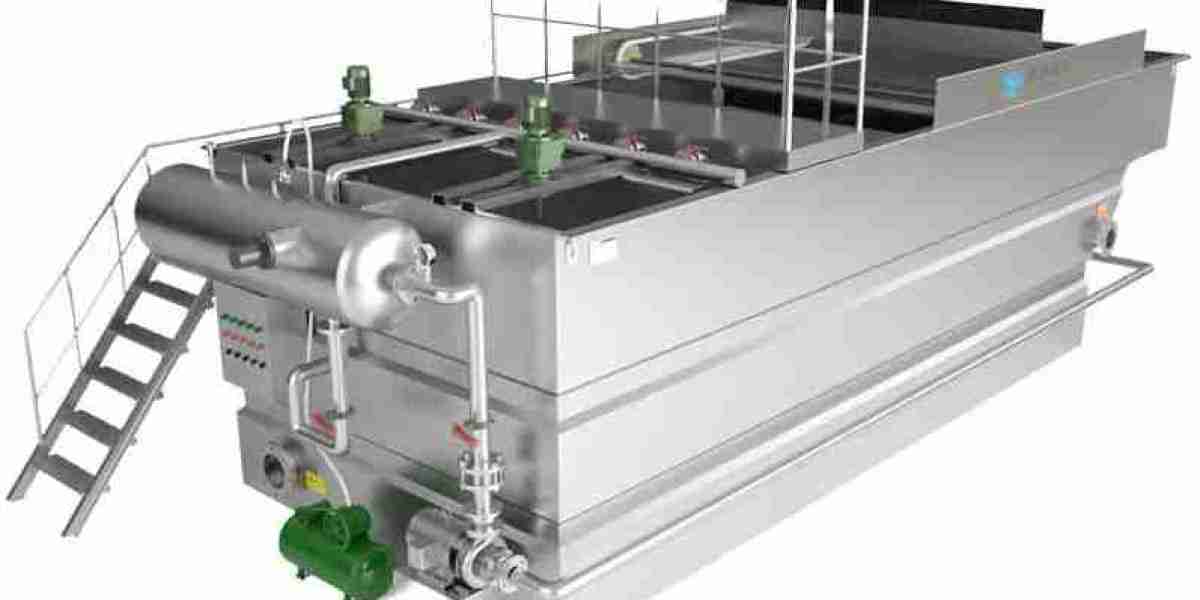
Dissolved air flotation clears algae that settle poorly, but it has limits. WaterWorld places it in water under 100 NTU, preferably under 30, with low alkalinity and high color, and a Brown and Caldwell paper puts high-rate units at up to 30 NTU. Check turbidity, alkalinity and loading rate before you pick a clarifier.
Reject Dissolved Air Flotation Above 100 NTU Without Presettling
Light particles float, and heavy ones do not. WaterWorld says flotation is generally applicable to water with light particles such as algae and low-to-medium turbidity, under 100 NTU and preferably under 30. A river after a storm can carry grit and clay that overwhelm a flotation tank’s design.
I’d put a presettling basin or a coarser screen ahead of the tank for any source that swings above that range.
Read Alkalinity and Color Before Turbidity
The same review says flotation suits low alkalinity and high color. Both traits affect coagulation, since low alkalinity limits buffering and high color demands more coagulant to bring the water into range. Check them in the jar tests before you design the flocculation tank.
Ask the lab for a year of raw-water data rather than a single sample, because seasonal swings in algae and color decide the worst day.
Trust the Track Record, Then Test Locally
WaterWorld says flotation has served drinking water in Europe and South Africa since the 1960s, with hundreds of plants in Europe, and the first large North American drinking-water flotation-filtration plant, 37.5 mgd, opened in Pittsfield, Massachusetts, in 1986. A long record reduces the risk of the idea, not the risk of your water.
Local pilot data on your source remains the deciding evidence.
Use High-Rate Units Only With Algae Data
A Brown and Caldwell paper describes the AquaDAF high-rate process as designed for algae-laden water with up to 30 NTU, at surface loading rates as high as 20 gpm/ft², about 49 meters per hour. The paper reports more than 55 full-scale plants since 2000 with a total capacity of 1.4 billion gallons per day.
Those figures show maturity for a specific design, not for every flotation unit. A standard tank at conventional loading has more margin for variable algae counts, and I’d choose margin over a smaller footprint when the source swings.
Retrofit Settling Basins With Care
A High Rate DAF supplier says its units can retrofit existing sedimentation basins to raise plant capacity and reports clarified turbidity under 1 NTU and algae removal above 90 percent, with thickened sludge of 2 to 4 percent. These are vendor figures for algae-laden low-turbidity water.
A retrofit changes hydraulics, sludge handling and recycle infrastructure, so ask for results on a source like yours before you cut concrete. I’d treat dissolved air flotation as a redesign of the basin, not a swap.
Harvesting Algae Pulls the Same Levers
Research on harvesting Chlorella by flotation evaluated algal concentration, culture conditions, coagulant type and dose, and recycle ratio, according to an abstract. Those are the same levers that matter in drinking water, which is a reminder that the chemistry and the recycle setting do the work.
Wuxi Yosun lists river and landscape water among its applications on its DAF page, where flotation reduces suspended solids and turbidity. Its river and lake page gives the details.
Check the Source Before You Choose
Pull a year of turbidity, alkalinity and color data, then run a flotation jar test and a settling test on your worst week. If turbidity stays under 30 NTU, a dissolved air flotation unit deserves a pilot. If it does not, presettle first.
Frequently Asked Questions
Q: Why does flotation work better than sedimentation for algae?
A: Algae are light and settle poorly. Flotation attaches bubbles to the floc and lifts it, so density matters less.
Q: What turbidity can a DAF handle?
A: WaterWorld says under 100 NTU and preferably under 30, and a Brown and Caldwell paper cites up to 30 NTU for AquaDAF. Above that, presettle.
Q: How fast can a high-rate DAF run?
A: A Brown and Caldwell paper says as high as 20 gpm/ft², about 49 m/h, for a specific design. Conventional units run lower.
Q: Can I convert a settling basin to flotation?
A: A supplier says high-rate units can retrofit sedimentation basins to increase capacity. Verify the hydraulics and sludge handling with a pilot first.



