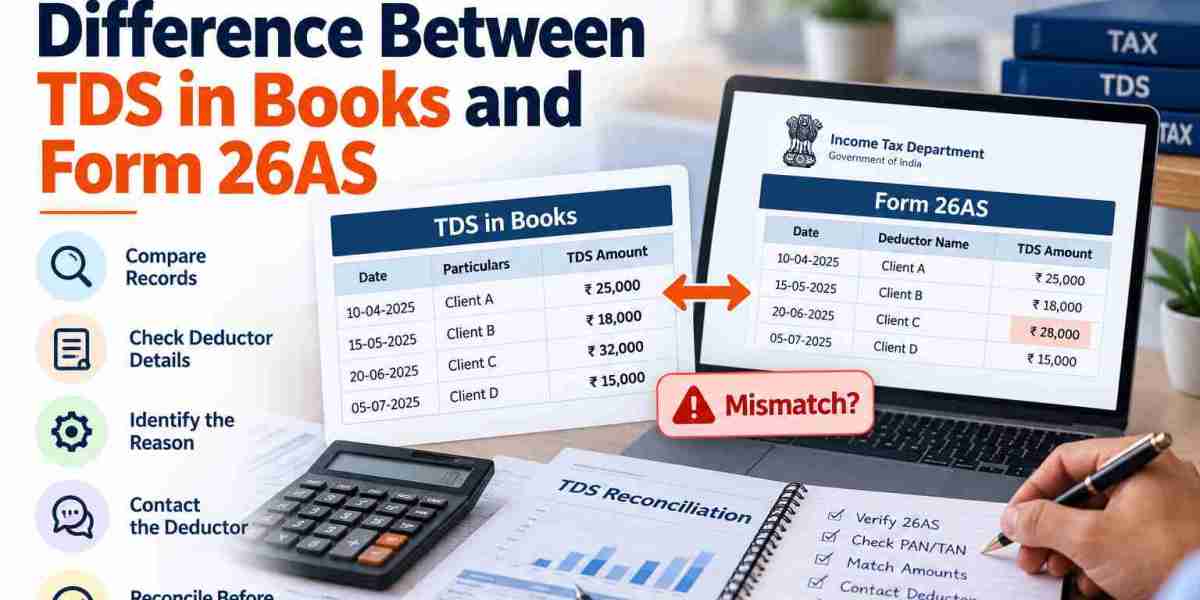
Tax Deducted at Source (TDS) is an important part of income tax compliance for businesses, professionals, and individuals. However, taxpayers sometimes discover that the TDS recorded in their accounting books does not match the amount reflected in Form 26AS. This difference can create difficulties when preparing financial statements, claiming tax credits, and filing income tax returns.
Understanding why the mismatch occurs and how to resolve it can help prevent incorrect tax credit claims and unnecessary compliance issues. This guide explains the common causes of TDS discrepancies and the steps businesses can take to resolve them.
Quick Summary
- Compare TDS recorded in your books with Form 26AS and supporting documents.
- Verify the deductor's PAN, TAN, payment details, and TDS amount.
- Check whether the deductor has deposited the tax and filed the applicable TDS statement.
- Contact the deductor if the TDS credit is missing or incorrectly reported.
- Claim TDS credit only in accordance with applicable income tax rules.
- Maintain proper reconciliation records for accurate tax filing.
1. What Is the Difference Between TDS in Books and Form 26AS?
TDS in books refers to the tax deducted at source recorded in your accounting records based on invoices, receipts, payments, and TDS certificates.
Form 26AS is an income tax statement that contains tax-related information associated with your PAN, including TDS and Tax Collected at Source (TCS) details reported to the Income Tax Department.
A mismatch occurs when the amount recorded in your books differs from the amount reflected in Form 26AS.
For example, your accounting records may show TDS of ₹25,000 deducted by a customer, while Form 26AS reflects only ₹20,000. The difference of ₹5,000 needs investigation before you finalise your tax return.
2. Common Reasons for TDS Mismatches
A. The Deductor Has Not Filed the TDS Return
The company or person deducting tax must comply with the applicable TDS reporting requirements. If the deductor has not filed the relevant TDS statement, the credit may not appear correctly in Form 26AS.
B. Incorrect PAN Details
If the deductor reports an incorrect PAN, the TDS credit may not be reflected against the correct taxpayer's account.
C. TDS Has Been Deducted but Not Deposited
A deductor may deduct tax from a payment but fail to deposit it or complete the required reporting correctly. This can result in a discrepancy between your accounting records and the tax statement.
D. Incorrect TDS Amount
The deductor may report an amount that differs from the actual tax deducted because of a data-entry error, incorrect payment information, or a mistake in the TDS statement.
E. Timing Differences
TDS may be recorded in your books in one accounting period but appear in Form 26AS later, depending on when the deductor deposits the tax and files the relevant statement.
F. Duplicate or Incorrect Accounting Entries
Your books may contain duplicate TDS entries, incorrect ledger postings, or amounts recorded against the wrong customer or vendor. These errors should be corrected after reviewing the supporting documents.
3. Step-by-Step Process to Reconcile TDS Differences
Step 1: Download Form 26AS
Log in to the official Income Tax e-Filing portal:
Access Form 26AS through the available tax-credit statement facility and review the relevant financial or tax year.
Step 2: Extract TDS Details from Your Books
Prepare a list of TDS transactions recorded in your accounting software or ledger.
Include the following information:
- Deductor's name
- Deductor's TAN, where available
- Deducted amount
- Date of deduction or receipt
- Invoice or payment reference
- Relevant accounting period
Step 3: Compare the Records
Compare your accounting records with Form 26AS and identify differences in amounts, deductor details, or reporting periods.
A reconciliation statement can help categorise transactions as matched, partially matched, missing, or requiring investigation.
Step 4: Check Form 16A or Other Supporting Documents
For applicable non-salary payments, Form 16A may provide details of TDS deducted and reported. Compare the certificate with your books and Form 26AS.
For salary-related TDS, review Form 16 and the relevant payroll records.
Step 5: Contact the Deductor
If the discrepancy appears to result from incorrect reporting or missing information, contact the deductor.
Request that they verify the transaction and correct the relevant TDS statement, where necessary, through the prescribed correction process.
Keep written communication and supporting documents for your records.
4. What If TDS Is Missing from Form 26AS?
If your books show that TDS was deducted but the credit is missing from Form 26AS, first confirm the deduction using invoices, payment records, and the applicable TDS certificate.
Next, ask the deductor to verify whether the tax was deposited and reported correctly.
Do not assume that a ledger entry alone establishes that tax credit has been properly reported. TDS credit is subject to applicable legal conditions, reporting requirements, and verification.
If the issue remains unresolved, consult a tax professional to understand the appropriate course of action before filing your return.
5. How TDS Reconciliation Supports Tax Planning
Accurate TDS reconciliation is an important part of Tax Planning in Noida for businesses, professionals, and individuals.
Regular reconciliation helps taxpayers identify missing credits, correct accounting errors, monitor tax deductions, and estimate their remaining tax liability.
Businesses should consider reconciling TDS records periodically instead of waiting until the income tax return filing deadline. This gives them more time to contact deductors and obtain corrected documents.
Maintaining organised ledgers, payment records, TDS certificates, and tax statements can also simplify year-end accounting.
6. Common Mistakes to Avoid
Avoid these common errors when handling TDS mismatches:
- Claiming credit without checking the supporting records.
- Ignoring differences between Form 26AS and accounting books.
- Failing to contact the deductor about missing or incorrect reporting.
- Recording duplicate TDS entries.
- Assuming that a TDS certificate automatically resolves every discrepancy.
- Waiting until the last minute to reconcile tax credits.
A documented reconciliation process helps businesses manage their tax compliance more efficiently.
7. How TaxCaller Can Help
TaxCaller provides tax consultancy, accounting, income tax return filing, and compliance assistance to individuals, professionals, and businesses.
If you need a tax filling consultant in noida, TaxCaller can help you review TDS records, reconcile accounting entries with tax statements, organise supporting documentation, and understand the applicable correction procedures.
Our Tax Planning in Noida assistance also helps taxpayers review their tax position, monitor available credits, and prepare for income tax compliance.
Frequently Asked Questions
1. Why does TDS in my books differ from Form 26AS?
Common reasons include incorrect deductor reporting, missing TDS statements, timing differences, or accounting errors.
2. Can I claim TDS that does not appear in Form 26AS?
TDS credit is subject to applicable legal conditions and supporting evidence. Verify the discrepancy and seek professional advice before claiming disputed credit.
3. Who should correct an incorrect TDS entry in Form 26AS?
If the discrepancy arises from the deductor's reporting, the deductor generally needs to verify and correct the relevant TDS statement.
4. How often should businesses reconcile TDS?
Periodic reconciliation, such as monthly or quarterly, can help identify discrepancies before income tax return filing.
Conclusion
A difference between TDS in your books and Form 26AS should be investigated before finalising your income tax return. Compare your records, review supporting documents, contact the deductor where necessary, and maintain evidence of the reconciliation.
For professional assistance with TDS reconciliation, Tax Planning in Noida, or guidance from a tax filling consultant in noida, TaxCaller can help you understand the relevant procedures and manage your tax compliance.