


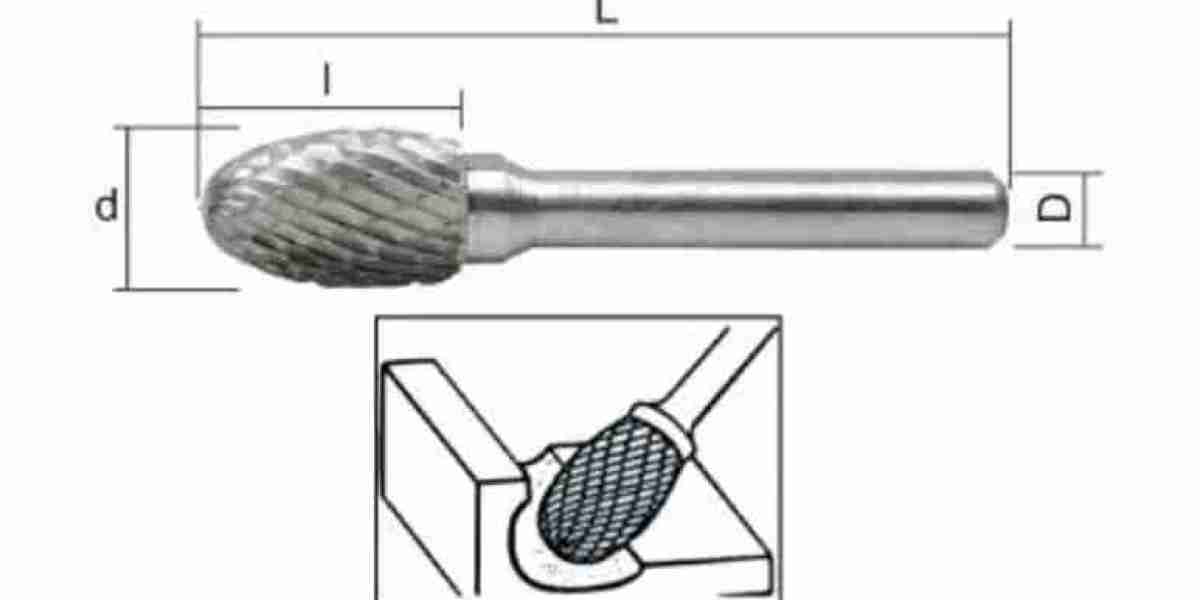
Metal fabrication involves cutting, welding, drilling, and finishing processes that can leave rough edges or excess material on components. These imperfections may affect assembly accuracy or create handling hazards. A Carbide Burr is commonly used to refine such areas, especially when a rotary tool can reach sections that are difficult to process with a grinding wheel or conventional file.
One common application is weld cleanup. After welding, operators may need to remove small amounts of excess metal, blend transitions, or prepare a surface for additional finishing. A suitable burr allows localized material removal around joints and irregular profiles. The selected head shape should provide access to the target area while limiting unwanted contact with the surrounding component.
Carbide burrs are also used to deburr drilled holes and machined openings. Edges left by drilling can interfere with fitting, sealing, or later machining steps. A cylindrical or conical profile may help remove these edges, depending on the opening's dimensions and accessibility. For curved surfaces and internal contours, ball-shaped and oval burrs offer alternative cutting geometries.
Material selection remains important throughout the process. Carbon steel, stainless steel, aluminum, and cast iron respond differently to rotary cutting. Operators should consider the material's hardness, chip formation, and heat sensitivity before choosing a burr. Cutting teeth designed for one application may not provide the same behavior on another material, so product specifications should be reviewed carefully.
Shank compatibility must also be checked before the tool is installed. The shank should fit the machine's collet securely, and the tool must operate within its specified speed range. An incorrectly fitted burr can vibrate, slip, or create an unsafe working condition. The workpiece should be clamped firmly, and the operator should wear suitable eye and face protection according to the task.
For businesses supplying fabrication equipment, product consistency is an important consideration. Clear specifications for head shape, cutting diameter, shank diameter, and overall length help users identify suitable tools for their equipment and applications. Assortment packs may be useful for maintenance teams that regularly handle different profiles, although the selection should reflect actual workshop requirements.
A Carbide Burr can also support mold repair, casting cleanup, and maintenance of metal fixtures. In these tasks, controlled movement and careful inspection help operators avoid removing material that is needed to maintain component dimensions.
Selecting the correct profile and operating it with steady pressure helps create cleaner edges and more consistent contours. For fabrication workshops, this approach supports practical finishing work while keeping the process adaptable to different component shapes and materials.
https://www.zycementedcarbides.com/product/carbide-burrs-series/




