
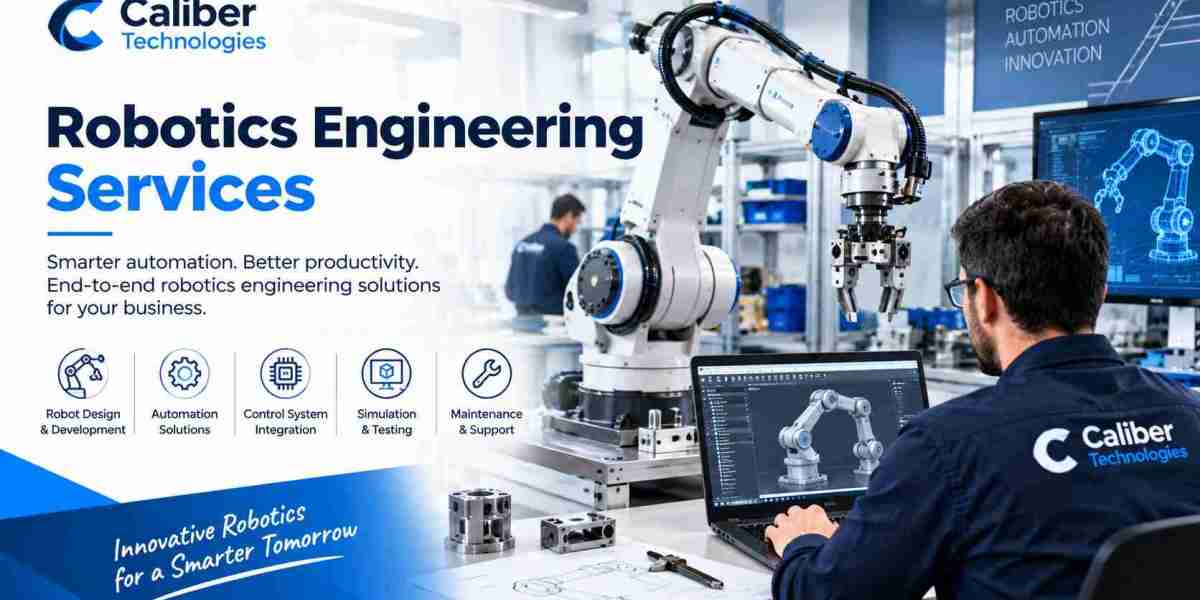
Automation is changing how businesses design products, manufacture components, and manage daily operations. Robotics Engineering Services help organisations develop automated systems that perform repetitive, precision-based, and physically demanding tasks with greater consistency. These services combine mechanical design, electrical engineering, software development, and control systems to create robotic solutions suited to specific industrial and commercial requirements.
Robotics engineering involves more than installing a robotic arm or programming a machine. Engineers must understand the task, operating environment, production targets, safety requirements, and interaction between different equipment. A well-designed robotic system can improve productivity, reduce handling errors, and support consistent product quality. By choosing the right technology and planning its integration carefully, businesses can automate suitable processes while maintaining control over costs and operational performance.
What Are Robotics Engineering Services?
Robotics engineering services cover the planning, design, development, integration, testing, and maintenance of robotic systems. The scope may include industrial robots, collaborative robots, autonomous mobile robots, machine vision, specialised grippers, and automated production cells.
An engineering team usually begins by identifying a process that would benefit from automation. It then evaluates the required movements, payload, working range, positioning accuracy, cycle time, and available space. These factors help determine the appropriate robot, tooling, sensors, and control architecture.
For example, a manufacturing company may need to transfer metal components between a conveyor and a machining centre. Robotics engineers can design a system that identifies each component, positions it correctly, coordinates with the machine, and removes the finished part. The solution must also account for operator access, machine status signals, and safe recovery from faults.
Main Types of Robotics Engineering Services
1. Robotic System Design and Development
Robotic system design establishes how a robot will perform its intended task. Engineers select suitable hardware, determine the robot's working range, and design the fixtures, mounting structures, and end-of-arm tooling needed for operation.
The end effector is particularly important because it directly interacts with the product. Depending on the application, it may use mechanical grippers, vacuum cups, magnetic tooling, or specialised handling mechanisms.
For instance, a packaging facility handling products of different shapes may require adjustable gripping equipment. Proper design helps prevent slipping, product damage, and unnecessary delays during handling.
2. Robot Programming and Control Systems
Robot programming defines the movements, sequences, and responses that allow a robotic system to complete its tasks. Engineers develop motion paths, set operating parameters, and configure communication with other machines.
Industrial automation frequently uses programmable logic controllers (PLCs), human-machine interfaces (HMIs), and industrial networks to coordinate equipment.
A robotic assembly station, for example, may need to wait until a component is correctly positioned before starting an operation. Control logic ensures that the robot receives the appropriate signal, performs the task, and communicates its status to the wider production system.
Good programming also includes fault detection, recovery procedures, and clear operator controls.
3. Robotic System Integration
Integration connects robots with conveyors, machine tools, inspection equipment, sensors, safety devices, and production software. The goal is to make all components work together as a coordinated system.
This process can be challenging when a facility uses older equipment or machines from different manufacturers. Engineers may need to configure communication interfaces, modify fixtures, or upgrade controls.
For example, an automated welding cell may combine a robot, welding power source, positioning equipment, extraction system, and safety enclosure. The integration team must coordinate their operation so that the process remains reliable and operators can access the equipment safely.
4. Machine Vision and Sensor Integration
Robots use sensors to gather information about products and their surroundings. Cameras, proximity sensors, encoders, and force sensors can help determine object position, movement, distance, or contact.
Machine vision is useful when products arrive in varying orientations or require automated inspection. A vision system may identify a component, locate its position, and provide coordinates that guide the robot.
However, performance depends on lighting, camera placement, image quality, and variations in the objects being inspected. Engineers must test these conditions to ensure that the system performs reliably in the actual working environment.
5. Robotic Simulation and Performance Testing
Simulation helps engineers assess robotic movements and workspace requirements before installing the system. They can examine reachability, cycle times, motion paths, and potential collisions with nearby equipment.
Testing also helps identify unnecessary movements that could increase cycle time or create interference between machines.
Physical commissioning remains essential because real equipment can behave differently from a virtual model. Engineers therefore verify motion sequences, sensor responses, safety functions, and communication signals before approving the system for regular use.
Industries That Use Robotics Engineering Services
Robotic technology supports different tasks across multiple sectors.
Manufacturing and Automotive
Manufacturers use robots for welding, painting, assembly, machine tending, material handling, and inspection. These applications are particularly useful when tasks are repetitive, require consistent positioning, or expose workers to hazardous conditions.
Warehousing and Logistics
Robots can transport inventory, sort packages, pick items, and support order fulfilment. Autonomous mobile robots move materials between designated locations, while robotic arms can automate selected picking and packing operations.
Healthcare and Medical Equipment
Robotics supports laboratory automation, rehabilitation devices, surgical assistance, and medical material handling. These applications require careful engineering, verification, and compliance with relevant safety and regulatory requirements.
Agriculture and Food Processing
Agricultural robots can support crop monitoring, harvesting, and targeted treatment. In food processing, robots perform packaging, sorting, palletising, and product handling. Equipment must be designed for environmental conditions and appropriate cleaning requirements.
Key Benefits of Robotics Engineering Services
Improved Productivity and Consistent Output
Robots can repeat suitable tasks at predictable speeds and follow programmed movements consistently. This helps businesses maintain production standards and reduce variations associated with repetitive manual operations.
Actual productivity improvements depend on cycle time, equipment availability, material supply, and the performance of the entire production line.
Better Workplace Safety
Robots can take over certain hazardous activities, including heavy lifting, repetitive handling, and work near high-temperature processes. Nevertheless, automated equipment introduces its own risks. Appropriate guarding, interlocks, risk assessments, and safety procedures are essential.
Reduced Waste and Handling Errors
Accurate robotic movements can reduce dropped items, incorrect positioning, and product damage. Automated inspection can also identify defects earlier, helping manufacturers avoid unnecessary processing of faulty components.
Flexible Production
Some robotic systems can handle different products through reprogramming, adjustable fixtures, or interchangeable tooling. This flexibility can support changing production requirements, although complex changeovers may require additional engineering and testing.
Better Use of Employee Skills
Automation can reduce the time employees spend on repetitive tasks, allowing them to focus on supervision, maintenance, quality assurance, and process improvement. Training helps workers operate and maintain the new systems effectively.
Common Challenges and Considerations
Implementing robotics requires more than selecting equipment based on price.
Initial investment: The total cost may include robots, tooling, integration, safety equipment, installation, training, and software.
Technical compatibility: Existing machinery may require hardware modifications or communication upgrades before integration.
Task complexity: Unpredictable materials, frequent product changes, and delicate handling can make automation more difficult.
Maintenance requirements: Businesses need preventive maintenance schedules, spare parts, technical support, and procedures for recovering from faults.
Safety and compliance: System designers must assess foreseeable hazards and follow applicable machinery safety standards and local regulations.
Return on investment: A realistic evaluation should consider labour, throughput, scrap, downtime, maintenance, and future production demand. Automating a poorly designed process may simply reproduce its existing problems at greater speed.
Businesses should define measurable objectives before starting a project. These might include reducing cycle time, improving inspection accuracy, lowering product damage, or increasing equipment availability.
How to Choose a Robotics Engineering Provider
Choose a provider with experience in the relevant application and the ability to manage the complete engineering process. Review its capabilities in mechanical design, programming, controls, machine vision, integration, and safety assessment.
Ask how the provider will test the system, document its performance, train operators, and support the equipment after installation. Clear deliverables and acceptance criteria help prevent misunderstandings.
For uncertain applications, a pilot project can demonstrate feasibility before a larger investment is made.
Frequently Asked Questions
1. What do robotics engineering services include?
They can include robotic design, programming, control systems, machine vision, simulation, equipment integration, testing, commissioning, and maintenance.
2. Which industries benefit from robotic automation?
Manufacturing, automotive, logistics, agriculture, food processing, healthcare technology, and other sectors can benefit when their processes are suitable for automation.
3. Are robotics engineering services suitable for small businesses?
Yes. Small businesses can automate individual tasks, such as packaging, machine tending, or inspection, without replacing every manual operation. A targeted project may offer a more manageable starting point.
4. How long does a robotics engineering project take?
Project duration depends on complexity, custom tooling, software requirements, existing equipment, and safety testing. A straightforward workstation generally requires less development than a fully integrated production line.
5. Do robotic systems require ongoing maintenance?
Yes. Regular maintenance may include inspecting mechanical parts, checking sensors and cables, verifying safety devices, updating software when appropriate, and following manufacturer recommendations.
Conclusion
Robotics Engineering Services help businesses develop automated systems that improve productivity, consistency, precision, and workplace safety. From robot programming and machine vision to complete production-line integration, these services address the engineering requirements needed for reliable automation.
Successful implementation depends on choosing suitable technology, understanding operational needs, planning safety measures, and testing the system under realistic conditions. With a clear project scope and an experienced engineering partner, businesses can adopt robotics in a practical way, improve their production processes, and build a stronger foundation for future growth.