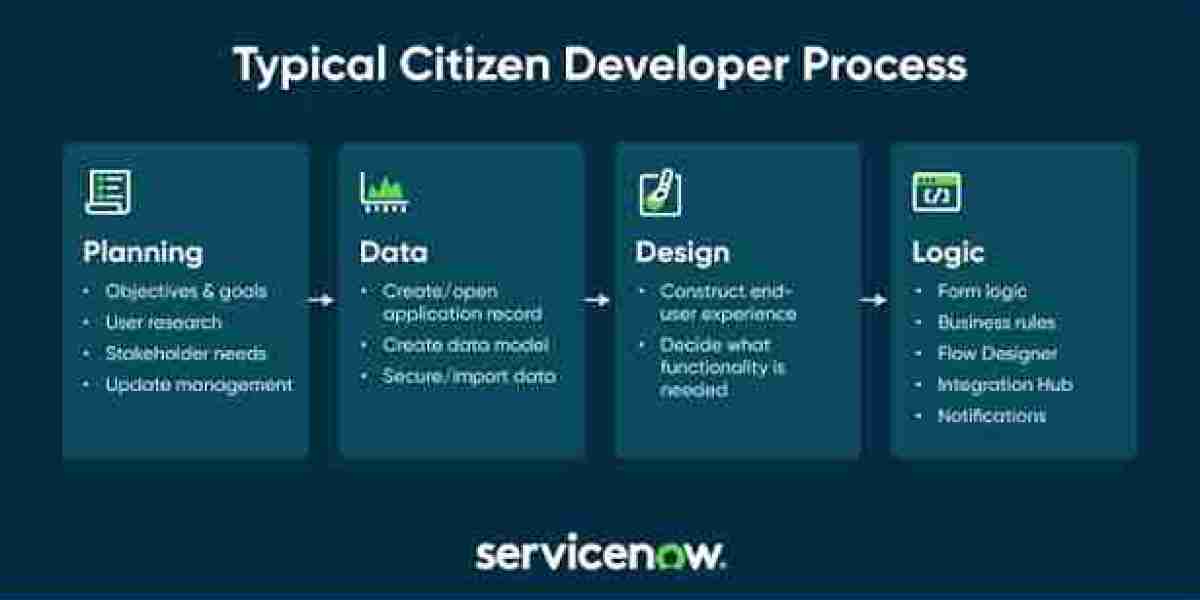
Modern businesses depend on digital tools to manage information, communicate with customers, and complete everyday tasks. However, many organizations struggle to develop customized applications quickly because their IT departments have limited time and resources. A citizen developer offers a practical way to address this challenge by allowing business employees to participate in application development.
A citizen developer is someone who builds business applications, creates automated workflows, or improves existing digital processes without necessarily having professional programming experience. These individuals typically use low-code or no-code development platforms to create solutions that meet the specific needs of their teams.
The concept is especially valuable because employees often understand operational problems better than anyone else. They know which tasks take too long, where mistakes occur, and what improvements would make their work easier.
By combining business knowledge with accessible technology, citizen developers can help organizations reduce manual work, improve collaboration, and encourage innovation. With appropriate training and IT guidance, they can become valuable contributors to a company's digital transformation strategy.
Understanding the Meaning of Citizen Developer
The term citizen developer describes a business user who participates in creating digital solutions outside the traditional software development environment. Rather than relying entirely on professional programmers, these employees use approved development platforms to solve practical problems.
A citizen developer might work in sales, marketing, finance, human resources, customer service, or operations. Their primary responsibility may not involve technology, but they can still identify opportunities to improve business processes through application development.
For example, a marketing employee could create a campaign tracking application, while an HR professional might develop an employee onboarding workflow. An operations employee could build an internal request management system that helps colleagues submit, monitor, and resolve service requests.
These applications are often designed for specific departmental needs rather than broad public use.
Citizen developers do not need to become expert programmers to contribute effectively. However, they should understand the business problem, select appropriate tools, test their solutions, and follow company policies.
Why Businesses Need Citizen Developers
Business requirements change frequently, and employees often need new tools to respond to those changes. Traditional development processes remain essential for complex software, but simple internal applications can sometimes be created more efficiently through citizen development.
Addressing IT Development Backlogs
IT teams frequently manage requests involving system maintenance, infrastructure, integrations, security, and custom software. Smaller requests can compete with projects that require specialized technical expertise.
Citizen developers can handle suitable, low-complexity tasks using approved platforms. This allows professional developers to focus on projects that require deeper programming knowledge and technical planning.
Solving Problems Closer to Their Source
Employees who work directly with business processes understand their practical challenges. They can identify unnecessary steps, confusing procedures, and repetitive activities that could benefit from automation.
Because citizen developers understand the users and the workflow, they can often design solutions that address the actual problem instead of introducing unnecessary features.
Supporting Digital Transformation
Digital transformation involves improving how an organization operates through technology. Citizen development supports this goal by allowing more employees to participate in creating digital solutions.
Instead of limiting application development to a specialized department, businesses can encourage responsible innovation throughout the organization.
Common Applications Built by Citizen Developers
Citizen developers can create different types of applications depending on their business requirements and the capabilities of their chosen platforms.
Employee Management Applications
Human resources departments can create applications for leave requests, employee onboarding, training records, and internal inquiries.
These tools can centralize information and make administrative processes easier to manage.
Customer Relationship Tools
Sales and customer service teams may build applications for tracking inquiries, organizing customer feedback, monitoring follow-up activities, and assigning responsibilities.
Such tools can improve visibility across teams and help employees manage customer interactions more consistently.
Workflow Automation Applications
Many business processes depend on repetitive actions, such as sending notifications, collecting approvals, and updating records. Citizen developers can automate these tasks using visual workflow builders.
For example, when an employee submits a request, the application could notify the appropriate manager and update the request status after approval.
Inventory and Operations Systems
Operations teams can use citizen development tools to monitor equipment, organize maintenance requests, manage inventory information, and record completed activities.
These applications can help employees access information without relying on scattered spreadsheets or lengthy email conversations.
Reporting and Dashboard Applications
Citizen developers can create dashboards that display business information in a clear and organized format.
Managers can use these dashboards to monitor workflow progress, identify recurring problems, and understand where improvements may be needed.
Essential Skills of a Successful Citizen Developer
Although citizen developers may not have formal programming qualifications, certain skills can help them create better applications.
Problem-solving: The ability to identify the underlying cause of a business problem and develop a practical solution is essential.
Business process knowledge: Understanding how a department operates helps developers create applications that reflect actual employee needs.
Logical thinking: Applications depend on rules, conditions, and sequences of actions. Logical thinking helps ensure that workflows behave as intended.
Communication: Citizen developers need to discuss requirements with colleagues, explain application features, and collect feedback.
Basic data management: Understanding how information is collected, organized, accessed, and updated helps prevent mistakes.
Testing and troubleshooting: Applications should be tested carefully to identify unexpected behavior before users depend on them.
Security awareness: Citizen developers must understand access permissions, confidential information, and company requirements for handling data.
These skills can be developed through practical experience, internal training, and collaboration with technical specialists.
Choosing the Right Tools for Citizen Development
Selecting the right platform is important because different tools support different types of applications.
Low-Code Platforms
Low-code platforms provide visual development environments that allow users to create applications with limited manual programming. They often include reusable components, workflow builders, data connections, and interface design features.
These platforms are useful when an application requires flexibility or more advanced functionality than a basic template can provide.
No-Code Platforms
No-code platforms allow users to build applications through visual editors and configurable components. They are particularly suitable for straightforward internal tools, digital forms, and task management applications.
The main advantage is accessibility, allowing employees to focus on business requirements instead of writing extensive code.
Workflow Automation Software
Workflow automation tools connect applications and perform actions based on defined conditions. They can send notifications, transfer information, initiate approvals, and update records.
These tools are useful for reducing manual tasks and creating more consistent processes.
AI-Assisted Development Tools
AI-assisted tools can help users generate application ideas, create initial designs, suggest workflow logic, and understand technical instructions.
However, AI-generated outputs still require human review. Developers should verify the results, test functionality, and confirm that the application follows organizational security standards.
Benefits of Citizen Development
Citizen development can provide significant advantages when supported by appropriate policies and technical guidance.
Improved Efficiency
Automated workflows and purpose-built applications can reduce repetitive work and help employees complete tasks more consistently.
Faster Problem Resolution
Business users can develop solutions for suitable operational challenges without always waiting for a traditional software development project.
Better Employee Experience
Applications designed around actual employee needs can simplify daily responsibilities and reduce frustration caused by inefficient procedures.
Greater Innovation
Citizen development encourages employees to experiment with ideas and contribute to business improvement.
Better Collaboration
Business users and IT professionals can work together, combining operational knowledge with technical expertise.
Potential Cost Savings
Reusable components, simplified development processes, and reduced manual work may help lower certain development and operational costs. Actual savings depend on platform expenses, training requirements, maintenance, and the complexity of the solution.
Challenges Citizen Developers Should Understand
Citizen development also presents risks that organizations must manage carefully.
Security Concerns
Applications may contain confidential company information or connect to business databases. Poorly configured permissions can expose data to unauthorized users.
Organizations should establish clear access rules and require security reviews for applications that handle sensitive information.
Limited Technical Knowledge
Citizen developers may not have the experience needed to identify complex architectural problems, performance limitations, or integration risks.
They should seek professional assistance when an application exceeds their technical capabilities.
Poor Application Maintenance
An application may become difficult to maintain if its original creator leaves or business requirements change.
Clear documentation, shared ownership, and maintenance responsibilities can help prevent this problem.
Uncontrolled Tool Usage
When departments create applications without coordination, organizations may end up with duplicate systems, inconsistent information, and unnecessary software expenses.
An approved development framework and central application inventory can help maintain visibility.
Compliance and Data Management
Businesses must ensure that applications follow relevant privacy, retention, and regulatory requirements. Citizen development should never become a way to bypass established controls.
How Organizations Can Encourage Citizen Development
A successful citizen development program begins with clear business objectives. Organizations should identify processes where accessible development tools can deliver meaningful improvements.
Training is equally important. Employees should learn how to use approved platforms, test applications, manage data, and recognize security risks.
IT departments should provide guidance without unnecessarily restricting simple projects. Clear rules can explain which applications employees may create independently and which require technical approval.
Organizations should also encourage collaboration between departments. Employees can share useful solutions, exchange ideas, and avoid duplicating existing work.
Before an application is introduced widely, it should be tested with representative users. Organizations should review its functionality, permissions, documentation, and maintenance requirements.
After deployment, businesses can evaluate whether the application improves productivity, reduces errors, or simplifies a process. Solutions that deliver clear value can be refined, while unsuitable applications should be replaced or retired.
Citizen Developer vs. Professional Software Developer
A citizen developer usually creates applications for specific business needs using accessible platforms. Their primary advantage is direct knowledge of the processes they want to improve.
A professional software developer generally has more extensive experience with programming, software architecture, database systems, complex integrations, and application testing.
Citizen developers are often well suited to internal forms, departmental dashboards, simple automation, and request management tools. Professional developers are better equipped to manage complex enterprise applications, specialized systems, and demanding technical requirements.
The distinction does not mean that one role is more valuable than the other. Both contribute to successful digital solutions.
When they collaborate, citizen developers can explain the business requirements and develop suitable initial solutions, while professional developers help manage technical complexity and long-term reliability.
The Future of Citizen Development
Citizen development is evolving as low-code platforms, no-code tools, and AI-assisted application builders become more accessible.
Employees may increasingly use natural language to describe business requirements and generate initial application designs. Visual tools can also make it easier to create workflows, organize information, and test ideas.
Nevertheless, accessible technology does not eliminate the need for responsible development. Applications still require accurate information, suitable permissions, reliable workflows, and clear ownership.
Organizations that combine employee creativity with professional IT oversight can encourage innovation while maintaining control over their technology environment.
The future of citizen development will depend on helping employees build useful solutions while ensuring that those solutions remain secure, maintainable, and aligned with business objectives.
Frequently Asked Questions
What is the main purpose of a citizen developer?
The main purpose is to help business users create applications and automated workflows that solve practical problems. Citizen developers use their understanding of business processes to improve productivity and simplify daily tasks.
Can someone become a citizen developer without a technical background?
Yes. Many people begin with little or no programming experience. Learning a suitable low-code or no-code platform, understanding business requirements, and practicing application testing can provide a useful starting point.
Is citizen development suitable for small businesses?
Yes. Small businesses can use citizen development to manage customer inquiries, organize employee requests, automate administrative tasks, and create internal reporting tools.
What is the difference between citizen development and traditional development?
Citizen development generally uses accessible platforms to address specific business requirements, while traditional development often involves professional programming and more complex technical work. Both approaches can complement each other.
How does citizen development improve productivity?
It can reduce repetitive tasks, centralize information, simplify approval processes, and help employees access the tools they need. The impact depends on whether the application addresses a genuine operational problem.
What are the biggest risks of citizen development?
The main risks include security weaknesses, poor documentation, duplicate applications, integration problems, and inadequate maintenance. Clear governance and collaboration with IT teams help reduce these risks.
Does citizen development replace IT departments?
No. Citizen development helps business users handle suitable projects, but IT departments remain essential for security, infrastructure, complex integrations, technical architecture, and long-term application management.
How can a business measure citizen development success?
Businesses can evaluate improvements in task completion, processing time, error rates, employee satisfaction, and maintenance requirements. The most useful measures depend on the application's original purpose.
Conclusion
Citizen developers are helping businesses make application development more accessible by allowing employees to turn operational challenges into practical digital solutions. Through low-code platforms, no-code tools, and AI-assisted development, business users can create applications that simplify workflows, organize information, and improve productivity.
The approach can reduce pressure on IT teams and encourage innovation across departments. However, its success depends on choosing appropriate projects, training employees, protecting sensitive information, and maintaining clear application ownership.
For organizations seeking to improve their digital capabilities, citizen development provides a practical way to connect business knowledge with technology. When employees receive the right tools and guidance, they can contribute valuable solutions while working alongside professional developers to support secure and sustainable business growth.