


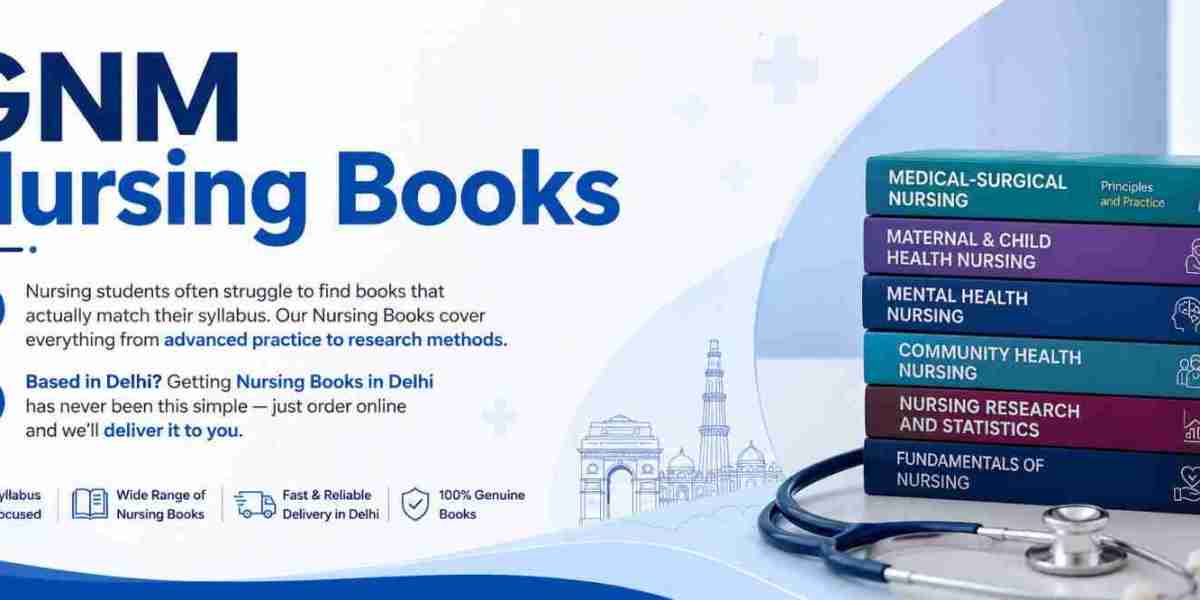
How to Choose the Right GNM Nursing Book for Students and Exam Preparation
Three years goes quickly when you are juggling lectures, ward postings, assignments, and exams. Most GNM students discover this early. By the time the first internal test arrives, they have also learned that the study material they use decides how smoothly they get through all of it. A well-chosen GNM Nursing Book can turn a confusing chapter into something you can follow, revise, and actually remember.
The General Nursing and Midwifery diploma is practical and demanding. You are expected to understand theory, perform skills on real patients, and sit written exams along the way. With so many titles available, picking the right GNM Nursing Books takes a little thought. This guide walks you through how to choose, what each subject involves, and how to turn your books into marks and, more importantly, real understanding.
Introduction to GNM Nursing Education
The GNM programme trains students to provide bedside care, support doctors, work in communities, and handle maternal and child health. Over three years, you move from basic nursing skills to more complex care, with clinical postings running alongside classroom learning.
Because the course covers so many areas, no single day of study looks the same. One week you may be reading about nutrition, and the next you are learning how to talk to a patient with a mental health condition. Good textbooks give this variety some order. They break each subject into units, explain terms clearly, and show you what nurses are expected to do.
Why Choosing the Right Nursing Study Material Matters
A textbook is more than something you read before exams. For many students, it is the one place where a subject is explained slowly and completely. Classroom time is limited, and ward postings show you only the cases that happen to arrive that week.
The right book helps in a few clear ways:
- It explains difficult ideas patiently. You can re-read a paragraph as many times as you need.
- It keeps you aligned with the syllabus. You spend time on topics that will actually be tested.
- It builds your medical vocabulary. Terms become familiar when you see them repeatedly in context.
- It makes revision quicker. Summaries, tables, and diagrams save hours before exams.
The wrong book does the opposite. It can bury you in detail you do not need or skip topics your exam expects. That is why the choice deserves a few minutes of real attention.
How to Select a Suitable GNM Nursing Book
Picking a book is easier when you follow a simple routine instead of choosing by cover or popularity.
Start with Your Syllabus
Your syllabus is your map. Before you buy anything, read through the list of units for your year and subject. Then open the book’s contents page and compare the two. Every unit should appear in the book, and the book should not spend half its pages on topics you will never be asked about.
If you are comparing different GNM Nursing Books for the same subject, this syllabus check usually narrows your choices quickly.
Check How the Book Explains Things
Open a topic you currently find difficult and read one page. If you can follow the idea without reading the same line three times, the book suits your level. If it feels like a puzzle, try another.
Look for Language You Can Handle
Understanding comes before everything else. Some students learn faster from simple English, while others prefer a regional-language edition. Neither choice is wrong. Pick whichever lets you grasp a concept the first time.
Look for Visual Support
Diagrams, flow charts, tables, and labelled pictures matter a lot in nursing. They help in anatomy, in procedures, and in remembering classifications. A book with clear visuals often beats a heavier book with plain text.
Ask Teachers and Seniors
Your instructors know the exam pattern. Seniors who have just finished the course know which books they really used and which ones sat unopened. A five-minute chat can save you money and frustration.
Important Subjects Covered in GNM Nursing Courses
Different institutions arrange subjects in slightly different ways, so always follow your own syllabus. In general, these are the areas where students most need dependable study material.
Community Health Nursing
This subject looks beyond the hospital to families, villages, schools, and neighbourhoods. It covers disease prevention, immunisation, national health programmes, and how to support people in their own surroundings. Community Health Nursing Books with real-life examples make it easier to picture how a programme works on the ground.
Psychiatric and Mental Health Nursing
Here you learn about mental health conditions, therapeutic communication, and respectful, ethical care. Psychiatric and Mental Health Nursing Books that include short case examples and sample conversations help you understand how theory sounds in practice.
Food and Nutrition
Nutrition affects recovery, growth, and disease prevention. This subject covers nutrients, balanced diets, special diets for patients, and the nurse’s role in nutrition education. Tables and diet charts in a book can make this subject easier to revise.
Paediatric Nursing
Children are not small adults, and this subject shows why. You study growth and development, common childhood illnesses, vaccination, and age-appropriate care. Paediatric Nursing Books with milestone charts and age-wise guidelines are especially handy for quick revision.
Environmental Hygiene
This subject deals with clean water, sanitation, waste disposal, housing, and how the environment affects health. It is a core part of community-oriented nursing, and a good book connects these topics to everyday health problems.
Health Education
Nurses teach as much as they treat. Health education covers how to plan and deliver messages to patients, families, and groups. Look for books that explain teaching methods and include practical examples.
Communication Skills
Clear, kind communication is part of safe nursing. This subject covers listening, explaining, documenting, and handling difficult conversations. A book that includes sample situations can help you practise.
Nursing Research and Statistics
Many students find this subject intimidating at first. It introduces the basics of research, data collection, and simple statistics. Choose a book that explains each step slowly with worked examples, because this is a subject where practice matters more than memorising.
Benefits of Using Subject-Specific Nursing Textbooks
You might wonder whether one combined guide could cover everything. It can work for quick revision, but dedicated subject books offer real advantages.
First, they go deeper. A single guide tends to skim, while a dedicated book gives each topic room to be explained properly.
Second, they keep your study organised. When you sit down for Paediatric Nursing, you open one book and stay with it.
Third, they are easier to personalise. You can add margin notes, tag important pages, and build your own revision system around them.
Students looking for Nursing Books for GNM Students will often find that mixing both approaches works best: subject books for learning, and a short guide for last-minute revision.
How Nursing Books Support Examination Preparation
Nursing exams test more than memory. They ask whether you can apply a concept to a patient situation. Good study material supports this in several ways.
Structured Learning
Chapters follow a logical order, so you can plan your study around them. You always know what to read next.
Better Answer Writing
Reading well-organised explanations teaches you how to structure your own answers, with definition, causes, signs, management, and nursing care in sensible order.
Practice Questions
Many books include end-of-chapter questions, short notes, and objective questions. Attempting them shows you what you really know.
A word of honesty here: no book can guarantee exam success. Results come from understanding, regular practice, and steady effort. Good Nursing Exam Preparation Books simply make that effort more effective.
Tips for Effective Nursing Study and Revision
Owning the right book is half the job. These habits help you use it well.
- Make a timetable you can actually follow. Plan around your classes and clinical duty hours, not an ideal day that never happens.
- Study one subject at a time. Switching every half hour splits your focus.
- Write notes in your own words. Short notes made from memory stick better than highlighting whole pages.
- Revise in spaced intervals. Return to a topic after a day, a week, and a month.
- Practise questions regularly. Do not wait until the last week.
- Learn terms gradually. Keep a small list of new words and review it a few times a week.
- Study with a friend sometimes. Explaining a topic to someone else shows quickly whether you understand it.
Thirty to forty-five minutes of focused study every day is far more effective than one long, tiring session the night before a paper.
How to Choose Books According to the Syllabus
Think of the syllabus as a shopping list. Here is a simple way to use it:
- Write down the subjects for your current year.
- Note the major units under each subject.
- Compare each unit with the contents page of the book you are considering.
- Prefer updated editions, especially for subjects like community health and nutrition where guidelines change.
- Add a reference book only for topics you find difficult.
Do not buy for all three years at once. A book that suits first-year content will not cover what you need in the final year.
The Importance of Theoretical Knowledge and Practical Learning
GNM is a practical course, but practice without theory is risky and theory without practice is incomplete. Textbooks teach the reason behind each action. Ward postings teach how to do it.
When you read about a procedure, such as checking vital signs or giving an injection, try to connect it to what you see or do in the lab. Always practise under the guidance of your clinical instructor. A book is a helper, not a replacement for supervision or professional guidance.
Common Mistakes Students Should Avoid When Selecting Nursing Books
Even careful students make a few predictable errors.
Mistakes That Waste Money
- Buying without checking the syllabus. A popular book may still miss what your exam covers.
- Buying duplicates. Check what you already own or what seniors can lend.
- Choosing only by price. A cheaper book that you cannot understand is not a bargain.
Mistakes That Waste Time
- Relying on a single source for everything. One book rarely explains every topic equally well.
- Ignoring practical learning. Clinical skills matter for exams and for future patients.
- Collecting too many reference books. More books do not mean more learning.
Why Edition and Accuracy Matter
Health guidelines, immunisation schedules, and national programmes change over time. An older edition may not reflect what your syllabus expects today.
How to Verify a Book
Check the author, edition, and publication year, then compare the contents with your syllabus. If you are unsure, ask your subject teacher.
Quick Checklist Before You Buy
- Is it written for GNM students?
- Does it match your subject and year?
- Does it cover your syllabus units?
- Is the edition reasonably recent?
- Is the language comfortable for you?
- Does the price fit your budget?
Frequently Asked Questions About GNM Nursing Books
Can I use BSc Nursing books for GNM?
They can serve as extra reference, but their depth and structure are designed for a different course. Your main book should match the GNM syllabus.
Should I buy one book for each subject?
In most cases, yes. Dedicated books explain topics more fully and are easier to revise. A short guide can be added for quick last-minute review.
Are the latest editions always necessary?
Not for every subject. Fast-changing areas such as community health and nutrition benefit most from recent editions, while basic subjects change less often.
How do I know whether a GNM Nursing Book is suitable?
Compare its contents with your syllabus, read one sample page, check its diagrams and practice questions, and ask your teachers or seniors for their opinion.
Can a book alone help me pass?
No. A book supports learning, but understanding, regular revision, and supervised practical training are what prepare you well.
Conclusion
GNM is a demanding course, and it is also a rewarding one. The knowledge you gather over these three years will help you care for patients, support families, and serve communities. Your books are the base of that learning, so they deserve careful selection.
Start with your syllabus, check the language and explanations, and compare more than one option before you commit. Build steady study habits, revise often, and practise your skills under proper supervision. When you are ready to browse by subject, explore the available GNM Nursing Books and choose the ones that suit your year and your style of learning. With the right material and regular effort, your GNM journey becomes far more manageable.




