


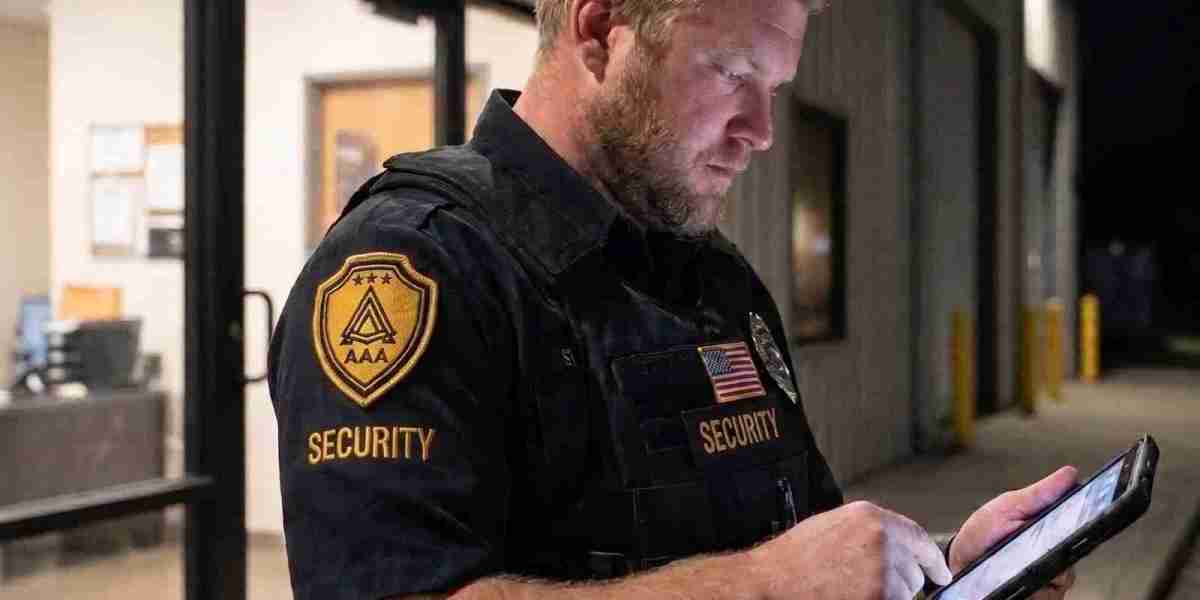

Banks are an essential part of everyday life. People depend on them to deposit money, withdraw cash, manage savings, transfer funds, and handle important financial transactions. Businesses also rely on banking institutions to protect their assets and support their daily operations. Because banks handle valuable resources and confidential information, maintaining a safe and secure environment is a major responsibility.
Modern banks use several security measures, including CCTV cameras, alarm systems, access controls, and digital monitoring tools. However, technology alone cannot manage every security concern. Cameras can record activity, but they cannot independently calm an aggressive visitor, guide customers during an emergency, or make every decision that requires human judgment.
This is why trained security guards remain an important part of banking security. They help monitor the premises, recognize unusual behavior, maintain order, and respond according to established procedures. Their training allows them to approach different situations professionally while prioritizing the safety of employees, customers, and visitors.
For banks, hiring trained security personnel is not simply about having someone stationed at the entrance. It is about creating a reliable security system that combines observation, communication, preparation, and responsible action.
In this article, we explore why trained security guards are important in banking institutions, the skills they need, and how professional security services can support safer banking environments.
Why Banking Institutions Need Professional Security
Banks face security challenges that differ from those of many other businesses. They handle financial assets, maintain confidential records, and welcome customers throughout the day. Their premises may also include restricted offices, cash-handling areas, employee-only spaces, and equipment that requires additional protection.
Without suitable security arrangements, banks may face risks involving theft, unauthorized access, disruptive behavior, property damage, and emergencies.
Professional security guards help banks manage these risks through a visible presence and consistent security procedures. They also provide a point of contact for employees and visitors who need assistance.
The main reasons banks need professional security include:
Protecting employees, customers, and visitors.
Helping discourage theft, robbery, and unauthorized access.
Monitoring entrances and designated sensitive areas.
Supporting emergency response procedures.
Maintaining order during busy banking hours.
Identifying and reporting potential safety concerns.
Supporting the proper use of security equipment.
Helping customers feel more comfortable while visiting the branch.
A professional security presence can improve awareness throughout the premises. When guards understand their responsibilities and communicate effectively, they can help bank management address concerns before they develop into more serious problems.
Training Helps Guards Recognize Security Risks
One of the greatest advantages of trained security guards is their ability to observe situations carefully and identify potential risks. Effective security requires more than simply watching people enter and leave a building. It involves understanding the environment, recognizing unusual circumstances, and knowing when a concern should be reported.
For example, a guard may notice an attempt to enter a restricted area, a damaged door, or repeated efforts to bypass established access procedures. Training helps the guard respond according to the bank's policies instead of making assumptions or reacting emotionally.
Security awareness training may cover:
Observing entrances, exits, and public areas.
Identifying unusual behavior without unfairly judging individuals.
Understanding the bank's access-control procedures.
Reporting potential hazards and suspicious activity.
Recognizing situations that require immediate assistance.
Communicating observations to supervisors.
Documenting incidents accurately.
It is important to remember that unusual behavior does not automatically indicate criminal intent. A customer might be confused, anxious, or unfamiliar with banking procedures. Trained guards use judgment and professional communication to assess situations fairly.
This balanced approach helps maintain security without creating an uncomfortable atmosphere for legitimate customers.
Professional Guards Help Protect Employees and Customers
Banks should be welcoming places where people can manage their finances without unnecessary fear or disruption. Employees need to concentrate on their work, while customers expect to complete transactions in a professional environment.
Trained security guards help support these expectations by remaining alert, assisting visitors, and addressing concerns appropriately.
Their responsibilities may include directing customers toward service areas, observing public spaces, managing access to restricted locations, and reporting disruptive behavior. When a visitor needs assistance, a professional guard should communicate clearly and respectfully.
This approach provides several benefits:
Customers have a visible person to approach when they need help.
Employees can report concerns to an assigned security professional.
Potential conflicts may be addressed before they escalate.
Visitors receive guidance about access requirements.
Security concerns can be communicated through established channels.
Professional conduct matters because guards represent the security arrangements of the institution. A calm and respectful approach can reassure customers while allowing guards to remain attentive to their duties.
Banks should therefore evaluate communication skills and customer-service abilities alongside technical security training when selecting personnel.
Training Improves Emergency Preparedness
Emergencies can happen without warning. A bank may experience a robbery attempt, medical emergency, fire alarm, aggressive visitor, or another event requiring immediate attention.
During these situations, employees and customers may feel confused or frightened. Trained security guards can help by following established emergency procedures, communicating important information, and assisting within the limits of their training.
Emergency preparedness may include training in:
Fire and evacuation procedures.
Emergency communication and reporting.
Basic first aid or CPR, where appropriately certified.
Conflict de-escalation.
Recognizing environmental hazards.
Contacting emergency services.
Protecting confidential information during incidents.
Coordinating with bank management and responding authorities.
A well-trained guard understands that the safety of people comes before the protection of property. For example, during a threatening incident, the correct response may involve alerting authorities, following the bank's emergency plan, and avoiding actions that could increase the danger.
Banks should also conduct periodic drills so employees and security personnel understand their respective responsibilities. Training becomes more effective when everyone knows how to communicate and where to find the relevant procedures.
The Role of Security Guards in Preventing Theft
Theft prevention requires awareness, consistent procedures, and timely reporting. Although no security arrangement can guarantee that theft will never occur, trained personnel can help reduce opportunities for unauthorized activity.
Guards may monitor public areas, observe designated sensitive locations, support visitor procedures, and report conditions that create security concerns.
For example, if a guard notices an unsecured restricted entrance, they can report the issue and follow the bank's instructions for addressing it. If someone attempts to access an employee-only area without authorization, the guard can respond according to established policy.
Effective theft-prevention practices may involve:
Monitoring designated areas of the premises.
Following access-control procedures.
Reporting unsecured doors and other vulnerabilities.
Observing activity around entrances and exits.
Helping staff maintain orderly public spaces.
Documenting security-related incidents.
Communicating recurring concerns to management.
Training helps guards understand the difference between observation and accusation. They should record factual information, avoid unsupported conclusions, and escalate concerns through appropriate channels.
When guards and bank employees work together, potential issues can be reported more consistently and addressed more quickly.
Understanding Armed and Unarmed Security Services
Not every banking institution requires the same level of security. A branch's location, operating hours, physical layout, customer activity, and identified risks all influence the type of security arrangement that may be appropriate.
Banks should conduct a professional risk assessment before choosing armed or unarmed personnel. The decision should also account for applicable laws, licensing requirements, insurance considerations, and the institution's policies.
When armed security may be suitable
Armed security may be considered when a documented risk assessment supports a higher level of protection and the assignment is legally permitted. Armed guards require appropriate licensing, specialized training, and a clear understanding of their legal responsibilities.
A bank considering an Armed Security Guard Dallas assignment should evaluate its specific security needs rather than assuming that armed protection is necessary for every location.
Relevant considerations may include the surrounding environment, the nature of identified threats, the site's operating procedures, and the ability to coordinate with law enforcement when required.
Armed personnel must understand when intervention is appropriate, how to communicate under pressure, and how to prioritize human safety. Their responsibilities should be clearly defined before the assignment begins.
When unarmed security may be suitable
Unarmed guards can provide valuable protection through observation, access monitoring, customer assistance, patrols, and incident reporting. They may be well suited to locations where the main requirements involve maintaining order, monitoring the premises, and supporting everyday security procedures.
Banks considering Unarmed Security Guards Dallas should assess whether a non-armed approach meets their identified risks and operational requirements.
Unarmed personnel also need appropriate training. Skills in observation, communication, conflict management, emergency procedures, and incident documentation are essential to effective performance.
The right choice depends on the institution's circumstances. A qualified provider should explain the available options and help management understand the responsibilities and limitations associated with each approach.
Security Guards and CCTV Monitoring Work Better Together
Technology plays an important role in banking security. CCTV cameras can help monitor activity, alarms can signal certain events, and access-control systems can restrict entry to designated areas.
However, technology and trained personnel serve different purposes. Cameras provide visual information, while guards can interpret relevant observations, communicate with employees, and follow established response procedures.
When these resources work together, banks can improve their awareness of potential concerns.
Security guards may help by:
Monitoring designated areas according to their assignment.
Responding to reports from authorized monitoring personnel.
Reporting damaged equipment or blocked camera views.
Following procedures when alarms are activated.
Recording relevant observations after an incident.
Coordinating with authorized staff during emergencies.
For example, a monitoring system may alert staff to activity near a restricted entrance. A guard can then follow the bank's procedures to assess the situation safely and report any findings.
Banks should establish clear responsibilities for surveillance monitoring, footage access, information retention, and privacy. Appropriate training ensures that security technology is used responsibly and consistently.
Access Control Helps Protect Restricted Areas
Bank buildings often contain spaces that are not intended for general public access. These may include employee offices, records rooms, equipment areas, and other locations where sensitive information or assets are handled.
Access-control procedures help ensure that only authorized individuals enter these areas. Security guards can support these procedures by observing entry points, checking authorization where required, and reporting attempts to bypass established controls.
Important access-control responsibilities may include:
Directing visitors to the correct reception area.
Following approved visitor registration procedures.
Monitoring employee-only entrances.
Reporting unauthorized access attempts.
Identifying damaged locks or malfunctioning doors.
Maintaining records when required by bank policy.
Guards should understand that access-control requirements must be applied consistently and respectfully. They should also know when to contact a supervisor if an authorization question cannot be resolved.
Clear procedures reduce confusion and help employees understand their responsibility for protecting restricted spaces.
Communication Skills Are Essential for Security Personnel
Security work involves interacting with people from different backgrounds and responding to situations that may be stressful. A guard who communicates poorly can unintentionally increase tension, even when trying to resolve a problem.
Training in professional communication helps guards remain calm, explain instructions clearly, and handle disagreements appropriately.
For example, a customer may become frustrated by a delayed transaction or a request to follow an access procedure. A trained guard should listen, explain the relevant requirement politely, and seek assistance when necessary.
Effective communication includes:
Speaking clearly and respectfully.
Listening carefully to customers and employees.
Avoiding unnecessary confrontation.
Using approved de-escalation techniques.
Reporting important information accurately.
Keeping supervisors informed of developing concerns.
Respecting privacy and confidentiality.
Communication is also critical during emergencies. Guards may need to share concise information with bank management or emergency responders while following established protocols.
These skills help create a safer environment while maintaining professional relationships with customers and employees.
Regular Patrols Help Maintain Security Awareness
Security patrols allow personnel to observe different areas of a bank's premises and identify conditions that may need attention. Depending on the assignment, patrols may cover entrances, parking areas, exterior walkways, public spaces, and designated restricted locations.
A consistent patrol routine can help identify problems such as poor lighting, damaged access points, unattended property, or unusual activity.
Typical patrol responsibilities include:
Checking designated areas according to the agreed schedule.
Reporting maintenance issues that could affect safety.
Observing activity around the building.
Confirming that access procedures are being followed.
Recording patrols and significant findings.
Informing supervisors about recurring concerns.
Patrols should be planned according to the location's risk assessment and operational needs. Guards should understand their assigned areas and know how to report anything that requires further attention.
Accurate patrol records can also help management review whether agreed procedures are being followed and identify opportunities to improve security arrangements.
Accurate Incident Reporting Supports Better Decisions
Incident reporting is an important responsibility for trained security guards. Reports provide bank management with a record of security concerns and can help authorized personnel understand what happened, what actions were taken, and whether follow-up is required.
A good incident report should be factual, organized, and completed according to the bank's procedures.
It may include:
The date, time, and location of the incident.
A clear description of the observed event.
Actions taken by security personnel.
Notifications made to supervisors or authorities.
Relevant witness information, where appropriate.
Any follow-up actions required.
Training helps guards distinguish between what they personally observed and what they were told by another person. This distinction supports accurate documentation and reduces the risk of unsupported conclusions.
Bank management can review reports to identify recurring problems, assess the effectiveness of existing procedures, and decide whether additional training or security measures are necessary.
Incident records must be handled confidentially and shared only with authorized individuals.
Training Promotes Accountability and Professional Conduct
A security guard's effectiveness depends on more than physical presence. Professional conduct, reliability, sound judgment, and a clear understanding of responsibilities are equally important.
Banks should work with providers that establish performance expectations, supervise assigned personnel, and offer relevant training. These measures help ensure that guards understand the standards required for their role.
Important professional expectations include:
Arriving on time and remaining attentive.
Following post orders and site-specific procedures.
Treating customers and employees respectfully.
Protecting confidential information.
Reporting incidents honestly and promptly.
Avoiding unauthorized actions.
Understanding the limits of their authority.
Supervision also matters. Regular reviews and constructive feedback can help identify training needs and address performance concerns.
When guards understand what is expected of them, banks can build more consistent security practices and improve coordination between security personnel and employees.
How Banks Can Choose a Qualified Security Provider
Selecting a security company is an important decision for any banking institution. The provider should understand the site's risks, explain its service arrangements clearly, and demonstrate that its personnel are appropriately qualified for their assignments.
Banks should consider several factors before entering into an agreement.
Licensing and legal compliance
Verify that the company and assigned personnel meet all applicable licensing and qualification requirements. Additional requirements may apply to armed assignments.
Training and experience
Ask about guard training, relevant banking or commercial security experience, emergency preparedness, and ongoing professional development.
Customized security planning
The provider should consider the branch's layout, operating hours, customer traffic, access requirements, and identified risks before recommending a security plan.
Supervision and accountability
Find out who supervises the guards, how attendance is verified, and how service concerns are handled.
Reporting and communication
Confirm how incidents are documented, how quickly concerns are communicated, and who serves as the main contact for bank management.
Technology and supporting services
Ask whether the company offers appropriate patrol verification, officer tracking, incident reporting, and CCTV monitoring support.
Insurance and service agreements
Review relevant insurance coverage, the scope of services, staffing arrangements, and responsibilities under the contract.
Banks should compare providers based on suitability, professionalism, and reliability rather than price alone. The goal is to establish a security arrangement that supports the institution's needs over time.
How AAA Guards Supports Business Security in Texas
AAA Guards provides armed and unarmed security services across Texas, supporting businesses and commercial properties with trained security personnel, patrols, access control, and CCTV monitoring support.
Every organization has different security requirements. Financial institutions should identify their main concerns, operating needs, and expectations before choosing a service arrangement.
For businesses exploring a Security guard service Dallas TX, important considerations include:
The size and layout of the premises.
The number of entrances and restricted areas.
Customer traffic and operating hours.
The need for armed or unarmed personnel.
Patrol requirements and access-control procedures.
Communication, supervision, and incident-reporting expectations.
A tailored approach helps align security coverage with the location's actual requirements. Before hiring any provider, banks should verify applicable licenses, personnel qualifications, insurance coverage, and the precise services included in the agreement.
AAA Guards aims to help businesses create more organized security arrangements through professional personnel and clearly defined service responsibilities.
To learn more about available services, visit the official website at https://aaaguards.com/.
Building a Long-Term Security Strategy
Hiring trained guards is an important step, but effective banking security requires ongoing attention. Risks can change as a branch expands, operating procedures evolve, or the surrounding environment changes.
Banks should periodically review their security arrangements to ensure that existing procedures remain suitable.
A practical review may include:
Assessing current security risks.
Reviewing entrance and exit procedures.
Checking alarms and surveillance equipment.
Conducting emergency drills.
Reviewing incident and patrol reports.
Providing refresher training where needed.
Gathering feedback from employees and security supervisors.
Updating procedures when operational requirements change.
Employee awareness should also remain a priority. Bank staff should know how to report suspicious activity, contact security personnel, and follow emergency instructions.
Regular reviews help institutions identify gaps and make improvements before a small concern becomes a larger problem.
Conclusion
Trained security guards play an essential role in helping banking institutions protect employees, customers, property, and daily operations. Their ability to recognize risks, manage access, conduct patrols, communicate professionally, and follow emergency procedures makes them a valuable part of a comprehensive security plan.
Training is especially important because guards must make sound decisions in changing situations. They need to understand their responsibilities, respect legal boundaries, maintain accurate records, and prioritize the safety of people.
Banks can strengthen their security by combining qualified personnel with suitable technology, clear policies, regular training, and effective communication. Choosing a professional security provider also helps ensure that coverage is based on the institution's actual needs.
AAA Guards supports businesses across Texas with armed and unarmed security services, patrols, access control, and CCTV monitoring support. Financial institutions can explore available services and discuss their security requirements by visiting https://aaaguards.com/.
A safer banking environment begins with preparation, professional training, and a commitment to protecting the people who depend on financial institutions every day.



