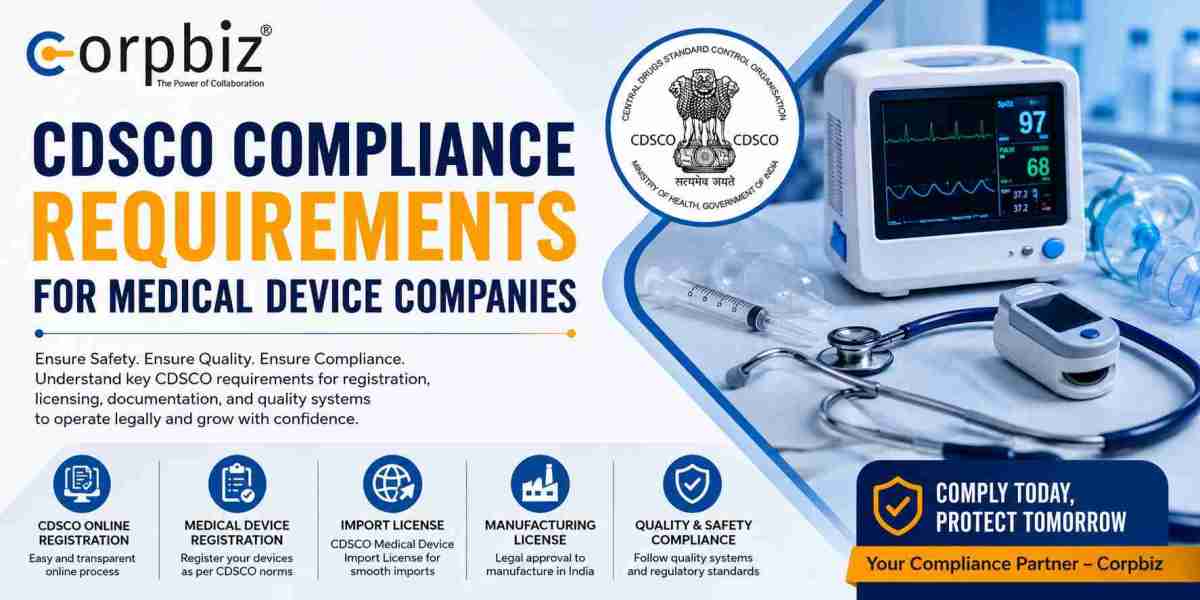
Medical devices play an important role in healthcare. Whether it is a thermometer, surgical gloves, MRI machine, or implant, every medical device must be safe and effective before reaching patients. In India, the Central Drugs Standard Control Organisation (CDSCO) regulates medical devices to ensure quality and safety under the Medical Devices Rules, 2017. Medical devices are classified into risk-based categories (Class A to Class D), and manufacturers and importers must obtain the required approvals before selling their products.
For manufacturers, importers, and distributors, understanding CDSCO compliance is essential. Failure to comply can result in penalties, product recalls, or suspension of licenses.
In this blog, we explain the key CDSCO compliance requirements for medical device companies in simple words.
What is CDSCO?
The Central Drugs Standard Control Organisation (CDSCO) is India's national regulatory authority under the Ministry of Health and Family Welfare. It regulates:
- Medical Devices
- Drugs
- Cosmetics
- In-Vitro Diagnostic (IVD) Devices
Its main objective is to ensure that products available in the Indian market are safe, effective, and of high quality.
Why is CDSCO Compliance Important?
CDSCO compliance helps companies:
- Legally manufacture or import medical devices
- Ensure patient safety
- Build customer trust
- Avoid legal penalties
- Increase market acceptance
- Expand business internationally
Who Needs CDSCO Compliance?
The following businesses must comply with CDSCO regulations:
- Medical device manufacturers
- Medical device importers
- Foreign manufacturers selling in India
- Authorized Indian Representatives (AIR)
- Medical device distributors
- Testing laboratories
Understanding Medical Device Classification
CDSCO classifies medical devices according to their risk level.
Device Class | Risk Level | Examples |
Class A | Low Risk | Surgical gloves, bandages |
Class B | Low to Moderate Risk | Syringes, infusion sets |
Class C | Moderate to High Risk | Ventilators |
Class D | High Risk | Heart valves, pacemakers |
The compliance process depends on the device classification. Higher-risk devices require stricter evaluation and licensing.
Major CDSCO Compliance Requirements
1. CDSCO Online Registration
The first step is completing CDSCO Online Registration through the official SUGAM portal.
Applicants need to:
- Create an account
- Submit application forms
- Upload required documents
- Pay applicable government fees
- Track application status online
Online filing makes the registration process faster and more transparent.
- CDSCO Medical Device Registration
Every regulated medical device must complete CDSCO Medical device registration before manufacturing or selling in India.
The process generally includes:
- Device classification
- Technical documentation
- Quality Management System documents
- Device testing reports
- Manufacturing details
- Clinical evidence (if required)
- Manufacturing License
Indian manufacturers must obtain a manufacturing license before commercial production.
Depending on the device class, the application is submitted to either:
- State Licensing Authority (SLA)
- Central Licensing Authority (CLA)
- CDSCO Medical Device Import License
Companies importing medical devices into India require a CDSCO Medical Device import license.
Foreign manufacturers must:
- Appoint an Authorized Indian Representative
- Submit technical documents
- Provide Free Sale Certificate
- Submit Quality Management System documents
- Obtain import approval before selling in India
- Quality Management System (QMS)
Medical device manufacturers should maintain a Quality Management System.
A good QMS includes:
- Manufacturing controls
- Product testing
- Quality checks
- Complaint handling
- Corrective actions
- Risk management
- Labeling Compliance
Medical device labels should clearly display:
- Product name
- Manufacturer details
- Batch number
- Manufacturing date
- Expiry date (where applicable)
- Storage instructions
- Importer information
Improper labeling may lead to regulatory action.
- Technical Documentation
Companies should maintain complete technical records including:
- Device Master File (DMF)
- Plant Master File (PMF)
- Test reports
- Risk analysis
- Clinical evaluation
- Product specifications
These documents may be inspected by CDSCO authorities.
- Post-Market Surveillance
Compliance does not end after product approval.
Manufacturers should:
- Monitor product performance
- Report adverse events
- Handle complaints
- Conduct recalls if required
- Maintain complaint records
- Regular Audits
Medical device companies should conduct periodic internal audits to verify:
- Manufacturing compliance
- Documentation
- Product quality
- Employee training
- Regulatory updates
Documents Required for CDSCO Compliance
Some commonly required documents include:
- Company Incorporation Certificate
- Manufacturing License
- Import Export Code (for importers)
- ISO Certificate
- Device Master File
- Plant Master File
- Free Sale Certificate (for imported devices)
- Product Test Reports
- Authorized Indian Representative documents
- Label samples
Common Compliance Challenges
Medical device companies often face challenges such as:
- Incorrect device classification
- Missing documents
- Delays in approvals
- Technical documentation errors
- Frequent regulatory updates
- Import documentation issues
Professional guidance can help reduce these issues.
Penalties for Non-Compliance
Failure to comply with CDSCO regulations may result in:
- License suspension
- Product seizure
- Product recall
- Monetary penalties
- Cancellation of approvals
- Legal action
How Corpbiz Can Help
Corpbiz offers complete regulatory support for medical device businesses across India.
Our services include:
- CDSCO Online Registration
- CDSCO Medical device registration
- CDSCO Medical Device import license assistance
- Manufacturing license support
- Documentation preparation
- Technical file review
- Regulatory consultation
- Compliance management
- Renewal assistance
Our experts help businesses complete the registration process smoothly while ensuring compliance with applicable regulations.
Note on CDSCO Cosmetic Manufacturing License
Although this blog focuses on medical devices, CDSCO also regulates cosmetics under separate provisions. Businesses involved in cosmetic manufacturing may need a CDSCO cosmetic manufacturing license, depending on the applicable regulatory framework and product category.
Conclusion
CDSCO compliance is essential for every medical device company operating in India. From obtaining CDSCO Online Registration and CDSCO Medical device registration to securing a CDSCO Medical Device import license, every step helps ensure that products meet the required safety and quality standards.
Keeping proper documentation, following quality systems, and complying with regulatory requirements can help businesses avoid penalties and build long-term credibility in the healthcare market.
Partnering with experienced compliance professionals like Corpbiz can simplify the entire registration and compliance process while allowing businesses to focus on innovation and growth.
Frequently Asked Questions (FAQs)
1. What is CDSCO?
CDSCO is India's national regulatory authority responsible for regulating medical devices, drugs, and cosmetics.
2. Is CDSCO registration mandatory for medical devices?
Yes. Regulated medical devices must complete CDSCO registration before being manufactured, imported, or sold in India.
3. What is CDSCO Online Registration?
CDSCO Online Registration is the online application process completed through the official SUGAM portal for obtaining approvals and licenses.
4. Who needs a CDSCO Medical Device import license?
Any company importing regulated medical devices into India must obtain a CDSCO Medical Device import license before import.
5. What documents are required for CDSCO Medical device registration?
Generally, applicants need company documents, quality certificates, technical files, product specifications, test reports, and other supporting documents.
6. Does CDSCO regulate cosmetics?
Yes. CDSCO regulates cosmetics, and businesses may require a CDSCO cosmetic manufacturing license based on the applicable rules.
7. How long does the CDSCO registration process take?
The timeline depends on the device classification, completeness of documents, and regulatory review process.
8. Can Corpbiz help with CDSCO compliance?
Yes. Corpbiz provides end-to-end assistance for CDSCO registrations, import licenses, documentation, renewals, and ongoing compliance.
Author Profile
Atul Shukla
Senior Regulatory Compliance Consultant – Corpbiz
Atul Shukla is an experienced regulatory consultant specializing in CDSCO approvals, medical device compliance, drug licensing, and cosmetic regulations. She has assisted numerous manufacturers, importers, and healthcare businesses in obtaining regulatory approvals while ensuring compliance with Indian laws. At Corpbiz, she regularly writes informative articles that simplify complex regulatory processes for businesses.