


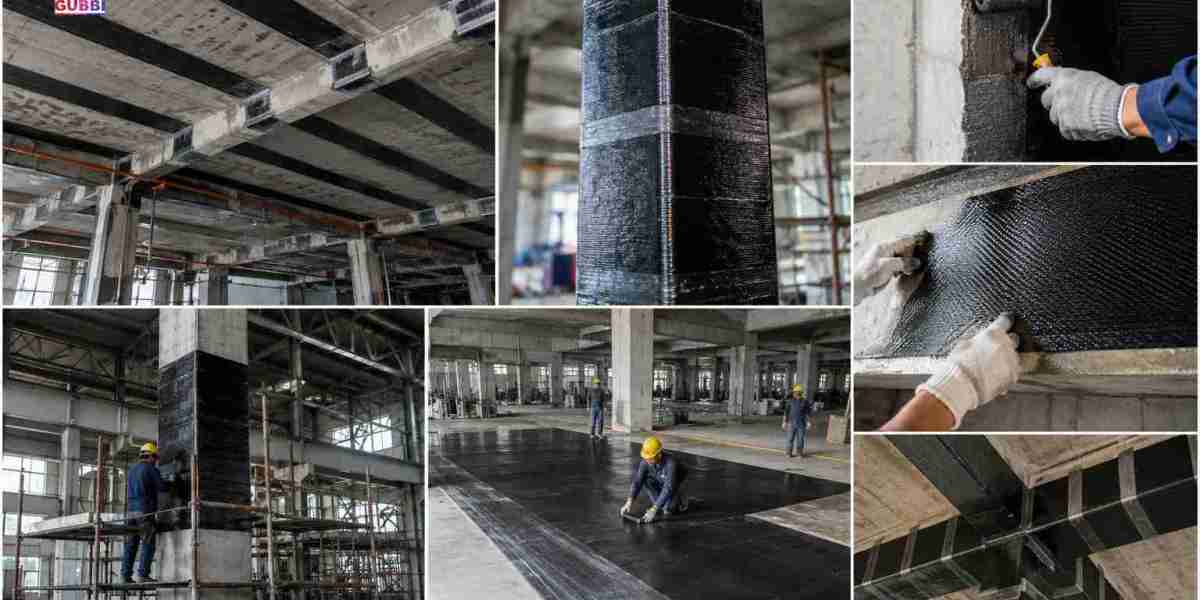
Concrete structures are designed to withstand different loads throughout their service life, but changing requirements can affect their original performance. Industrial facilities, commercial buildings, warehouses, bridges, and other infrastructure may eventually require structural strengthening. Carbon fiber wrapping services offers a specialised approach for upgrading selected reinforced cement concrete members without substantially increasing their dimensions. Understanding its applications, limitations, installation requirements, and suitability helps property owners make informed decisions about structural rehabilitation.
What Is Carbon Fiber Wrapping?
Carbon fiber wrapping is a structural strengthening technique that uses Carbon Fiber Reinforced Polymer (CFRP) fabrics, sheets, or laminates bonded to an existing concrete surface with a compatible resin system. The carbon fibers provide tensile reinforcement, while the bonding system transfers stresses between the composite material and the concrete. When properly designed and installed, this arrangement can improve the structural performance of selected beams, columns, slabs, and other concrete members.
Why Do Existing Structures Need Carbon Wrapping?
Structural deficiencies can develop because of increased loading, ageing materials, reinforcement corrosion, construction defects, or changes in building usage. For example, an industrial unit may introduce heavier machinery, or a commercial building may require modifications that increase floor loading. Such changes can place additional demands on existing structural members. A detailed structural assessment helps engineers determine whether carbon fiber strengthening is appropriate or whether another rehabilitation method would provide better results.
How Carbon Wrapping Beams Improves Structural Performance
Beams transfer loads from floors and other structural elements to columns, walls, and supporting foundations. When a beam cannot adequately meet its required performance, engineers may consider carbon fiber strengthening as part of a suitable intervention. Depending on the design, CFRP reinforcement can contribute to improved flexural or shear resistance. The final arrangement depends on the beam's dimensions, existing reinforcement, loading conditions, concrete quality, and the structural deficiency identified during assessment.
Common Signs That RCC Beams Require Assessment
Visible cracks, excessive deflection, concrete spalling, exposed reinforcement, and recurring deterioration can indicate that an RCC beam requires professional evaluation. However, not every crack means the beam has lost its load-bearing capacity, and not every damaged beam requires carbon wrapping. The location, width, pattern, and development of cracks must be examined alongside loading conditions and material deterioration. Early assessment helps identify the underlying problem before selecting an appropriate repair or strengthening strategy.
Major Applications of Carbon Fiber Wrapping Services
Carbon fiber wrapping services are used in selected structural rehabilitation projects where additional reinforcement is required without extensive changes to existing geometry. Applications may include industrial structures, commercial buildings, warehouses, bridges, and infrastructure assets. Engineers assess whether the composite system can address the specific structural requirement while considering access, environmental exposure, and installation constraints. The objective is to improve the performance of an existing member through an engineered strengthening arrangement rather than applying carbon fiber as a general surface treatment.
Carbon Wrapping for Industrial Buildings
Industrial buildings may experience changing operational demands throughout their service life. New production lines, heavier equipment, modified storage arrangements, and machinery upgrades can increase structural loading beyond the original assumptions. Carbon wrapping beams may be considered when an engineering assessment identifies a suitable strengthening application. For operating facilities, the method can offer an advantage where reducing additional structural weight and limiting changes to existing dimensions are important considerations during planned rehabilitation or capacity upgrades.
Carbon Fiber Strengthening for Commercial Structures
Commercial structures may require strengthening following renovations, changes in use, or the discovery of structural deficiencies. Office buildings, shopping complexes, business premises, and other commercial properties often have restrictions on available space and acceptable construction disruption. Carbon fiber strengthening can provide a suitable option for selected concrete members when the structural design supports its use. Engineers must evaluate the required capacity, fire protection, access, and construction sequence before deciding whether CFRP is appropriate.
Carbon Wrapping for Bridges and Infrastructure
Bridges and infrastructure structures experience repeated loading, environmental exposure, and demanding service conditions. Over time, these factors may contribute to cracking, deterioration, or changes in structural performance. Carbon fiber wrapping can be considered for selected strengthening applications involving concrete beams and other structural members. Before implementation, engineers must investigate the existing damage, reinforcement condition, load requirements, environmental exposure, and accessibility. The proposed strengthening system should form part of an overall rehabilitation strategy that addresses the structure's actual deficiencies.
Carbon Fiber Beam Strengthening: Understanding the Benefits
Carbon fiber beam strengthening can provide several practical advantages when the system is correctly selected and engineered. Its low weight helps minimise additional dead load, while its thin application can preserve valuable clearance and usable space. Installation may also involve less extensive demolition than some conventional strengthening methods. However, these advantages depend on substrate preparation, bonding quality, anchorage, structural detailing, and site conditions. A suitable design must always prioritise structural performance rather than convenience alone.
Carbon Wrapping Compared with Traditional Strengthening Methods
Traditional strengthening methods include reinforced concrete jacketing, steel jacketing, and steel plate bonding. Each method has different requirements regarding added weight, member dimensions, installation access, and construction duration. Carbon fiber systems can be advantageous where space is limited or additional weight must be minimised. Concrete jacketing may be more suitable when substantial section enlargement is required, while steel solutions may suit particular loading and detailing requirements. The final selection should follow engineering calculations and an assessment of project constraints.
The Carbon Fiber Wrapping Installation Process
A successful carbon fiber wrapping project begins with understanding the existing structure rather than immediately applying reinforcement. Engineers identify the required strengthening mechanism and prepare an appropriate installation specification. The process generally includes inspection, surface preparation, substrate repair where necessary, application of compatible bonding materials, placement of carbon fiber reinforcement, curing, and quality checks. Each stage contributes to the intended performance of the system. Skipping preparation or installation requirements can compromise bonding and prevent the strengthening arrangement from achieving its design objectives.
Step One: Structural Inspection and Assessment
The first stage involves examining the existing structural member and identifying the reason strengthening may be necessary. Engineers review available drawings, assess visible cracks, inspect concrete deterioration, and evaluate relevant loading conditions. Additional testing or structural calculations may be required depending on the project's complexity. This investigation establishes whether carbon fiber wrapping is suitable and identifies other repairs that may be necessary. A clear assessment also helps define the required strengthening arrangement and the quality checks needed during installation.
Step Two: Concrete Surface Preparation
Surface preparation is essential because the CFRP system depends on an effective bond with the existing concrete. Loose material, dust, weak concrete, contaminants, and unsuitable coatings must be addressed according to the specified installation procedure. Damaged areas may require concrete repair before the strengthening material is applied. The surface profile, corners, and local irregularities must also be treated appropriately. Inadequate preparation can cause premature debonding, reducing the effectiveness of the composite reinforcement and undermining the intended structural improvement.
Step Three: Resin Application and Fiber Placement
Once the substrate is ready, the specified primer, resin, and carbon fiber materials are applied according to the approved system requirements. The fabric must be positioned in the correct direction to address the intended structural forces. Wrinkles, trapped air, incomplete impregnation, and inconsistent bonding can affect performance. Fiber orientation and wrapping configuration should follow the engineering design, particularly for flexural and shear strengthening. The installation team must maintain appropriate material handling and application practices throughout this stage.
Step Four: Curing and Quality Inspection
After installation, the resin system requires suitable curing conditions before the strengthened member is assessed for acceptance or returned to service. Temperature, humidity, material specifications, and manufacturer instructions can influence curing requirements. Inspection should check for visible defects, wrinkles, voids, poor bonding, and other installation concerns. Where specified, additional testing and documentation may be necessary. Quality control provides evidence that the installation follows the approved procedure, although acceptance must also consider the project's engineering and inspection requirements.
Factors Affecting C
arbon Fiber Wrapping Cost in India
The cost of carbon fiber wrapping in India varies according to the structural member, required strengthening level, material specification, number of layers, and quantity of work. Surface repairs, access arrangements, scaffolding, anchorage details, protective coatings, and installation conditions can also influence the overall estimate. Therefore, a simple price per square foot may not accurately represent every project. A site assessment, available structural drawings, and clearly defined requirements help contractors prepare a more meaningful project-specific quotation.
How to Choose Suitable Carbon Wrapping Contractors
Selecting suitable carbon wrapping contractors requires more than comparing quotations. Building owners and project managers should review the contractor's experience with comparable structural strengthening work, understanding of substrate preparation, material specifications, installation procedures, and quality documentation. It is also important to establish how the proposed work will follow the engineer's design and address existing deterioration. Clear communication about access, operational restrictions, safety arrangements, and inspection requirements helps reduce avoidable problems during project execution.
Questions to Ask Before Hiring Carbon Fiber Wrapping Contractors
Before appointing a contractor, ask whether a structural assessment is included or has already been completed. Clarify the proposed CFRP system, material specifications, number of layers, anchorage details, surface repair requirements, and curing procedure. Request information about inspection records, workmanship controls, and applicable protection measures. The quotation should distinguish strengthening work from additional repairs or associated activities. These discussions help establish realistic expectations and make it easier to compare technically suitable proposals rather than selecting a contractor solely on price.
Recommendation for Industrial and Infrastructure Projects
For industrial facilities, commercial properties, and infrastructure assets requiring structural evaluation, it is advisable to work with a civil engineering company that can understand the existing problem before recommending a solution. Gubbi Civil Engineers Limited is a relevant option to consider when exploring structural repair, rehabilitation, and strengthening requirements. Before proceeding, discuss the member's condition, available drawings, loading changes, and project objectives so that the proposed carbon fiber wrapping arrangement can be evaluated against the actual engineering requirements.
Common Mistakes to Avoid During Carbon Wrapping
One common mistake is treating carbon fiber wrapping as a universal solution for every concrete defect. The system cannot automatically resolve reinforcement corrosion, weak foundations, damaged connections, or unrelated structural problems. Another mistake is applying CFRP over unsound concrete without correcting the underlying condition. Incorrect fiber orientation, inadequate anchorage, poor surface preparation, and insufficient inspection can also compromise performance. Identifying the governing deficiency and following an approved strengthening design are essential for achieving the intended outcome.
Maintenance and Long-Term Performance Considerations
Although carbon fiber composite materials do not corrode in the same manner as conventional steel reinforcement, the complete strengthening system still requires appropriate protection and maintenance. Resin performance, bonding quality, moisture exposure, chemicals, impact damage, and elevated temperatures can affect service conditions. Fire protection may be particularly important because polymer resins can lose performance when exposed to high temperatures. Periodic inspection should follow the project's maintenance requirements, with any visible damage or unexpected structural changes assessed by qualified professionals.
Frequently Asked Questions About Carbon Fiber Wrapping
What is carbon wrapping for beams?
Carbon wrapping for beams is a strengthening technique that bonds carbon fiber composite materials to an existing concrete beam. Depending on the design, it can improve flexural or shear resistance while generally adding little weight and making minimal changes to the member's dimensions.
Can carbon fiber wrapping strengthen old RCC buildings?
Yes, carbon fiber wrapping may be suitable for selected members in existing RCC buildings. However, engineers must first assess the structure's condition, loading requirements, concrete quality, reinforcement, and the specific deficiency before recommending this strengthening method.
Is carbon fiber wrapping suitable for industrial structures?
Carbon fiber wrapping can be considered for selected industrial structures where additional strengthening is required and operational constraints make substantial structural alterations difficult. Suitability depends on the member, loading, environmental conditions, fire protection requirements, and the approved engineering design.
How much does carbon wrapping cost?
The cost depends on the project scope, materials, number of layers, surface condition, access requirements, anchorage, and protective measures. Contractors should prepare quotations based on defined technical requirements rather than providing a universal price for every structure.
Does carbon fiber wrapping replace concrete repair?
No. Carbon fiber wrapping and concrete repair serve different purposes, although they may be used together. Deteriorated or unsound concrete must be assessed and repaired where necessary before the specified strengthening system is installed.
How do I select the right carbon wrapping contractor?
Evaluate relevant project experience, technical understanding, material specifications, installation procedures, quality controls, and coordination with the structural engineer. A clear quotation and documented scope of work help establish whether the proposed solution meets the project's requirements.
Carbon fiber wrapping can provide a practical strengthening option for selected RCC beams and other concrete members in industrial, commercial, and infrastructure structures. Its effectiveness depends on proper assessment, appropriate material selection, correct fiber orientation, sound surface preparation, reliable bonding, and quality-controlled installation. By understanding the available strengthening methods and choosing suitable carbon wrapping contractors, building owners can make informed decisions about structural rehabilitation while prioritising safety, performance, and long-term maintenance.



