


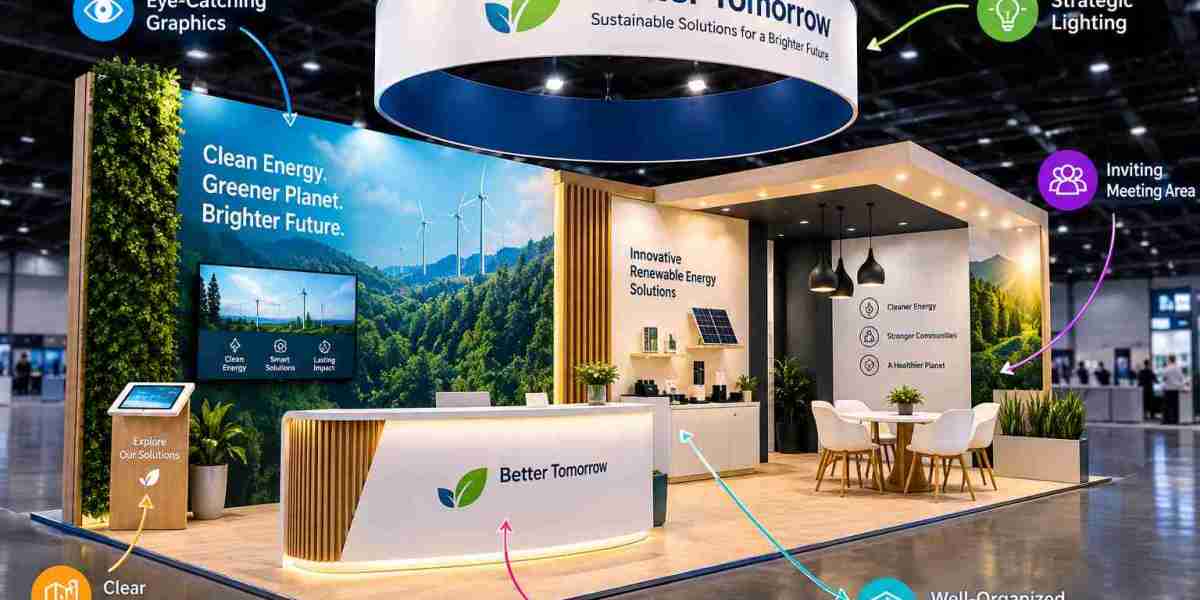
Standing out at a busy exhibition requires more than placing a company logo on a booth or displaying a few products. Businesses need a presentation that communicates their identity, attracts the right audience, and creates a memorable experience. A well-planned trade show display design can help companies showcase their products, explain their value, and encourage visitors to start conversations with their teams. Custom displays take this approach further by allowing businesses to develop an exhibition space that reflects their specific goals, brand personality, and customer expectations.
Every brand has a different story to tell. Some companies want to introduce innovative products, while others aim to build relationships with distributors, generate qualified leads, or strengthen their position in a competitive industry. A customized booth can support these objectives by combining relevant graphics, product displays, lighting, technology, and visitor-friendly layouts. Instead of relying on a generic setup, businesses can create an environment designed around what makes them unique.
What Is Custom Trade Show Display Design?
Custom trade show display design involves developing an exhibition booth around a company's branding, products, marketing objectives, and available space. Unlike a standard display that uses a fixed arrangement, a custom solution can be tailored to the business's requirements.
The design may include branded walls, product demonstration stations, storage areas, meeting spaces, interactive screens, specialized lighting, and distinctive architectural features. Each element is selected to support the overall presentation.
For example, a technology company might require large screens and interactive demonstration counters. A furniture manufacturer may need carefully arranged product settings that allow visitors to inspect materials and construction. A healthcare supplier could prioritize organized product displays and clear educational graphics.
The purpose is not simply to create an unusual booth. It is to build a practical exhibition environment that helps the company communicate effectively with its target audience.
1. Create a Unique Brand Identity
One of the most important benefits of custom display design is the ability to express a brand's identity consistently. At major exhibitions, visitors encounter many businesses offering similar products and services. A distinctive booth can help your company become easier to recognize.
Custom design allows you to incorporate your brand colors, typography, messaging, imagery, and preferred materials into a unified presentation.
For instance, a premium electronics brand may use clean lines, restrained colors, and integrated digital screens to communicate innovation. An outdoor equipment company may prefer natural textures, product-focused displays, and imagery showing its products in real-world environments.
These design choices help visitors form an initial impression before speaking with a representative.
Consistency is especially important for companies that participate in multiple events. Using recognizable design elements across different exhibitions can strengthen brand recall and create a familiar experience for returning customers.
2. Make Better Use of Available Booth Space
Exhibition space is often limited, expensive, and subject to strict venue rules. A custom booth can be planned around the exact dimensions of the assigned area, helping businesses use every section more effectively.
Rather than fitting products into a standard structure, you can organize the layout according to how visitors will interact with your brand.
A compact booth might include a vertical product display, a clear central message, and a small demonstration counter. A larger exhibition space could accommodate several product categories, informal meeting areas, and a dedicated presentation zone.
Good space planning should address three important needs:
Visibility: Visitors should be able to identify your brand and key offerings from the aisle.
Accessibility: The entrance and main pathways should remain clear.
Functionality: Staff should have enough room to demonstrate products, answer questions, and hold discussions.
Storage should also be considered during the planning stage. Hidden storage areas can keep promotional materials, personal belongings, and spare supplies out of sight, helping maintain a clean and professional appearance.
3. Highlight Your Products More Effectively
A standard booth may not always provide the right arrangement for showcasing specialized products. Custom design allows companies to select display features that suit the size, purpose, and presentation requirements of their offerings.
For example, a manufacturer exhibiting heavy machinery may need reinforced display platforms or clear technical information. A cosmetics company may benefit from organized product shelves, mirrors, and well-positioned lighting. A furniture brand might create a realistic room setting so visitors can understand how its products work together.
The design should make it easy for attendees to see what is available and understand why it matters.
Avoid displaying every product simply because space is available. Too many items can make a booth look crowded and reduce attention on important offerings. Instead, identify the products that best represent your brand, generate customer interest, or support your current marketing campaign.
You can then organize the remaining information through catalogs, digital screens, or staff-led demonstrations.
4. Communicate Your Message Clearly
An exhibition booth has only a short time to capture a visitor's attention. People walking through a crowded hall may not stop to read long descriptions or complicated technical explanations.
Custom display design gives you greater control over how information is presented. You can prioritize your main message, highlight customer benefits, and arrange supporting information in a logical order.
A useful messaging structure includes:
Brand identification: Make your company name and identity easy to recognize.
Main value proposition: Explain what your business offers or what problem it solves.
Supporting information: Present relevant products, services, or benefits.
Call to action: Encourage visitors to request a demonstration, discuss a requirement, or schedule a meeting.
For example, instead of using a headline that only says "Industrial Solutions," a manufacturer might communicate a specific benefit, such as improving production efficiency through its equipment.
The exact message should reflect what your audience values. Clear communication helps visitors determine whether your offering is relevant before they spend time at the booth.
5. Improve Visitor Engagement Through Interactive Features
Custom displays can incorporate interactive elements that encourage attendees to participate instead of simply looking at products.
Depending on your industry and budget, these features may include touchscreens, live demonstrations, product configurators, virtual tours, testing stations, or guided product experiences.
A software company could let visitors explore a product workflow on a screen. An automotive supplier might demonstrate a component's performance. A consumer goods brand could create a hands-on product trial area.
Interactive features are most effective when they help visitors understand something useful. Technology added purely for decoration may attract attention without supporting meaningful conversations.
Think about accessibility and ease of use when selecting these features. Visitors should understand how to participate without needing lengthy instructions. Staff members should also be prepared to guide attendees and explain the relevant product benefits.
For digital displays, consider providing captions and clear visual information so people can understand the content even in a noisy exhibition hall.
6. Use Lighting and Materials to Build the Right Atmosphere
Lighting and materials influence how visitors perceive an exhibition booth. Custom design allows you to select combinations that complement your products and brand positioning.
Lighting can highlight featured items, improve visibility, and guide attention toward important areas. Accent lights work well for product displays, while general lighting helps maintain a comfortable environment for conversations and demonstrations.
Materials also contribute to the overall experience. Wood finishes may create a warm appearance, metal structures can communicate precision, and glass or acrylic elements may support a modern aesthetic.
The best choices depend on your brand and practical requirements. A booth designed for a luxury product launch may look very different from one created for industrial equipment.
However, appearance should not be the only consideration. Materials must be appropriate for transportation, installation, repeated use, cleaning, and venue safety requirements. Lighting should also be tested to avoid screen glare or uncomfortable brightness.
A carefully balanced combination of materials, colors, and lighting can help your booth feel cohesive and professional.
7. Support Product Launches and Marketing Campaigns
Exhibitions are valuable opportunities to introduce new products, announce improvements, or communicate a change in brand positioning. Custom displays can be designed around these specific campaigns.
For a product launch, you might create a dedicated presentation area that highlights the new offering. Large graphics can explain the product's main benefits, while a demonstration counter allows visitors to see it in action.
If the exhibition supports a broader marketing campaign, the booth can use the same visual identity and messaging as your website, advertisements, social media, and promotional materials.
This creates a consistent experience across channels.
Consider a company introducing a new energy-efficient product. Its booth might feature a prominent product display, a concise explanation of the technology, and a demonstration showing how the product works. Sales representatives can then discuss applications and customer requirements.
Planning the display around a specific campaign helps ensure that the booth supports a clear business objective rather than functioning as a general advertising space.
8. Create Better Opportunities for Lead Generation
Attracting visitors is important, but exhibitions also provide opportunities to identify potential customers and develop business relationships.
A custom booth can be organized to support the entire visitor journey, from initial interest to a detailed sales discussion.
For example, an open display area can attract passersby, a demonstration station can help qualify interest, and a quieter meeting area can support conversations with promising prospects.
You can also include digital lead-capture tools, QR codes, appointment scheduling, or product information forms where appropriate.
The key is to make these activities convenient for visitors. Avoid requesting excessive information before providing value. A product demonstration or useful discussion should come before an unnecessary form-filling process.
Before the event, train your team to ask relevant questions, identify visitor needs, and record useful follow-up information. After the exhibition, prioritize leads according to their requirements and agreed next steps.
The booth creates the opportunity, but effective staff engagement and timely follow-up are essential for converting that opportunity into business.
9. Differentiate Your Brand From Competitors
Many exhibitors at the same event may sell comparable products or target similar customers. A distinctive display can help communicate what makes your business different.
Start by understanding the other companies likely to attend the exhibition. Consider their product presentations, messaging, visual styles, and typical customer experiences.
You do not need to create the largest or most expensive booth to stand out. A clear message, thoughtful product arrangement, and relevant visitor experience may be more effective than an elaborate structure with little practical purpose.
For example, if competitors focus heavily on printed product information, your company might use a concise visual presentation supported by live demonstrations. If other booths appear crowded, a clean and accessible layout may offer a more welcoming experience.
The objective is not to be different for its own sake. Your design should communicate a meaningful advantage, such as product quality, technical expertise, customization, service, or ease of use.
10. Consider Modular and Reusable Design Elements
Custom design does not necessarily mean creating a booth that can be used only once. Many businesses benefit from combining customized branding with modular components that can be rearranged for different exhibitions.
Reusable panels, counters, shelves, lighting systems, and display frames can help companies adapt to different booth sizes while maintaining a recognizable identity.
This approach may reduce long-term costs when a business participates in several events each year. It can also simplify storage and make future exhibition planning more predictable.
For example, a company might use a consistent branded backdrop and product counters at smaller events, then add meeting spaces and additional display structures for a larger exhibition.
When evaluating reusable components, consider their durability, transport requirements, assembly time, and compatibility with future layouts.
Sustainable choices can also include using durable materials, replacing individual graphic panels rather than entire structures, and reducing unnecessary printed materials.
The right balance between customization and modularity depends on your exhibition schedule, brand requirements, and available budget.
Custom vs. Standard Trade Show Displays
Both custom and standard displays can be useful. The right option depends on the company's objectives, resources, and exhibition requirements.
| Factor | Custom display | Standard display |
|---|---|---|
| Design flexibility | Can be tailored to specific goals and branding | Usually offers a more limited range of layouts |
| Brand presentation | Supports distinctive visual identity | Often relies on common display formats |
| Space planning | Can be designed around the assigned area | May require adapting the space to the display |
| Initial investment | May require a higher design and production budget | Often provides a simpler starting option |
| Reusability | Can incorporate reusable or modular elements | Depends on the selected system |
| Best suited for | Product launches, specialized demonstrations, and distinctive brand experiences | Simple presentations, smaller events, or straightforward display needs |
A standard display can be perfectly suitable for businesses with straightforward requirements. A custom approach may be more appropriate when the company needs a specialized product arrangement, a distinctive experience, or greater control over its exhibition presentation.
The decision should be based on expected business value rather than appearance alone.
How to Plan an Effective Custom Display
A successful booth begins with a clear plan. Before commissioning a design, define what you want to achieve and what resources are available.
Establish your objectives
Choose the main purpose of the exhibition. Your priorities may include brand awareness, qualified leads, product demonstrations, distributor relationships, or customer meetings.
Understand your audience
Identify the visitors you want to attract and consider their needs. Technical buyers may value detailed demonstrations, while retail buyers may focus on product presentation, pricing, and market demand.
Review the venue requirements
Confirm booth dimensions, height restrictions, electrical requirements, hanging-sign rules, access arrangements, and installation deadlines.
Prepare your content
Gather approved logos, product images, key messages, specifications, and promotional materials. Decide which information should appear on the booth and which details can be shared through staff conversations or digital resources.
Coordinate with the design team
Discuss the concept, budget, materials, construction schedule, transport, installation, and dismantling. Review the proposed layout to ensure it supports both visitor movement and staff activities.
Measure results
After the exhibition, review visitor engagement, qualified leads, meetings, product demonstrations, and follow-up outcomes. Use these results to improve future booth designs.
Conclusion
Custom trade show display design helps businesses develop exhibition spaces that reflect their brand identity, showcase products effectively, and support meaningful customer interactions. From distinctive graphics and interactive demonstrations to efficient space planning and reusable structures, every design choice should contribute to a clear objective.
The most effective booth is not necessarily the biggest or most elaborate. It is the one that communicates value quickly, welcomes the right audience, and gives visitors a reason to engage with your company. By balancing creativity with functionality, businesses can create a professional exhibition presence that supports both immediate interactions and longer-term marketing goals.
If you are preparing for an upcoming exhibition, start by defining your audience, message, and desired outcomes. Then explore professional trade show display design options that fit your space, budget, and brand requirements. A thoughtful, customized approach can help your company make a stronger impression and turn exhibition participation into a more valuable business opportunity.



