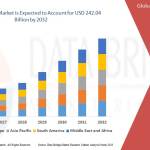
The global mosquito repellent market size was valued at USD 4.71 billion in 2025 and is projected to grow from USD 5.09 billion in 2026 to USD 9.42 billion by 2034, registering a CAGR of 8.01% during the forecast period from 2026 to 2034. Asia Pacific dominated the mosquito repellent market with a market share of 38.4% in 2025.
Market Size (2025): USD 4.71 Billion
Market Size (2026): USD 5.09 Billion
CAGR (Forecast Period): 8.01% (2026–2034)
Forecast Year: 2034
Projected Market Size (2034): USD 9.42 Billion
Dominant Region: Asia Pacific
Fastest Growing Region: Not specified in the available market data
Market Overview
Demand for mosquito repellents is closely linked to public health awareness, seasonal mosquito activity, climatic conditions, and the prevalence of vector-borne diseases. Consumers use these products in residential, commercial, outdoor, and travel settings. Manufacturers are expanding their product portfolios with convenient application formats, longer-lasting formulations, and plant-based alternatives to address changing consumer preferences.
Growth Drivers of the Mosquito Repellent Market
Changing climatic conditions and urbanization also influence mosquito repellent demand. Warmer temperatures, irregular rainfall, standing water, and expanding urban settlements can create favorable conditions for mosquito breeding in certain areas. These environmental factors increase the need for personal and household protection products, particularly in tropical and subtropical regions.
The growing popularity of outdoor activities and travel further supports market expansion. Camping, hiking, sports, tourism, and other outdoor activities expose consumers to mosquitoes in residential and recreational environments. Portable sprays, lotions, wearable repellents, and other convenient formats are helping manufacturers reach consumers seeking protection while traveling or spending time outdoors.
Challenges in the Mosquito Repellent Market
The availability of counterfeit and low-quality products can also affect market confidence. Products with inadequate formulations or misleading claims may reduce consumer trust and create difficulties for established manufacturers. Maintaining quality control, product authenticity, and reliable distribution networks is therefore important for market participants.
Competition from alternative mosquito control methods presents another challenge. Insecticide-treated nets, window screens, mosquito traps, and professional pest control services offer additional protection options. These alternatives may influence consumer purchasing decisions, particularly in areas where households prefer integrated mosquito prevention approaches.
Opportunities in the Mosquito Repellent Market
Product development focused on convenience and longer-lasting protection also offers growth potential. Portable wearable repellents, compact sprays, travel-friendly lotions, and advanced vaporizer systems can serve different consumer needs. Innovations in delivery formats and formulation technology may help companies strengthen their presence across residential and outdoor applications.
Emerging markets provide additional opportunities through expanding retail distribution and increasing public health awareness. Localized products, affordable packaging, and partnerships with pharmacies, supermarkets, and e-commerce platforms can help manufacturers reach a wider consumer base. Educational initiatives related to mosquito bite prevention may further support product adoption.
Segment Analysis
By form, the market includes aerosol sprays, liquid formulations, solid products, and other formats. Aerosol sprays provide convenient application across exposed skin and surrounding areas, while creams and lotions allow consumers to apply repellents directly to the skin. Vaporizer liquids and mats are designed for household use and provide an alternative to topical products.
Based on ingredients, the market includes chemical-based and plant-based repellents. Chemical ingredients such as DEET and picaridin are used in formulations designed to provide effective mosquito protection. Plant-derived ingredients are also gaining attention as manufacturers respond to demand for botanical and naturally positioned products.
Distribution channels include supermarkets and hypermarkets, convenience stores, pharmacies and drugstores, online retail, and other outlets. Supermarkets and pharmacies provide access to established brands and different product formats, while e-commerce platforms offer convenience, product comparisons, and broader availability.
Regional Analysis
North America represents an established market supported by consumer awareness, outdoor recreation, and demand for personal insect protection. The United States and Canada have established retail networks offering sprays, lotions, wearable products, and household repellents. Demand is also influenced by camping, hiking, travel, and seasonal mosquito activity.
Europe's mosquito repellent market is supported by outdoor recreation, tourism, and increasing consumer attention to insect protection. Countries such as Germany, France, Italy, and the United Kingdom provide opportunities for personal and household repellent products. Demand for convenient application formats and plant-based formulations also contributes to product diversification.
Latin America offers opportunities due to tropical climates and the presence of mosquito-borne diseases in several countries. Brazil, Mexico, and other regional markets have demand for affordable household and personal protection products. Meanwhile, the Middle East and Africa market is influenced by climatic conditions, public health requirements, and the need for mosquito protection in areas affected by malaria and other vector-borne diseases.
Competitive Landscape
The mosquito repellent market includes multinational consumer goods companies, specialized insect control manufacturers, and regional brands. Market participants compete through product innovation, ingredient development, brand recognition, pricing, and distribution expansion. Companies are also focusing on convenient application formats and formulations that address different consumer preferences and usage environments.
Key companies operating in the market include:
SC Johnson & Son, Inc.
Reckitt Benckiser Group plc
Godrej Consumer Products Limited
Spectrum Brands Holdings, Inc.
3M Company
Henkel AG & Co. KGaA
Dabur India Limited
Jyothy Labs Limited
S.C. Johnson Professional
Enesis Group
Recent Developments
Interest in botanical formulations is also influencing product development. Manufacturers are exploring plant-derived ingredients and alternative formulations to serve consumers seeking different options for personal and household mosquito protection. At the same time, companies continue to improve product consistency, application experience, and compliance with applicable safety requirements.
Future Outlook
The mosquito repellent market is expected to maintain steady growth through 2034, supported by increasing awareness of mosquito-borne diseases, changing environmental conditions, and demand for convenient protection products. Household use, outdoor recreation, and travel-related applications are likely to remain important sources of demand.
Future market development will depend on product safety, formulation performance, affordability, and innovation. Manufacturers investing in plant-based alternatives, portable formats, and improved household protection systems are positioned to address evolving consumer requirements. Expansion of retail and e-commerce distribution, particularly in emerging economies, is also expected to support market growth over the forecast period.
Click to Download and Read the Full Report : https://straitsresearch.com/report/mosquito-repellent-market
About Straits Research
Straits Research is a global market intelligence and consulting company that provides comprehensive market research reports, industry insights, and strategic analysis across diverse sectors. The company delivers data-driven research to help businesses, investors, and decision-makers understand market dynamics, identify growth opportunities, assess competitive landscapes, and make informed business decisions.