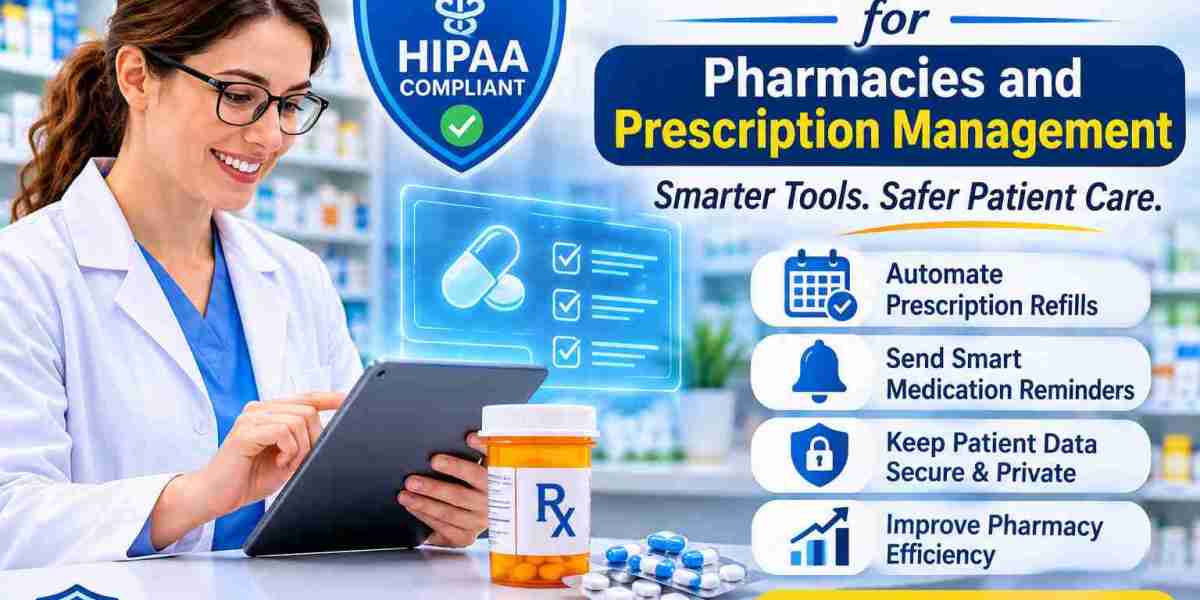
HIPAA Compliant AI for Pharmacies and Prescription Management
What is HIPAA compliant AI for pharmacies?
HIPAA compliant AI for pharmacies means using artificial intelligence in pharmacy operations in a way that protects patient health information under the HIPAA Privacy, Security and Breach Notification Rules. The AI can speed up work, but the pharmacy stays responsible for how PHI is stored, accessed and shared.
Pharmacy data is especially sensitive. A prescription record reveals medications, and medications often reveal conditions. That makes secure design a requirement, not an extra.
Why pharmacies are turning to AI in 2026
Pharmacy teams handle high volumes of repetitive work: refill requests, phone calls, insurance rejections, stock checks and adherence follow-ups. AI in pharmacy can take over the routine parts so pharmacists spend more time on counseling and clinical decisions.
The opportunity is real, but so is the risk. Any tool that reads, stores or sends prescription data is a place where a breach can happen. A HIPAA compliant pharmacy software choice has to be made on security first, features second.
6 ways AI supports prescription management
1. AI for prescription refill automation
Patients request refills by text, app or phone, and the system verifies eligibility, queues the request and flags exceptions for staff. This is a strong first project because the task is repetitive and the pharmacist stays in the approval loop.
2. How AI improves prescription accuracy
AI can check incoming prescriptions for missing fields, unusual dosing patterns and possible interactions, then flag them for review. It supports the pharmacist. It does not replace professional judgment, and every flag should be confirmed by a licensed pharmacist.
3. AI medication adherence tools
Automated reminders and check-ins can help patients take medications on schedule and notify the pharmacy when refills lapse. Messages must avoid exposing PHI on insecure channels.
4. HIPAA compliant chatbot for pharmacies
A secure assistant can answer routine questions about store hours, refill status and pickup, and hand off clinical questions to a pharmacist. It must verify identity before sharing anything specific to a patient.
5. AI for pharmacy inventory management
Demand forecasting and reorder alerts reduce stockouts and waste. This use case often involves little or no PHI, which makes it a lower-risk starting point.
6. Workflow and claims support
AI can help prepare prior authorization paperwork and flag likely insurance rejections before submission, saving staff time on follow-up.
HIPAA requirements for pharmacies using AI
These are the main obligations to check before any AI tool goes live. The table is a practical summary, not legal advice.
Requirement | What it means for AI in a pharmacy |
Business Associate Agreement (BAA) | Sign one with every AI vendor and subprocessor that handles PHI |
Risk analysis | Document how the new tool changes your risks, and update it regularly |
Access controls | Limit who and what can see prescription data, based on job role |
Encryption | Protect PHI in transit and at rest |
Audit controls | Keep audit trails showing who accessed which records |
Minimum necessary | Give the AI only the data it needs for the task |
Breach notification | Have a tested plan to detect, assess and report incidents |
Workforce training | Train staff on safe use, phishing and escalation |
You may also need to follow state pharmacy board rules and consent rules for patient texts and calls, which sit outside HIPAA. Confirm them with your legal advisor.
Protecting patient data in pharmacy AI: a vendor checklist
Use these questions when you compare vendors. Protecting patient data in pharmacy AI starts with asking them before you sign.
- Will you sign a BAA, and do your subprocessors sign one too?
- Where is data stored, and is it encrypted in transit and at rest?
- Do you use our patient data to train your models? If yes, under what authorization?
- What are your data retention and deletion policies?
- Can we see audit trails of every access to prescription records?
- How do you verify patient identity before the AI shares information?
- How do you detect and report a breach, and how fast?
- Does your system keep a pharmacist in the loop for clinical decisions?
Red flags: no BAA, vague answers about training on patient data, no access logs, or claims that the product is certified HIPAA compliant. HIPAA has no official certification for software, so treat that claim as marketing, not proof.
How to implement HIPAA compliant AI in your pharmacy
- Pick one workflow. Start with refill reminders or inventory forecasting.
- Run a risk analysis. Map where PHI flows and what could go wrong.
- Sign the BAA before any data is shared.
- Configure access and logging. Apply role-based access and turn on audit trails.
- Pilot with a small group. Use one location or one patient segment.
- Train staff. Cover escalation, phishing and what the AI may not do.
- Measure and review. Track time saved, errors caught and any incidents, then expand.
Want secure AI built for your pharmacy? Talk to Barqsol about HIPAA compliant AI built around your workflows.
Frequently asked questions
Is AI allowed in pharmacies under HIPAA?
Yes. HIPAA does not ban AI. It requires that any tool handling PHI meets the Privacy, Security and Breach Notification Rules, including a signed BAA with the vendor.
Do pharmacies need a BAA with AI vendors?
Yes, when the vendor creates, receives, maintains or transmits PHI on the pharmacy's behalf.
Can an AI chatbot answer patient questions about prescriptions?
It can for routine matters, if it verifies identity first and uses a secure channel. Clinical questions should go to a pharmacist.
What are the HIPAA requirements for pharmacies using AI?
The main ones are a BAA, a documented risk analysis, access controls, encryption, audit trails, the minimum necessary standard, a breach notification plan and staff training.
Can AI replace a pharmacist?
No. AI supports prescription management, but licensed pharmacists make the clinical decisions and remain accountable for them.
Is any AI tool officially HIPAA certified?
No. There is no government HIPAA certification for software. Compliance depends on how the tool is built, contracted and used.
Conclusion: automate the routine, protect the data
HIPAA compliant AI for pharmacies works best when it takes over repetitive tasks, keeps pharmacists in charge of clinical decisions and is built on strong safeguards from day one. Start small, choose vendors carefully and keep your documentation current.
Ready to modernize prescription management safely? Explore HIPAA compliant AI solutions and book a free consultation today.