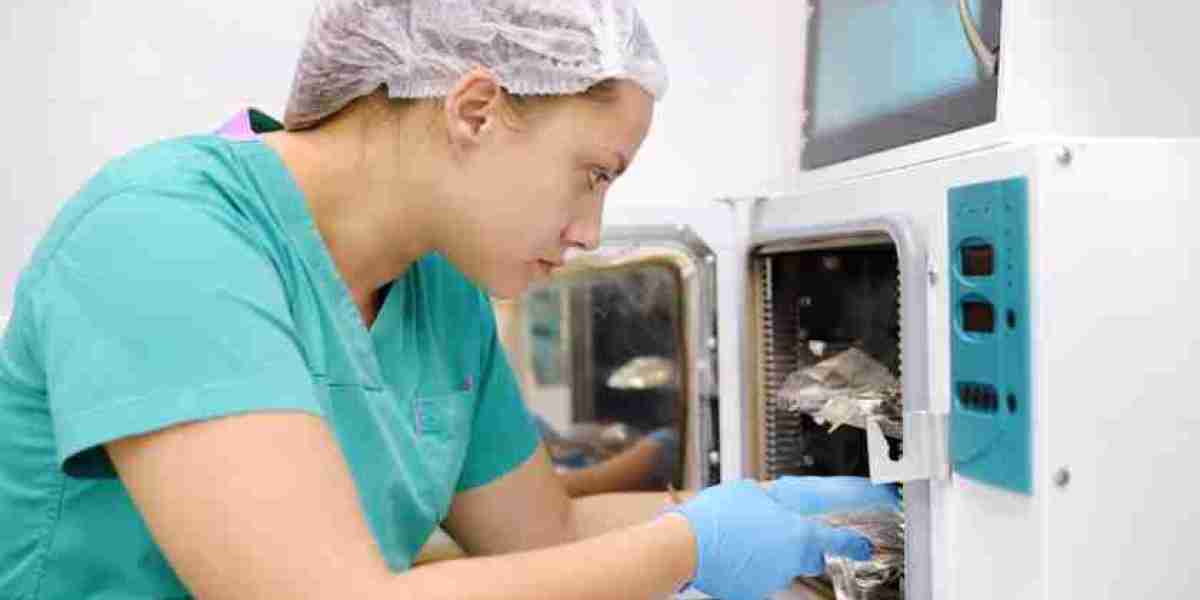
In sterile processing departments (SPD) and healthcare facilities, high-quality steam is essential for reliable sterilization. Moist heat sterilization using an autoclave relies on pure, dry saturated steam to deliver the thermal energy needed to destroy microorganisms. However, one of the most persistent and insidious threats to effective steam sterilization is the presence of non-condensable gases (NCGs).
Non-condensable gases—primarily air, carbon dioxide, and oxygen—do not condense into liquid water under the temperature and pressure conditions present inside a sterilizer. When these gases enter the sterilization chamber alongside steam, they disrupt the thermodynamic balance, act as thermal insulators, and potentially lead to sterilization failure. Detecting NCGs before they compromise instrument processing is a critical component of routine quality assurance.
Understanding Non-Condensable Gases and Their Risks
Before performing diagnostic testing, it is essential to understand why NCGs pose such a significant hazard to SPD operations and medical device reprocessors. When steam condenses on a cooler instrument bundle inside an autoclave, it releases a massive amount of latent heat. This immediate energy transfer rapidly elevates the temperature of the load to the target sterilization temperature.
When NCGs are present in the steam supply, they remain in gaseous form. As the steam condenses around them, the remaining non-condensable gases gather together, forming insulating gas pockets around the instruments. These pockets block steam contact and prevent localized areas from reaching the necessary sterilization temperature.
Common Sources of Non-Condensable Gases in Steam:
- Inadequate Boiler Water Deaeration: Dissolved oxygen and carbon dioxide in feedwater enter the steam system if degassing systems underperform.
- Air Ingress Points: Leaks in vacuum lines, valve stems, fitting seals, or pump glands can pull ambient air directly into the steam distribution header.
- Chemical Treatment By-products: Over-application or breakdown of certain boiler treatment chemicals can generate volatile gaseous compounds during heating.
- System Shutdown Dynamics: Air entering pipes during maintenance or off-peak shutdowns can remain trapped upon system startup if unvented.
According to international standards such as EN 285, the maximum allowable volume of non-condensable gases in steam supplied to a sterilizer is 3.5% by volume (measured relative to condensed steam). Exceeding this threshold significantly increases the risk of unsterile loads and wet packs.
Equipment Required for Temperature-Based NCG Testing
Testing for non-condensable gases using the temperature probe method requires dedicated test apparatus designed to isolate, condense, and measure steam samples safely under line pressure. The testing assembly relies on precise temperature differential readings to determine the gas ratio accurately.
Essential Apparatus and Components:
- Calibrated Temperature Probes: High-accuracy RTD (Resistance Temperature Detector) or Type-T thermocouple probes capable of resolution down to $0.1^\circ\text{C}$.
- Steam Pitot Tube / Sampling Port: Installed directly in the steam supply line feeding the sterilizer to collect a representative sample from the center of the flow.
- Sample Condenser Unit: A water-jacketed heat exchanger coil that rapidly cools incoming steam into condensate while keeping non-condensable gases in gaseous form.
- Burette or Graduated Gas Receiver: A specialized calibrated vessel used to collect and measure the volumetric displacement of non-condensable gases over liquid condensate.
- Digital Data Logger: To monitor and record real-time steam temperature, condensate temperature, and ambient references simultaneously during testing.
Having proper equipment calibrated against traceable standards ensures that diagnostic measurements are reliable and repeatable for regulatory compliance audits.
Step-by-Step Procedure for NCG Testing
Executing a temperature probe test for non-condensable gases requires meticulous attention to process control and safety protocols. Because live steam poses severe burn hazards, technicians must wear appropriate thermal personal protective equipment (PPE) throughout the testing sequence.
Phase 1: Preparation and Purging
- Connect the sampling apparatus securely to the dedicated steam sampling valve located upstream of the sterilizer inlet.
- Flush the cooling water circuit through the sample condenser to ensure continuous thermal exchange.
- Crack open the main steam valve slowly to vent trapped air and condensate from the sample line before attaching collection instruments.
Phase 2: Dynamic Sampling and Temperature Monitoring
- Insert the calibrated temperature probe into the designated thermowell or flow section of the sample condenser inlet to verify saturated steam temperatures.
- Direct the outlet flow into the filled gas burette. As steam passes through the condenser, it converts into liquid condensate, while NCGs pass through into the graduated measuring column.
- Monitor the inlet steam temperature and pressure simultaneously. The recorded temperature must strictly match the theoretical saturation temperature corresponding to the line pressure (derived from steam tables).
Phase 3: Volumetric Calculation and Analysis
- Allow the collection to proceed until a predefined volume of condensate (typically 100mL) is gathered in the receiving flask.
- Record the volume of gas trapped in the upper section of the burette column (Vgas) and the volume of collected condensate (Vcondensate).
- Calculate the percentage of non-condensable gases using the following standardized equation:
Interpreting Diagnostics and Troubleshooting System Failures
When temperature probes indicate a discrepancy between observed steam temperature and standard saturation tables, non-condensable gases are frequently the root cause. A depressed steam temperature relative to system pressure strongly points to air intrusion displacing partial steam pressure.
Maintaining reliable sterilizer performance demands a comprehensive understanding of healthcare utility engineering. Sterile processing technicians and bio-med engineers frequently cross-train through professional programs such as a sterile processing technician course to better understand how utility water, steam quality, and autoclave mechanics directly impact infection prevention standards.
Recommended Corrective Actions for High NCG Readings:
- Inspect Deaerator Operations: Verify that feedwater deaerators are operating at target temperatures (typically above $102^\circ\text{C}$) to drive off dissolved gases.
- Check Automatic Air Vents: Test thermostatic air vents installed on steam headers and sterilizer jackets to ensure they clear air during startup.
- Perform Vacuum Leak Tests: Run vacuum decay checks on sterilizer chambers and feed piping to locate degraded gaskets or loose couplings.
- Review Water Chemical Dosage: Consult facility water treatment specialists to optimize oxygen scavenger dosing without introducing volatile by-products.
By establishing routine quarterly testing for non-condensable gases using temperature probes, medical facilities can proactively protect surgical inventory, reduce equipment downtime, and guarantee patient safety during every sterilization cycle.