Asset-heavy businesses often own valuable physical assets, including commercial properties, manufacturing equipment, warehouses, infrastructure, energy facilities, transportation fleets, and industrial resources. While these assets contribute significantly to business value, they can also tie up substantial capital that could otherwise support expansion, innovation, and operational improvements.
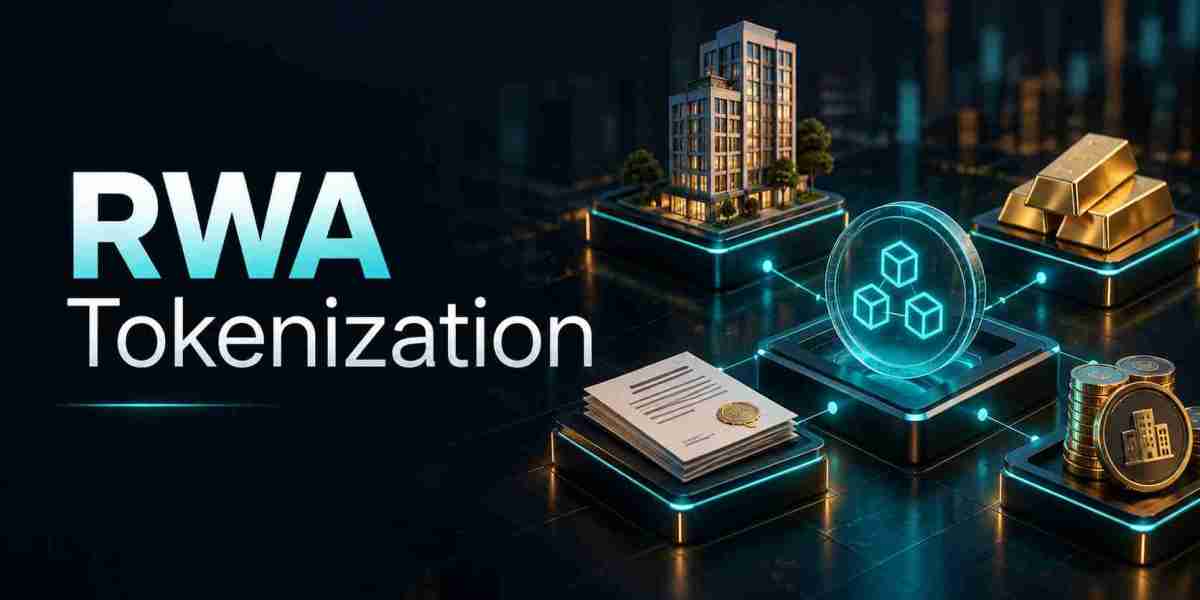
Traditional financing methods may not always provide the flexibility businesses need to unlock the financial potential of these resources. Real World Asset (RWA) tokenization offers an alternative approach by converting eligible ownership interests, financial claims, or asset-backed rights into digital tokens on a blockchain.
Through tokenization, businesses can explore new funding models, fractional investment structures, and broader investor participation without necessarily selling their entire assets. This creates opportunities to transform underutilized resources into potential sources of capital and develop more flexible financial strategies.
For asset-heavy enterprises, RWA tokenization could become more than a blockchain initiative. It could serve as a strategic tool for improving capital efficiency, diversifying funding sources, and supporting long-term business growth.
Understanding RWA Tokenization for Asset-Heavy Businesses
RWA tokenization refers to representing rights associated with real-world assets through digital tokens recorded on a blockchain. These tokens can represent ownership interests, debt obligations, revenue-sharing rights, or other legally structured financial interests.
Asset-heavy businesses can explore tokenization across different categories of physical and financial assets.
Some examples include:
Commercial real estate: Tokenizing eligible interests in office buildings, shopping centers, and industrial properties.
Manufacturing equipment: Structuring financing opportunities around valuable machinery and industrial equipment.
Infrastructure assets: Representing eligible investment interests in roads, energy facilities, and utility projects.
Warehouses and logistics facilities: Creating investment structures linked to income-generating storage and distribution properties.
Transportation assets: Exploring tokenized interests in shipping vessels, aircraft, and commercial vehicle fleets.
Energy resources: Structuring investment opportunities around renewable energy facilities and other eligible energy infrastructure.
Instead of treating these resources exclusively as operational assets, businesses can evaluate how their associated economic rights could support additional financial opportunities.
Importantly, tokenization does not automatically transfer legal ownership or make an asset liquid. The underlying legal structure, investor rights, regulatory requirements, and transfer restrictions must be clearly established.
Turning Underutilized Assets Into Funding Opportunities
One of the biggest challenges for asset-heavy businesses is having substantial value tied up in resources that are not generating their full financial potential.
For example, a company may own multiple warehouses, industrial facilities, or commercial properties but lack sufficient capital to expand its operations. Selling these assets could reduce its long-term operating capacity, while traditional borrowing may increase its debt obligations.
RWA tokenization provides another structure to explore.
Businesses can identify eligible assets, establish the rights available for investment, and issue digital tokens representing those interests through an appropriate legal framework. Investors can participate according to the terms of the offering, while the business may obtain funding for expansion or other strategic objectives.
Potential business opportunities include:
Raising capital against eligible asset-backed interests.
Financing new infrastructure and industrial projects.
Unlocking value from underutilized commercial properties.
Funding equipment upgrades and operational expansion.
Supporting new business ventures without selling entire asset portfolios.
This approach can help businesses evaluate their existing asset base from a new financial perspective.
Creating New Revenue Opportunities Through Asset Monetization
Asset-heavy enterprises frequently generate revenue through their primary operations. However, some assets may offer additional economic opportunities beyond their existing business use.
For instance, a logistics company owning warehouse facilities may explore investment structures linked to rental income. An energy company may evaluate financing opportunities associated with eligible project revenue. Similarly, a manufacturing enterprise could explore asset-backed financing around equipment or other valuable resources.
Tokenization can help represent these economic interests digitally.
Rather than relying exclusively on conventional asset sales, businesses can structure investment opportunities around specific rights and cash flows.
Potential applications include:
Rental income from commercial and industrial properties.
Revenue-sharing arrangements from infrastructure projects.
Lease payments associated with equipment.
Contractual payment rights from eligible business operations.
Income-generating interests in renewable energy projects.
These structures must clearly define how revenue is calculated, distributed, and reported to investors.
Expanding Access to a Broader Investor Base
Traditional fundraising can be limited by geographical boundaries, institutional requirements, high investment thresholds, and lengthy financial processes. Asset-heavy businesses looking to finance large projects may find it challenging to attract sufficient capital through conventional channels alone.
Tokenization can introduce a more flexible investment distribution model.
By dividing eligible investment interests into smaller digital units, businesses may be able to structure opportunities for different categories of investors, subject to applicable securities laws and investor eligibility requirements.
For example, a company developing a large industrial park could structure an investment offering around a legally defined interest in the project. Instead of depending on a single large investor, it could potentially attract participation from multiple qualified investors.
This creates several opportunities:
Access to a wider network of potential investors.
More flexible investment denominations.
Opportunities for cross-border capital participation where permitted.
Improved investor onboarding through digital infrastructure.
Different investment structures for different asset categories.
Broader investor distribution can help businesses explore funding channels beyond their existing financial networks.
Improving Capital Efficiency Without Selling Entire Assets
Selling valuable assets is not always the preferred strategy for companies that depend on them for daily operations. A manufacturing business, for example, may rely on its machinery to maintain production capacity. Similarly, a logistics company may need its warehouses and transportation infrastructure to support ongoing operations.
RWA tokenization offers the possibility of structuring investments around specific financial interests without necessarily transferring complete ownership or operational control.
Consider a company that owns a portfolio of commercial properties. Rather than selling an entire building, it could explore issuing tokens representing a legally established share of ownership, debt, or eligible revenue rights.
The company could potentially use the capital raised to:
Develop additional properties.
Upgrade existing facilities.
Expand into new geographical markets.
Invest in advanced equipment and technology.
Strengthen working capital.
The actual benefits depend on the transaction structure, asset valuation, financing costs, and investor rights.
The objective is to make existing assets more financially productive while maintaining the business capabilities required for long-term operations.
Supporting Multi-Asset Investment and Portfolio Development
Many asset-heavy businesses manage multiple asset categories across different locations and operational divisions. Managing these resources through separate financing structures can create administrative complexity and limit opportunities to develop integrated investment products.
A multi-asset RWA tokenization platform can help businesses organize different eligible asset categories within a unified digital investment infrastructure.
For example, an enterprise could explore tokenization opportunities involving:
Commercial and residential real estate.
Industrial equipment and machinery.
Warehouses and logistics infrastructure.
Renewable energy projects.
Agricultural land and production assets.
Transportation and maritime infrastructure.
Asset-backed debt and receivables.
Each asset category can have its own valuation process, investment structure, documentation, and token issuance requirements.
A centralized platform can help administrators monitor asset information, investor allocations, transaction records, and portfolio performance.
This approach may be particularly useful for enterprises that want to expand their investment offerings beyond a single asset class.
Automating Financial Operations Through Smart Contracts
Managing investments in physical assets involves several administrative processes, including investor registration, ownership records, payment distribution, reporting, and transaction reconciliation.
When these activities rely heavily on manual processes, they can increase operational costs and create delays.
Smart contracts can automate selected processes within an RWA tokenization platform.
For example, businesses can implement smart contract functionality for:
Automated investment allocation: Digital tokens can be allocated to eligible investors based on predefined offering conditions.
Revenue distribution: Rental income, interest payments, or other eligible distributions can be calculated and allocated according to the governing agreements.
Transfer restrictions: Smart contracts can enforce eligibility checks and transfer restrictions where properly integrated with identity and compliance systems.
Transaction tracking: Blockchain records can provide a shared transaction history for authorized participants.
Investor reporting: Platform modules can provide updated information about token balances, distributions, and relevant asset performance.
Automation can reduce repetitive administrative work and improve consistency across investment operations. However, smart contracts do not replace legal agreements, financial audits, or professional asset management.
Creating Opportunities for Secondary Market Participation
One of the major challenges associated with traditional asset investments is limited liquidity. Real estate, infrastructure, industrial equipment, and other physical assets can take considerable time to sell.
Tokenization may support the development of secondary market mechanisms where eligible investors can transfer their tokenized interests to other qualified participants.
For asset-heavy businesses, this can make investment offerings more attractive by introducing potential exit opportunities.
For example, investors participating in a tokenized commercial property offering may be able to transfer their eligible interests through a compliant secondary trading platform, subject to lock-up periods, transfer restrictions, and market demand.
Potential advantages include:
Additional options for investor exits.
More flexible transfer processes.
Better visibility into eligible transactions.
Opportunities to connect issuers with secondary market participants.
Potential improvements in investment distribution.
However, tokenization does not guarantee liquidity. A functioning secondary market requires sufficient demand, regulatory permissions, suitable trading infrastructure, and reliable asset information.
Strengthening Asset Transparency and Investor Confidence
Investors evaluating asset-backed investment opportunities need reliable information about the underlying assets, their financial performance, ownership structures, and associated risks.
Traditional asset management processes may involve multiple service providers, documentation systems, and reporting channels.
Blockchain-based tokenization can introduce a shared digital record of selected asset and transaction information.
Depending on the platform architecture, businesses can provide:
Digital records of token issuance and allocation.
Information about underlying asset documentation.
Investment and transaction histories.
Distribution and payment records.
Smart contract execution details.
Investor portfolio information.
Businesses can also integrate external valuation providers, asset verification services, custodians, and financial reporting systems.
This creates a more organized approach to communicating investment-related information.
Importantly, blockchain records alone do not prove that an underlying asset exists or that the issuer has valid legal rights over it. Independent verification, accurate documentation, and reliable custody arrangements remain essential.
Developing New Business Models Around Tokenized Assets
RWA tokenization can also encourage asset-heavy enterprises to explore business models beyond traditional asset ownership and operations.
Instead of focusing exclusively on selling products, leasing equipment, or generating revenue through physical infrastructure, companies can evaluate opportunities to develop investment-oriented services around their asset portfolios.
Some emerging business model possibilities include:
Business model | Potential application |
|---|---|
Asset-backed investment platform | Offering eligible investment interests in business assets |
Fractional real estate investment | Structuring smaller investment units in commercial properties |
Equipment financing platform | Connecting equipment-backed financing opportunities with investors |
Infrastructure investment platform | Structuring investments around eligible infrastructure projects |
Revenue-sharing platform | Representing contractual rights to defined business revenues |
Multi-asset investment platform | Managing different tokenized asset categories through one system |
These models can help businesses diversify their financial strategies and explore additional revenue opportunities.
For enterprises interested in developing such solutions, working with an experienced RWA tokenization development company can help translate the business model into a functional digital investment platform.
Essential Features of an RWA Tokenization Platform for Asset-Heavy Enterprises
A successful tokenization initiative requires more than creating digital tokens. Businesses need an integrated platform that supports asset management, compliance, investor operations, and financial transactions.
The following features can form the foundation of an enterprise-grade RWA platform.
1. Asset Management Module
Allows businesses to register, categorize, and manage tokenization-ready assets. It can include asset descriptions, valuation information, ownership documentation, and supporting records.
2. Token Issuance and Management
Supports token creation, allocation, supply management, and lifecycle operations based on the selected tokenization model.
3. Investor Onboarding and KYC
Enables investor registration, identity verification, eligibility checks, and compliance screening.
4. Smart Contract Integration
Automates predefined processes such as token allocation, payment distribution, and transfer restrictions.
5. Payment and Distribution Management
Manages investment contributions, revenue distributions, interest payments, and other eligible financial transactions.
6. Investor Dashboard
Provides investors with access to their holdings, transaction histories, distribution records, and relevant investment information.
7. Secondary Market Integration
Supports compliant token transfers or trading through suitable marketplaces, subject to regulatory requirements.
8. Analytics and Reporting
Provides asset-level and portfolio-level reporting, investment activity tracking, and administrative insights.
9. Custody and Wallet Integration
Connects the platform with suitable digital asset custody solutions and wallet infrastructure.
10. Security and Access Management
Implements role-based permissions, transaction monitoring, secure authentication, audit trails, and smart contract security controls.
The combination of these modules can help businesses establish a scalable infrastructure for managing different tokenized investment products.
How to Implement RWA Tokenization in an Asset-Heavy Business
Businesses interested in adopting tokenization should approach implementation through a structured development process. The objective is to establish a commercially viable, legally compliant, and technically reliable solution.
Step 1: Identify suitable assets
Begin by evaluating the company's existing asset portfolio. Identify properties, equipment, infrastructure, or financial rights that may be suitable for tokenization.
Consider asset value, ownership status, income generation, documentation, and investor demand.
Step 2: Define the investment structure
Determine what the tokens will represent. Possible structures include equity interests, debt instruments, revenue-sharing rights, or other contractual claims.
The legal structure must clearly establish investor rights and issuer obligations.
Step 3: Evaluate regulatory requirements
Review applicable securities, financial services, AML/KYC, tax, data protection, and cross-border investment regulations.
The requirements depend on the asset, jurisdiction, issuer, investor category, and offering structure.
Step 4: Choose the blockchain infrastructure
Select an appropriate blockchain network based on transaction costs, security, scalability, interoperability, ecosystem support, and privacy requirements.
Step 5: Develop the tokenization platform
Work with a blockchain development partner to build the required modules, including asset management, smart contracts, investor onboarding, payment processing, and reporting.
A company such as Inoru, which provides tokenization development solutions, can be part of the technology partner evaluation process when enterprises plan to build custom RWA platforms.
Step 6: Integrate asset verification and custody
Establish reliable arrangements for verifying underlying assets, maintaining legal documentation, managing custody, and connecting relevant off-chain information with the platform.
Step 7: Launch a pilot tokenization project
Start with a clearly defined asset or portfolio rather than tokenizing the entire business immediately.
Evaluate investor participation, operational performance, compliance processes, and platform reliability before expanding.
Challenges Asset-Heavy Businesses Should Consider
Although RWA tokenization offers several potential growth opportunities, businesses must address certain challenges before implementing it.
Regulatory complexity: Tokenized assets may fall under securities, financial services, or other regulatory frameworks. Businesses must establish compliant issuance and distribution structures.
Asset valuation: Physical assets require reliable valuation methods. Independent assessments can help establish fair investment values.
Ownership verification: Businesses must confirm legal ownership, existing liens, contractual obligations, and rights associated with the underlying assets.
Investor protection: Clear investment agreements, risk disclosures, redemption conditions, and distribution policies are essential.
Technology integration: Tokenization platforms may need to integrate with existing enterprise resource planning systems, financial applications, custodians, and asset management tools.
Market liquidity: Digital representation does not automatically create buyers or guarantee an active secondary market.
Cybersecurity: Smart contract vulnerabilities, wallet security, unauthorized access, and data protection must be addressed through appropriate security measures.
Addressing these challenges early can help enterprises build more reliable tokenization initiatives and reduce implementation risks.
The Future of RWA Tokenization in Asset-Heavy Industries
The growing interest in blockchain-based financial infrastructure is creating new possibilities for connecting traditional assets with digital investment markets.
Institutional participation in tokenized funds, private credit, commodities, and other financial products demonstrates how tokenization is gradually becoming part of broader financial market infrastructure. Coinbase's January 2026 research also highlights increasing institutional adoption and the expanding role of tokenized financial products.
For asset-heavy industries, the next stage could involve exploring more specialized applications.
Some potential developments include:
Tokenized industrial infrastructure investment.
Digital investment products backed by commercial property portfolios.
Equipment-backed financing opportunities.
Tokenized renewable energy project interests.
Cross-border investment structures for eligible physical assets.
Multi-asset platforms connecting different business sectors.
Tokenized private credit and business receivables.
As the supporting infrastructure matures, enterprises may find new ways to connect their existing assets with investors, financing partners, and digital financial ecosystems.
The opportunity will depend on the quality of the underlying assets, commercial demand, regulatory clarity, and the ability to integrate blockchain technology with established business operations.
Conclusion
RWA tokenization could become a valuable growth strategy for asset-heavy businesses by creating additional ways to utilize existing resources, structure investment opportunities, and access alternative funding channels.
Rather than depending entirely on conventional borrowing or complete asset sales, businesses can explore tokenized ownership interests, asset-backed financing, revenue-sharing arrangements, and multi-asset investment models.
However, successful implementation requires more than blockchain integration. Enterprises must establish suitable legal structures, verify underlying assets, develop secure platforms, and maintain transparent investor relationships.
For businesses managing substantial physical assets, RWA tokenization represents an opportunity to rethink how asset value can support financial growth, operational expansion, and long-term business development.