The nursing process is a systematic approach that nurses use to provide safe, effective, and individualised patient care. It helps healthcare professionals identify patient needs, develop appropriate care plans, implement nursing interventions, and evaluate the results of treatment. Understanding this process is essential for nursing students because it forms the foundation of clinical practice and supports effective decision-making in different healthcare settings.
The nursing process is not simply a checklist of clinical activities. It involves continuous observation, critical thinking, communication, and professional judgement. Each stage is connected, allowing nurses to adjust their care according to changes in a patient's health condition. For students learning clinical concepts and academic writing, understanding do my nursing assignment resources can also help clarify nursing topics, assessment requirements, and care planning principles.
1. What Is the Nursing Process?
The nursing process is a structured, patient-centred method used to identify healthcare needs and provide appropriate nursing care. It offers a consistent framework for making clinical decisions and ensuring that patient care is planned, delivered, and reviewed systematically.
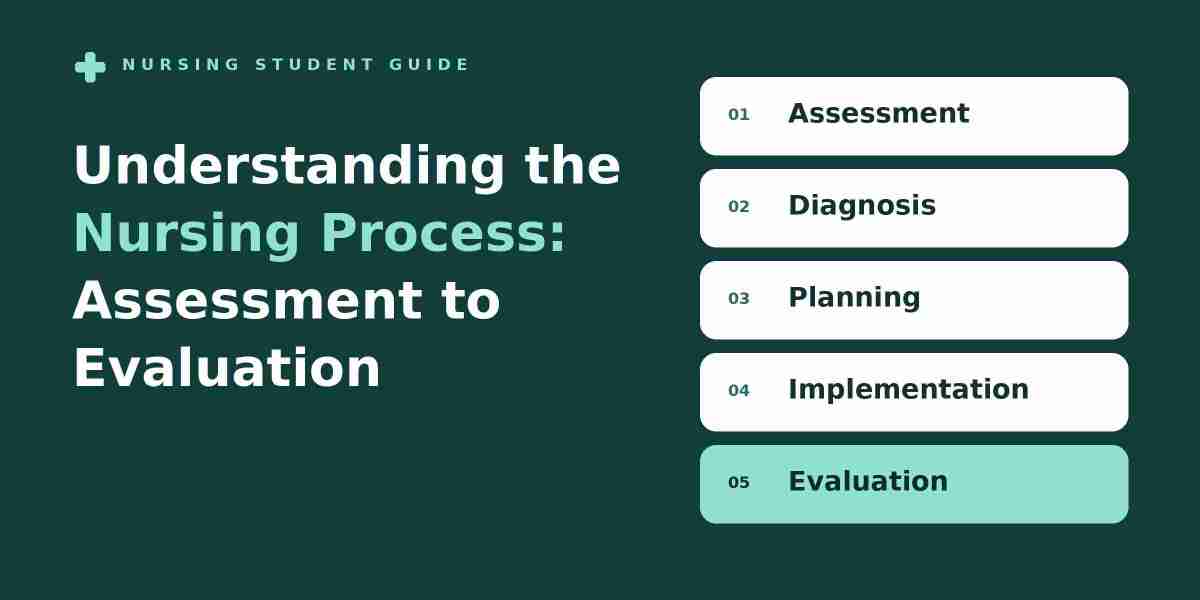
The process consists of five main stages:
Assessment
Nursing Diagnosis
Planning
Implementation
Evaluation
These stages are commonly referred to as ADPIE. Although they are presented in a particular order, nursing practice is continuous. Nurses may return to an earlier stage whenever new information becomes available or a patient's condition changes.
The main purpose of the nursing process is to promote patient safety, improve healthcare outcomes, support individual needs, and maintain continuity of care.
2. Assessment: Collecting Patient Information
Assessment is the first stage of the nursing process. It involves collecting and analysing information about a patient's physical, psychological, social, and emotional health.
Accurate assessment is important because the remaining stages depend on the quality of the information collected.
Nurses generally gather two main types of information:
Subjective data: Information provided directly by the patient, including pain, nausea, fatigue, dizziness, and personal concerns.
Objective data: Information that can be observed or measured, such as blood pressure, temperature, heart rate, oxygen saturation, physical examination findings, and laboratory results.
Common assessment activities include:
Reviewing the patient's medical history.
Conducting physical examinations.
Monitoring vital signs.
Asking questions about symptoms.
Reviewing medications and allergies.
Identifying lifestyle and social factors.
Assessing emotional and psychological wellbeing.
For example, when assessing a patient experiencing breathing difficulties, a nurse may check respiratory rate, oxygen saturation, breathing patterns, and reported symptoms.
All relevant findings should be documented accurately and communicated to the appropriate healthcare professionals.
3. Nursing Diagnosis: Identifying Patient Problems
After collecting patient information, the next stage is identifying actual or potential health problems that nursing care can address.
A nursing diagnosis is a clinical judgement about a patient's response to a health condition or life process. It differs from a medical diagnosis, which identifies a disease or medical condition.
For example:
A medical diagnosis may be pneumonia.
A nursing diagnosis may be ineffective airway clearance related to respiratory secretions.
Nursing diagnoses help nurses identify care priorities and select appropriate interventions.
When developing a nursing diagnosis, students should consider:
Relevant assessment findings.
Patient symptoms and reported concerns.
Existing health problems.
Potential complications and safety risks.
The patient's individual healthcare needs.
Students may also use recognised nursing diagnostic frameworks, such as NANDA International (NANDA-I), where appropriate and required by their institution.
It is important to ensure that nursing diagnoses are supported by assessment evidence rather than assumptions.
4. Planning: Setting Goals and Expected Outcomes
Planning is the stage where nurses establish patient-centred goals and determine which interventions may help achieve them.
The goals should be realistic, measurable, and relevant to the patient's condition. They should also consider the patient's preferences, abilities, and available healthcare resources.
A useful approach is the SMART goal framework:
Specific: Clearly explain what needs to improve.
Measurable: Identify how progress will be assessed.
Achievable: Set realistic expectations.
Relevant: Connect the goal with the patient's healthcare needs.
Time-bound: Establish an appropriate timeframe.
For example, for a patient experiencing acute pain, a goal could be:
"The patient will report a reduction in pain from 8/10 to 3/10 or lower within one hour of the prescribed pain management intervention."
The planning stage also involves prioritising nursing problems. Immediate concerns involving airway, breathing, circulation, and patient safety generally require particular attention.
Nurses should collaborate with patients and other healthcare professionals when developing care plans.
5. Implementation: Providing Nursing Interventions
Implementation involves putting the nursing care plan into action. At this stage, nurses perform the planned interventions to address identified patient needs.
Depending on the situation, interventions may be independent, dependent, or collaborative.
Independent nursing interventions: Actions that nurses can initiate within their professional scope without requiring a specific medical prescription. Examples include patient education, repositioning, and routine assessment.
Dependent nursing interventions: Actions that require an authorised prescription or clinical order, such as administering prescribed medication.
Collaborative interventions: Activities carried out in cooperation with other healthcare professionals, such as physiotherapists, doctors, and dietitians.
Consider a patient recovering from surgery who experiences difficulty moving independently. Nursing interventions may include:
Assessing pain before mobilisation.
Supporting safe movement and positioning.
Monitoring vital signs as clinically indicated.
Providing education about mobility and recovery.
Coordinating with physiotherapy when required.
Nurses must follow clinical guidelines, infection prevention procedures, and professional standards while implementing care.
Accurate documentation is also essential. It provides a record of the interventions performed and helps maintain communication between members of the healthcare team.
6. Evaluation: Reviewing Patient Outcomes
Evaluation is the final stage of the nursing process. It involves determining whether the planned interventions have achieved the expected patient outcomes.
During this stage, nurses compare the patient's current condition with the goals established during planning.
There are generally three possible outcomes:
Goal achieved: The expected result has been reached.
Goal partially achieved: Some improvement has occurred, but further care is required.
Goal not achieved: The expected outcome has not been reached, and the care plan may need revision.
For example, if the goal was to reduce a patient's pain from 8/10 to 3/10, the nurse should reassess the patient's pain level following the intervention.
If the patient continues to report severe pain, further assessment may be necessary. The nurse may need to communicate the findings to the relevant healthcare professional and review the care plan.
Evaluation is not simply the final step. It provides information that may require nurses to repeat the assessment process and modify their interventions.
7. Why Is the Nursing Process Important?
The nursing process plays an important role in maintaining the quality and consistency of patient care.
Some of its major benefits include:
Improved patient safety: A structured approach helps nurses identify risks, monitor changes, and respond to patient needs.
Individualised care: Interventions are developed according to each patient's condition, preferences, and healthcare goals.
Better clinical decision-making: Nurses use assessment findings and clinical evidence to determine appropriate actions.
Effective communication: Clear documentation and care planning improve coordination between healthcare professionals.
Continuity of care: A systematic process helps ensure that patient needs are monitored throughout different stages of treatment.
Professional accountability: Documented assessments, interventions, and evaluations support responsible nursing practice.
8. Practical Example of the Nursing Process
Consider a patient admitted to a hospital with a respiratory infection who is experiencing shortness of breath.
The five stages can be applied as follows:
| Nursing stage | Practical application |
|---|---|
| Assessment | Check oxygen saturation, respiratory rate, breathing patterns, and reported symptoms. |
| Nursing Diagnosis | Identify impaired gas exchange if supported by the patient's assessment findings. |
| Planning | Establish an appropriate oxygenation and respiratory monitoring goal. |
| Implementation | Carry out prescribed treatment, monitor respiratory status, and provide appropriate positioning and support. |
| Evaluation | Reassess respiratory findings and determine whether the expected outcomes have been achieved. |
This example demonstrates how each stage contributes to identifying patient needs and providing appropriate care. Actual interventions should always be based on clinical assessment, authorised treatment plans, and relevant healthcare protocols.
9. Common Mistakes Nursing Students Should Avoid
When learning the nursing process, students sometimes make mistakes that affect the quality of their care plans and academic assignments.
Common issues include:
Collecting incomplete patient assessment information.
Confusing medical diagnoses with nursing diagnoses.
Developing goals that cannot be measured.
Selecting interventions without clinical justification.
Failing to connect interventions with identified patient problems.
Ignoring patient preferences and individual needs.
Evaluating care without comparing outcomes against established goals.
To avoid these mistakes, students should follow the ADPIE framework carefully and ensure that every stage is supported by relevant clinical information and evidence-based reasoning.
Conclusion
The nursing process provides a systematic foundation for delivering safe, effective, and patient-centred healthcare. Its five stages—assessment, nursing diagnosis, planning, implementation, and evaluation—help nurses identify patient needs, establish appropriate goals, deliver interventions, and monitor outcomes.
For nursing students, understanding ADPIE is essential for developing clinical reasoning and applying theoretical knowledge in practical situations. By learning how each stage connects with the others, students can build a stronger understanding of nursing responsibilities and the importance of continuous patient assessment.
Ultimately, the nursing process is an ongoing cycle that