


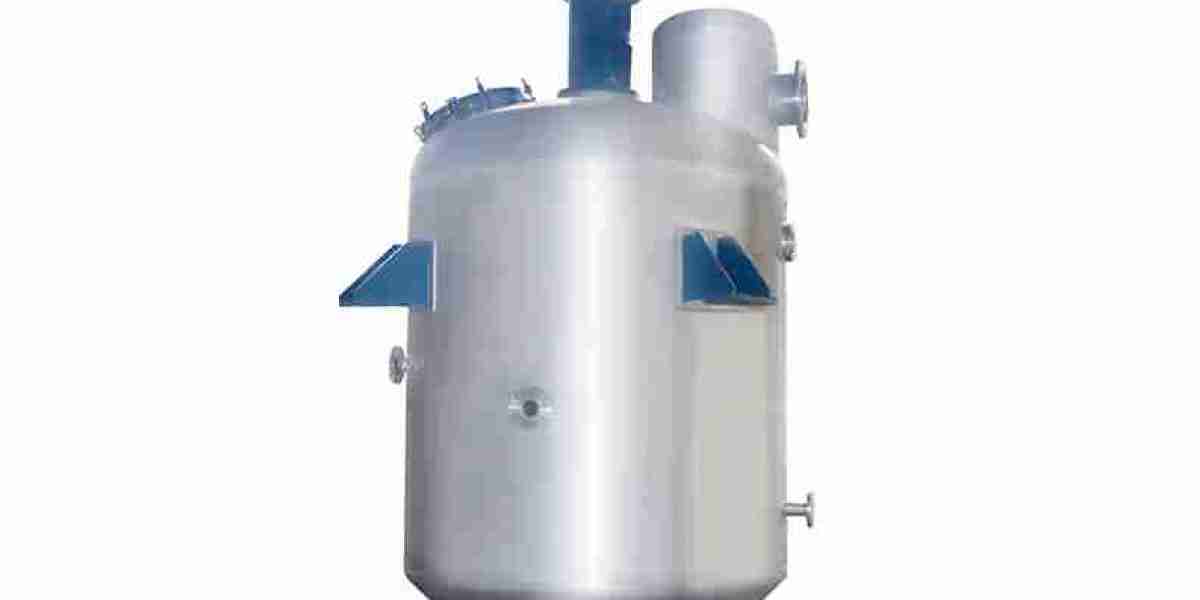
Selecting an evaporator is an important decision for manufacturers working with liquid concentration and thermal separation processes. Different materials behave differently when heated, and production facilities may have specific requirements for temperature, pressure, processing capacity, and final concentration. Understanding these factors helps industrial buyers choose equipment that matches their production conditions.
Start With the Properties of the Liquid Material
Before purchasing an evaporator, buyers should understand the physical and chemical properties of the material being processed. Viscosity, boiling point, solid content, corrosion characteristics, and heat sensitivity can all influence equipment selection.
For example, a liquid containing corrosive components may require carefully selected construction materials. Heat-sensitive substances may need controlled operating temperatures to avoid unnecessary changes in product properties. Materials with higher viscosity may also require additional consideration regarding circulation and heat transfer.
Providing accurate material information allows the engineering team to assess the appropriate evaporator configuration.
Compare Different Evaporator Designs
An industrial evaporator can be designed with different heating structures according to the process requirements. A vertical shell and tube evaporator features a vertical arrangement of heat exchange components, while a horizontal U-tube shell and tube evaporator uses U-shaped tubes for heat transfer.
External coil evaporators transfer heat through an external coil arrangement. Jacketed evaporators use a surrounding heating jacket, while internal coil evaporators place heating coils inside the equipment.
These designs serve different process conditions. Buyers should compare their structural characteristics, heating arrangements, maintenance requirements, and installation conditions instead of selecting equipment based on appearance alone.
Consider Heating and Operating Conditions
The heating medium is another important factor in evaporator selection. Depending on the project, the system may use steam or another suitable heating source. The required temperature difference between the heating medium and process liquid affects heat transfer performance.
Operating pressure should also be evaluated. Some processes require vacuum operation to reduce the boiling temperature of the liquid. Whether this arrangement is necessary depends on material characteristics and production objectives.
Evaluate Installation and Maintenance Requirements
An evaporator is usually connected with pumps, pipelines, storage tanks, control instruments, and other production equipment. Buyers should check whether the proposed system can fit into the existing factory layout.
Maintenance access is equally important. Heating surfaces may require inspection and cleaning during operation cycles. Equipment design should allow maintenance personnel to reach relevant components without unnecessary difficulty.
Work With a Manufacturer on Project Details
For industrial procurement, providing detailed technical requirements helps manufacturers prepare an appropriate equipment proposal. Information about material composition, processing volume, target concentration, heating source, and installation environment can support the design discussion.
A properly selected evaporator should match the actual production process rather than simply meet a general equipment specification. Careful evaluation before purchasing can help manufacturers control project costs and improve production planning.
https://www.cxcemachine.com/product/evaporator/



