
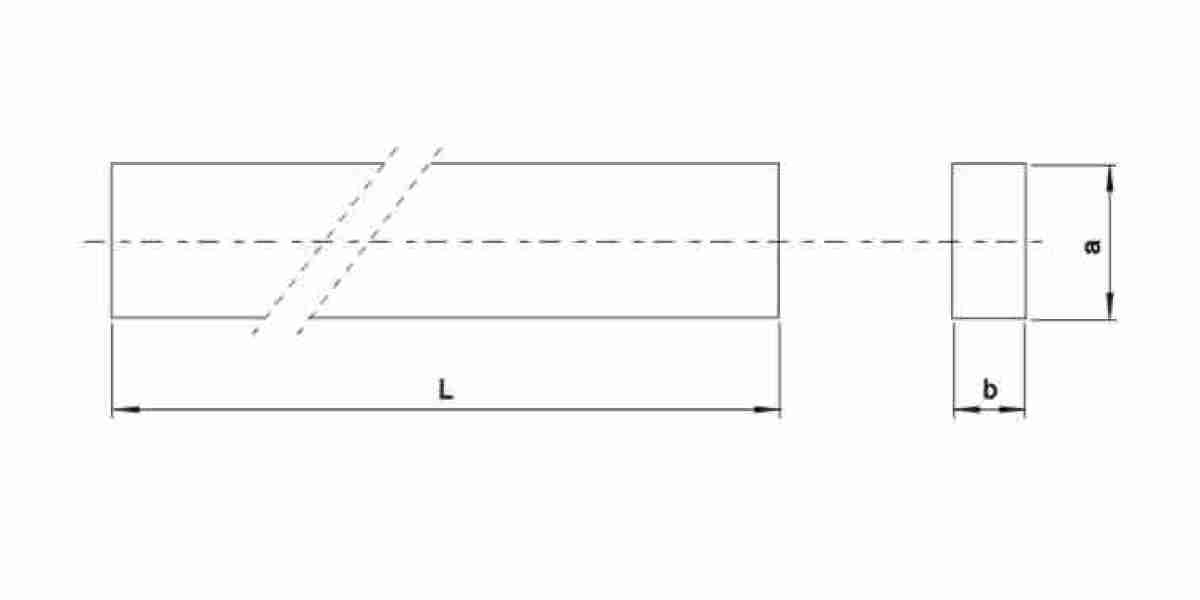
Industrial equipment often operates under repeated friction, pressure, and contact with abrasive materials. These conditions can gradually damage conventional metal components and increase maintenance requirements. Carbide Flats provide a practical material option for applications that require hardness and wear resistance. Made from cemented carbide, these rectangular blanks can be processed into different industrial parts according to equipment design and operating conditions.
Why Wear Resistance Is Important
Wear is a common issue in manufacturing equipment. Components that remain in contact with moving materials may experience surface abrasion, deformation, or gradual dimensional changes. When these problems affect tooling accuracy, manufacturers may need to replace parts or interrupt production for maintenance.
Cemented carbide offers high hardness and resistance to mechanical wear. Its properties make it suitable for producing components used in demanding working environments. However, the actual service performance depends on the selected grade, component design, and operating conditions.
The Role of Carbide Grade Selection
Different industrial applications require different material characteristics. YG3X and YG6 are commonly associated with finishing and semi-finishing machining of cast iron, non-ferrous metals, alloys, and non-metallic materials.
For applications involving hardened cast iron and heat-resistant alloy steel, YG6X and YG6.2A may be considered. ZF10A is suitable for finishing and semi-finishing various cast irons and non-ferrous metals and can also be used for integral cutting tool production.
When machining conditions involve rough processing and greater impact, YG8 and YG8X offer useful toughness characteristics. YW2 is designed for machining wear-resistant steel, high-manganese steel, stainless steel, and advanced alloys.
Processing Carbide Flats into Industrial Parts
Carbide Flats are supplied as rectangular blanks that can undergo grinding, cutting, and other machining operations. Depending on the drawing, manufacturers can process them into wear strips, cutting components, guide elements, and customized tooling parts.
For equipment manufacturers, having a suitable blank specification helps simplify the production process. Before ordering, purchasing teams should confirm the required length, width, thickness, tolerances, and surface condition.
Considerations for Bulk Purchasing
Bulk buyers should pay attention to more than the quoted unit price. Material consistency, dimensional accuracy, packaging, inspection arrangements, and delivery schedules can all affect procurement efficiency.
It is also useful to discuss the actual working environment with the supplier. Information about the processed material, cutting speed, operating temperature, and expected mechanical load can help narrow down suitable carbide grades.
Reducing Unnecessary Tool Replacement
A properly selected carbide component can help control wear-related maintenance and reduce replacement frequency under suitable operating conditions. Buyers should also consider tool geometry, installation accuracy, and routine inspection rather than relying on material hardness alone.
For industrial tool producers and machinery manufacturers, Carbide Flats offer flexibility in component processing and material selection. Matching the carbide grade with the intended application helps establish a practical balance between wear resistance, toughness, machining requirements, and purchasing costs.
https://www.zycementedcarbides.com/product/cemented-carbide-flats/