


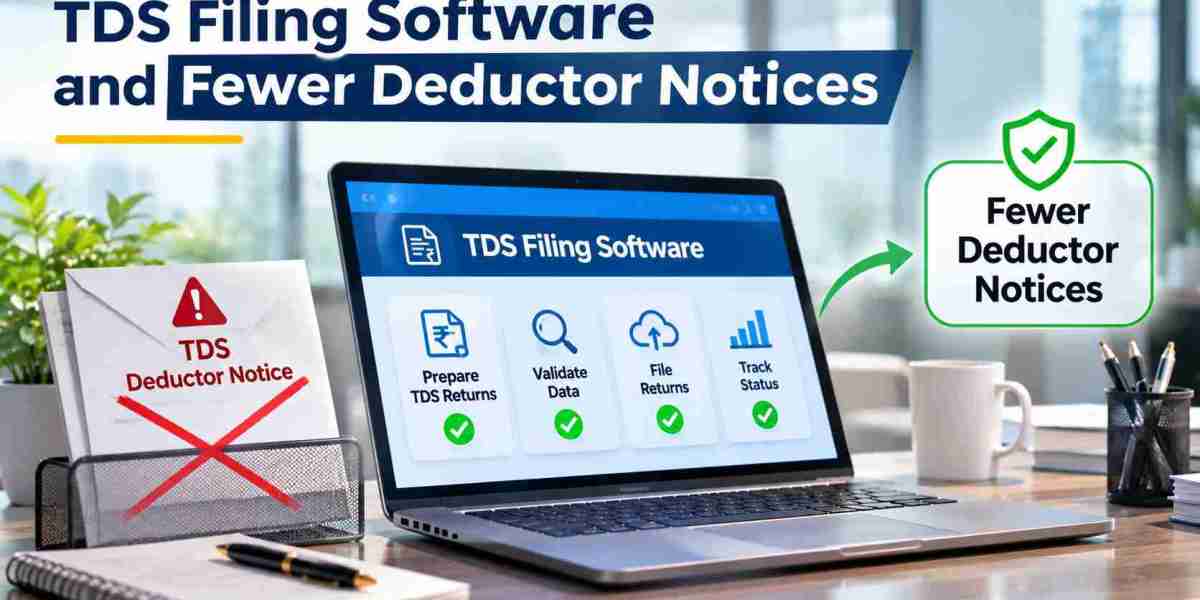
Businesses deducting tax at source must manage several responsibilities, including calculating deductions, depositing tax, maintaining deductee records and submitting quarterly TDS returns. Even small mistakes in these activities can create mismatches, correction requirements and notices from the Income Tax Department.
Using suitable tds filing software can help finance teams organise these activities and review return information before submission. Software does not guarantee that notices will never occur, but the right tools and a consistent filing process can help reduce common data-related errors.
Why TDS Filing Accuracy Matters
TDS compliance involves more than deducting tax from payments. Businesses must also ensure that the deducted amounts are deposited correctly and reported with accurate details.
For example, a company may deduct tax from several vendor payments during a quarter. If the deductee's PAN, deduction amount or challan information is entered incorrectly, the details reported in the return may not match the underlying records.
Such discrepancies can require additional verification and correction. Maintaining accurate information throughout the process helps businesses reduce avoidable compliance problems.
How TDS Filing Software Helps Deductors
TDS filing software can support different stages of return preparation. Depending on its features, it may help businesses manage the following activities.
1. Accurate Deductee Information
PAN details, names, payment amounts and deduction information must be recorded correctly.
Incorrect or missing PAN information can affect the accuracy of TDS reporting. Finance teams should verify deductee details against available records before preparing returns.
Software with structured data entry and validation features may help identify missing fields or formatting issues. This gives the team an opportunity to review information before generating the return.
2. Better Challan Reconciliation
Challan reconciliation is an important part of TDS return preparation.
The tax deposited by a deductor must be correctly reflected in the corresponding return details. Differences in challan identification numbers, payment amounts or other particulars can create reconciliation problems.
A suitable software workflow can help organise challan information and compare it with deduction records.
Before submission, finance teams should check:
Whether the deposited tax amount matches the records.
Whether challan details have been entered correctly.
Whether the relevant deductions are reported accurately.
Whether any challan information is missing or duplicated.
These checks can help reduce mismatches between deposited tax and reported deductions.
3. Organised Quarterly TDS Return Preparation
Businesses need to prepare applicable TDS returns based on their transactions and reporting responsibilities.
Managing deductee details, deduction amounts and challan information through separate spreadsheets can make the process difficult, particularly when transaction volumes are high.
TDS filing software can provide a more structured environment for organising return data. Depending on the application, it may support data import, preparation of return information and generation of the required filing format.
A consistent process also makes it easier for finance teams to review records before submission.
4. Error Checking Before Submission
Errors discovered after filing may require additional correction work.
Software-based validation can help identify certain issues, such as missing information, incorrect data formats and inconsistencies in return records.
However, automated checks have limitations. They cannot independently confirm that every transaction has been classified correctly or that the underlying deduction was legally appropriate.
Finance teams should review validation results and compare return information against accounting records, payment details and supporting documents.
Common Reasons Deductors May Receive Notices
TDS-related notices or communications can arise for different reasons. Some common areas that businesses should monitor include:
PAN discrepancies: Incorrect or missing deductee PAN details.
Challan mismatches: Differences between tax deposited and amounts reported.
Incorrect deduction details: Errors in payment amounts, deduction amounts or applicable rates.
Late compliance: Delays in depositing deducted tax or submitting required returns.
Return inconsistencies: Incorrect or incomplete information in quarterly statements.
Correction requirements: Differences between previously submitted information and updated records.
Not every notice has the same cause. Businesses should examine the communication received, identify the relevant discrepancy and take appropriate corrective action.
Why Manual TDS Preparation Can Become Difficult
Manual preparation may be manageable when transaction volumes are low and the finance team has an established process.
However, as the number of deductees and transactions increases, maintaining accurate records becomes more demanding. Employees may need to work across accounting systems, spreadsheets, challan records and return preparation files.
This can increase the possibility of duplicate entries, missing information and inconsistent figures.
Software can help centralise parts of the preparation workflow and reduce repetitive work. The actual benefit depends on the application's capabilities and the quality of the data entered.
Connecting TDS and Income Tax Workflows
TDS filing is one part of a business's wider tax compliance activities. Finance teams may also manage income tax calculations, return preparation and related reporting responsibilities.
Using suitable income tax software can help organise these activities within the company's tax preparation process.
Businesses should evaluate their software requirements based on filing volume, reporting responsibilities, existing systems and the experience of their finance teams.
Build a More Reliable TDS Filing Process
Reducing avoidable TDS notices requires accurate records, timely reconciliation and careful review before submission.
TDS filing software can support this process by helping deductors organise information, prepare quarterly returns and identify certain data-related errors. However, businesses must still verify their transactions, deposited tax and applicable compliance requirements.
A combination of suitable software, trained finance personnel and consistent review procedures can help companies maintain better control over TDS reporting and reduce unnecessary correction work.




