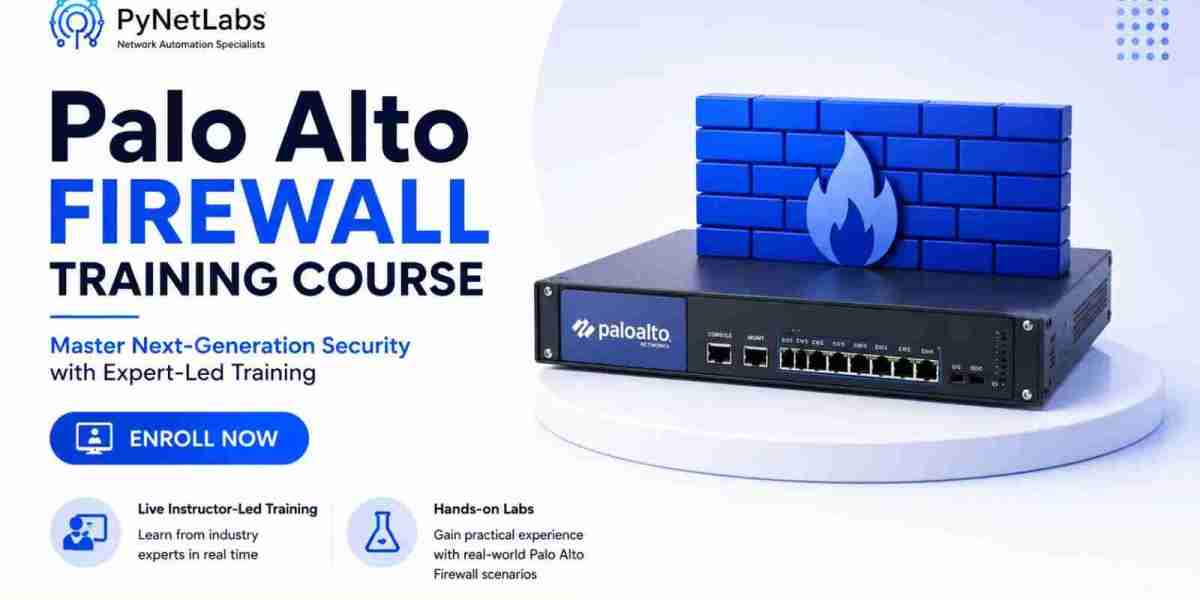
If you're starting a career in network security, one of the most common questions is which firewall platform to focus on first. Many beginners specifically look into Palo Alto Firewall Training since Palo Alto, Fortinet, and Cisco are the three names you'll encounter most often in job postings and enterprise environments. Each has its strengths, and choosing where to start can shape your early career opportunities. Here's an honest, practical comparison to help you decide.
Palo Alto Networks: The Enterprise Security Leader
Palo Alto Networks built its reputation on next-generation firewall innovation, particularly with its App-ID, User-ID, and Content-ID technologies. These allow administrators to control traffic based on the actual application and user identity, rather than relying solely on ports and protocols. This makes Palo Alto firewalls especially strong in environments that demand granular visibility and precise policy control, like large enterprises, financial institutions, and government networks.
Strengths: Deep application awareness, strong threat intelligence through WildFire, robust centralized management via Panorama, and a reputation as the go-to platform for complex, large-scale deployments.
Considerations: Palo Alto solutions tend to come with a higher price point, which means it's more commonly found in larger organizations rather than small businesses. This also means Palo Alto Firewall Training tends to lead toward higher-paying, enterprise-focused roles.
Fortinet: The Performance and Value Play
Fortinet's FortiGate firewalls are known for strong price-to-performance value, particularly through their custom security processing units (SPUs) that accelerate traffic inspection without heavily taxing the CPU. Fortinet has built a broad security ecosystem, often referred to as the Fortinet Security Fabric, integrating firewalls with endpoint protection, SD-WAN, and cloud security tools.
Strengths: Strong performance at a competitive price, widely adopted across small and mid-sized businesses, and a broad integrated product ecosystem that appeals to organizations wanting a single-vendor security stack.
Considerations: While Fortinet is powerful, some advanced application-layer visibility features are considered less mature compared to Palo Alto's offerings, which can matter in highly complex enterprise environments.
Cisco: The Networking Incumbent
Cisco has long dominated enterprise networking, and its Secure Firewall (formerly Firepower) lineup benefits from deep integration with the broader Cisco networking ecosystem. For organizations already heavily invested in Cisco switches, routers, and identity services, sticking with Cisco firewalls often simplifies management and support.
Strengths: Seamless integration with existing Cisco infrastructure, strong brand recognition, and widespread adoption across enterprises that have built their networks around Cisco technology for years.
Considerations: Cisco's firewall product line has undergone several rebranding and architecture shifts over the years, which can make documentation and community resources feel less consistent compared to Palo Alto or Fortinet.
Which One Should You Learn First?
There's no universally "correct" answer, but here's a practical way to think about it:
Choose Palo Alto if: You want to target enterprise-level network security roles, work toward some of the highest-paying certifications in the field, or you're interested in advanced application-aware security concepts that are increasingly becoming the industry standard.
Choose Fortinet if: You're aiming for roles at small to mid-sized businesses, want strong job availability due to Fortinet's widespread adoption, or you're interested in a unified security ecosystem approach.
Choose Cisco if: You already have strong Cisco networking experience (like CCNA or CCNP), and want to build directly on that foundation without switching vendor ecosystems entirely.
Why Many Professionals Start With Palo Alto
Many career changers and networking professionals choose to start with Palo Alto Firewall Training specifically because it offers a strong foundation in modern, application-aware security concepts that increasingly apply across other platforms too. Once you understand how App-ID-style application identification and identity-based policies work, adapting to other vendors' implementations of similar concepts becomes considerably easier.
Additionally, Palo Alto's strong presence in large enterprises, government, and regulated industries like banking and healthcare means certified professionals often have access to higher-paying, more specialized career paths compared to some other platforms.
You Don't Have to Choose Just One
In reality, many experienced network security professionals end up working across multiple vendors over the course of their careers, since large enterprises frequently run multi-vendor environments or migrate between platforms. Starting with one platform, ideally one with strong industry demand like Palo Alto, gives you a solid foundation. From there, picking up additional vendor-specific skills becomes significantly faster, since the core security concepts, like zone-based policies, NAT, VPNs, and threat prevention, remain largely consistent across platforms.
Final Thoughts
If you're unsure where to begin, starting with Palo Alto Firewall Training is a reasonable, career-focused choice given its strong enterprise demand and advanced feature set. But regardless of which platform you choose first, focus on building strong, hands-on fundamentals. Vendor-specific syntax and interfaces can be learned relatively quickly once you deeply understand the underlying security concepts.