


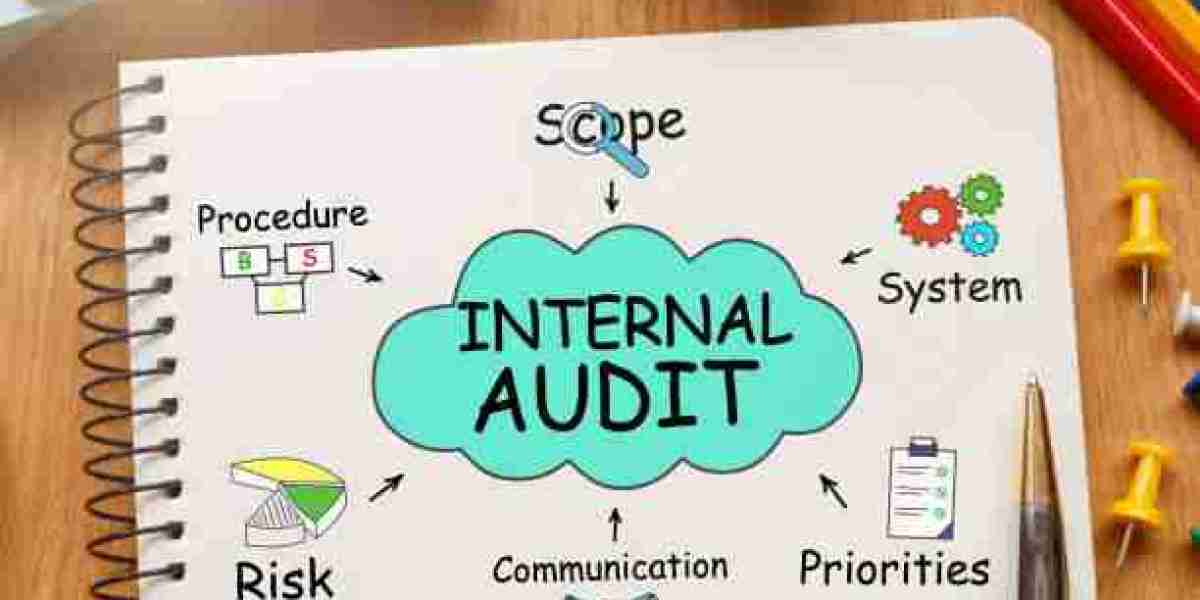
Building a strategic internal audit roadmap has become an important priority for organizations operating in Saudi Arabia as regulatory expectations, digital transformation, financial accountability, and corporate governance requirements continue to evolve. In 2026, businesses must move beyond traditional compliance checks and develop structured audit strategies that identify emerging risks, improve operational performance, strengthen internal controls, and support long term organizational objectives. Effective internal audit services help organizations establish risk based audit plans, evaluate governance frameworks, detect financial irregularities, and maintain transparency across business operations. As Saudi Arabia advances its Vision 2030 transformation agenda, companies across public and private sectors need a more proactive approach to internal auditing.
A well designed roadmap also helps organizations connect their risk management activities with strategic business priorities. An Insights Advisory consultancy approach can support management teams in identifying control weaknesses, evaluating operational exposure, and developing measurable audit objectives. The growing importance of corporate governance, cybersecurity, artificial intelligence, financial reporting accuracy, and regulatory compliance means that internal audit functions must become more analytical and technology driven. For Saudi businesses, the objective is not simply to identify past mistakes but to anticipate future risks and provide management with reliable information for better decision making.
Understanding the Importance of a Strategic Internal Audit Roadmap in KSA
A strategic internal audit roadmap is a structured plan that defines how an organization's internal audit function will operate over a specific period. It identifies key business risks, establishes audit priorities, allocates resources, and determines how audit recommendations will be monitored. In Saudi Arabia, this approach is particularly relevant because businesses operate in an environment shaped by economic diversification, regulatory modernization, digital investment, and expanding private sector participation.
Organizations must ensure that their audit strategies reflect their actual risk exposure rather than relying on repetitive annual checklists. A manufacturing company, for example, may prioritize supply chain continuity, inventory management, procurement controls, and workplace safety. A financial institution may focus more heavily on regulatory reporting, cybersecurity, credit risk, fraud prevention, and data protection.
A strategic roadmap helps organizations:
- Align audit activities with corporate objectives and business strategies.
- Identify financial, operational, technological, and regulatory risks.
- Strengthen internal control systems across departments.
- Improve accountability among senior management and process owners.
- Monitor compliance with applicable Saudi regulations.
- Evaluate the effectiveness of risk management frameworks.
- Support informed decisions through independent audit insights.
- Track corrective actions and measure improvements over time.
An effective roadmap should remain flexible. When a new regulation, technology risk, or business development changes the organization's exposure, audit priorities should be reassessed rather than waiting until the next annual planning cycle.
Saudi Arabia's 2026 Business Environment and Its Impact on Internal Auditing
Saudi Arabia's economic transformation is creating new opportunities while increasing the complexity of organizational risk management. Vision 2030 initiatives are encouraging investment across tourism, infrastructure, financial services, manufacturing, logistics, technology, healthcare, and entertainment. These developments are increasing the importance of transparent financial management, reliable reporting, effective governance, and operational accountability.
The approved 2026 national budget provides important context for organizations developing their audit strategies. Saudi Arabia projected government expenditure of approximately SAR 1.313 trillion, revenue of around SAR 1.147 trillion, and a fiscal deficit of approximately SAR 165 billion. These figures highlight the importance of expenditure controls, procurement transparency, project monitoring, and financial discipline.
The International Monetary Fund's economic outlook also provides useful indicators for business planning. Its 2026 projections have highlighted continued growth in Saudi Arabia's non oil economy, reinforcing the need for businesses to manage expanding operations, investment commitments, and changing market conditions. These developments influence internal audit priorities in several ways.
Greater Financial Accountability: Organizations managing large investments and complex financial arrangements need stronger controls over budgeting, expenditure approval, revenue recognition, and financial reporting.
Expanding Operational Complexity: Businesses entering new markets or expanding geographically must ensure that their processes remain consistent, documented, and adequately controlled.
Increasing Regulatory Expectations: Organizations must monitor changes in tax, zakat, labor, financial reporting, cybersecurity, and sector specific requirements.
Technology Related Exposure: Digital platforms and automated business processes introduce risks involving unauthorized access, inaccurate data, system failures, and cyberattacks.
Stronger Governance Requirements: Boards and audit committees increasingly require reliable information about organizational risks, control effectiveness, and remediation progress.
Internal audit roadmaps should therefore consider both current operational weaknesses and the risks associated with future business expansion.
Establishing Clear Audit Objectives and Strategic Priorities
The first stage of developing an effective internal audit roadmap is defining clear objectives that support organizational priorities. Audit teams should understand what the business wants to achieve and identify the risks that could prevent those objectives from being accomplished.
In Saudi Arabia, audit objectives should reflect the organization's industry, operational structure, regulatory obligations, and financial position. A roadmap designed for a government contractor will have different priorities from one developed for a bank, healthcare provider, or technology company. Management and audit committees should establish objectives covering the following areas.
Financial Reporting and Accountability
Financial reporting accuracy is one of the most important responsibilities of an internal audit function. Organizations should examine whether financial information is complete, accurate, properly authorized, and supported by appropriate documentation.
Auditors should assess revenue recognition, expense classification, accuracy of financial statements, budget preparation, expenditure monitoring, accounts payable and receivable controls, cash flow management, bank reconciliations, fixed asset registration, depreciation, and fraud risks involving financial transactions.
Saudi businesses should also consider the impact of tax and zakat requirements on financial reporting. Audit procedures should examine whether financial records support accurate tax calculations and whether transactions are documented appropriately.
Operational Efficiency and Performance
Operational audits help management understand whether business processes are delivering expected results. They identify unnecessary costs, inefficient procedures, resource allocation problems, and weaknesses in departmental performance.
For example, a construction business may experience project delays because procurement approvals are inefficient or supplier performance is not monitored properly. An operational audit can identify these weaknesses and recommend improvements.
Key operational audit areas include:
- Procurement and vendor management.
- Inventory control and warehouse operations.
- Production efficiency and quality management.
- Project management and cost monitoring.
- Employee productivity and payroll processes.
- Contract management and service delivery.
- Business continuity and disaster recovery.
Regulatory Compliance and Corporate Governance
Saudi organizations must maintain appropriate compliance arrangements according to their industry and regulatory responsibilities. Listed companies, financial institutions, insurance providers, and other regulated entities may have specific governance and reporting obligations.
The Capital Market Authority's Corporate Governance Regulations contain important requirements concerning internal audit arrangements for listed companies. Organizations should ensure that their internal audit units operate according to applicable requirements and that audit plans and reports receive appropriate oversight.
An audit roadmap should evaluate board and audit committee oversight, independence of the internal audit function, internal audit policies, delegation of authority, conflict of interest management, regulatory reporting responsibilities, whistleblowing mechanisms, and monitoring of compliance deficiencies.
Conducting an Enterprise Wide Risk Assessment
A comprehensive risk assessment is the foundation of a successful internal audit roadmap. It helps organizations identify their most significant exposures and determine which business activities require greater audit attention.
Rather than auditing every department with equal frequency, organizations should prioritize areas according to their likelihood of failure and potential business impact.
Identifying Major Risk Categories
The risk assessment should cover several interconnected categories.
Financial Risks: These include inaccurate reporting, cash flow problems, unauthorized transactions, poor budgeting, credit exposure, and financial fraud.
Operational Risks: These involve supply chain disruptions, project delays, weak procurement procedures, inadequate inventory controls, and inefficient business processes.
Technology Risks: These include cyberattacks, unauthorized system access, data loss, software vulnerabilities, and failures in automated business applications.
Regulatory Risks: These arise when organizations fail to comply with relevant Saudi laws, sector regulations, tax requirements, and reporting obligations.
Strategic Risks: These include unsuccessful expansion plans, investment losses, changing market conditions, and ineffective business transformation projects.
Human Resource Risks: These involve payroll inaccuracies, employee misconduct, inadequate training, conflicts of interest, and poor segregation of duties.
Developing a Risk Scoring Framework
A practical risk scoring model enables audit teams to compare different risks and establish priorities. Each risk can be evaluated according to its likelihood and potential impact.
For example, organizations may use a scoring system from 1 to 5 for both factors. A score of 1 represents very low likelihood or impact, while a score of 5 represents very high likelihood or impact.
The inherent risk score can be calculated by multiplying likelihood by impact.
For instance, a cybersecurity threat with a likelihood score of 4 and an impact score of 5 receives a risk score of 20 out of 25. This would normally require significant management attention and potentially more frequent audit coverage.
Organizations should also assess residual risk after considering existing controls. A high inherent risk may be manageable when strong preventive and detective controls are operating effectively.
Building a Dynamic Risk Register
A risk register should document identified risks, their potential consequences, existing controls, responsible departments, and planned corrective actions.
An effective risk register should include:
- Risk identification number and description.
- Business process or department affected.
- Likelihood and impact ratings.
- Inherent and residual risk scores.
- Existing control activities.
- Risk owners and responsible managers.
- Required mitigation measures.
- Target completion dates.
- Monitoring and review frequency.
The risk register should be updated whenever significant operational, regulatory, financial, or technological changes occur.
Designing a Risk Based Internal Audit Plan
After completing the enterprise wide risk assessment, organizations should convert the findings into a practical annual and multi year audit plan. The plan should identify which departments, systems, projects, and business processes will be audited and when the audits will take place.
A risk based plan ensures that audit resources are allocated according to business exposure rather than historical audit schedules.
For organizations operating in Saudi Arabia, the plan should consider the following priorities.
Financial and Accounting Audits
Financial audits should assess the reliability of accounting systems, transaction approvals, reconciliations, and financial reporting processes.
Auditors should pay particular attention to high value transactions, unusual journal entries, related party transactions, and manual adjustments. They should also examine whether financial controls are operating consistently across different branches and subsidiaries.
Procurement and Contract Management Audits
Procurement is a significant risk area for organizations managing large infrastructure projects, government contracts, and complex supplier networks.
Audit teams should examine vendor selection, tender evaluation, purchase order approvals, contract amendments, and supplier payments.
Important audit procedures include:
- Reviewing competitive bidding procedures.
- Checking supplier registration and due diligence.
- Identifying duplicate or suspicious vendor records.
- Examining purchase orders against approved budgets.
- Reviewing contract variations and additional costs.
- Verifying goods received before payment authorization.
- Identifying potential conflicts of interest.
IT and Cybersecurity Audits
Technology related risks are becoming increasingly important as Saudi businesses adopt cloud computing, artificial intelligence, enterprise resource planning systems, and digital customer platforms.
Internal audit teams should examine user access management, password controls, system configurations, data backups, incident reporting, and third party technology arrangements.
Cybersecurity should be included in the audit roadmap because digital threats can affect financial information, customer records, business continuity, and organizational reputation.
Compliance and Regulatory Audits
Compliance audits should determine whether the organization follows relevant legal and regulatory obligations. Depending on the industry, this may include requirements issued by the Capital Market Authority, Saudi Central Bank, Zakat, Tax and Customs Authority, and other supervisory bodies.
A structured compliance audit should examine whether policies are updated, employees understand their responsibilities, reporting deadlines are monitored, and regulatory breaches are escalated appropriately.
Strengthening Internal Audit Governance and Independence
An internal audit roadmap cannot deliver reliable results without appropriate governance and organizational independence. Internal auditors must be able to evaluate business activities objectively without interference from the departments they examine.
The board and audit committee should provide appropriate oversight of the internal audit function. Senior management should support the audit process while respecting the independent judgment of auditors.
Defining the Internal Audit Charter
The internal audit charter establishes the authority, responsibilities, scope, and reporting arrangements of the audit function.
It should clearly define the purpose and objectives of internal auditing, authority to access organizational records and systems, reporting arrangements with the audit committee, responsibilities of the chief audit executive, audit planning and execution procedures, independence requirements, confidentiality, professional conduct, coordination with external auditors, and procedures for reporting significant findings.
The charter should be reviewed periodically to ensure it reflects changes in the organization's structure and regulatory environment.
Improving Audit Committee Oversight
The audit committee should review and approve the annual audit plan, monitor the performance of the audit function, and ensure that significant findings receive appropriate management attention.
Its responsibilities should include:
- Reviewing major financial and operational risks.
- Approving internal audit resources and budgets.
- Evaluating the independence of internal auditors.
- Monitoring overdue audit recommendations.
- Reviewing significant fraud and compliance matters.
- Assessing the effectiveness of internal controls.
For financial institutions regulated by the Saudi Central Bank, internal audit requirements include a formal internal audit policy and a risk based audit plan approved by the audit committee. Organizations should incorporate applicable regulatory expectations into their audit governance arrangements.
Integrating Technology and Data Analytics into Internal Auditing
Technology is changing how internal audit functions identify risks, collect evidence, and evaluate control effectiveness. Traditional sampling methods can be useful, but they may not identify unusual patterns across large transaction populations.
In 2026, Saudi organizations should consider adopting data analytics, automated testing, and artificial intelligence supported audit techniques where appropriate.
Using Data Analytics for Continuous Monitoring
Data analytics allows auditors to examine large volumes of financial and operational information. It can help identify unusual transactions, repeated payment patterns, unauthorized adjustments, and potential control failures.
Examples include:
Duplicate Payment Detection: Analytical tools can identify invoices with matching supplier details, invoice numbers, amounts, or payment dates.
Unusual Journal Entries: Auditors can identify transactions posted outside normal working hours, unusual account combinations, or entries made by unauthorized users.
Payroll Analysis: Data analysis can identify duplicate bank accounts, inactive employees receiving payments, or unusual salary adjustments.
Procurement Analytics: Audit teams can examine repeated purchases from the same suppliers, split purchase orders, and transactions exceeding approval limits.
Revenue Monitoring: Automated testing can highlight unusual discounts, delayed invoicing, abnormal sales returns, and unexpected revenue movements.
Artificial Intelligence in Internal Audit
Artificial intelligence can support risk identification, document analysis, anomaly detection, and audit reporting. However, organizations must ensure that AI generated results are reviewed by qualified professionals.
AI systems can produce inaccurate results, overlook context, or identify false positives. Therefore, auditors should validate findings against original records and maintain clear documentation of their procedures.
An effective technology strategy should include:
- Approved access to business data.
- Secure storage of audit evidence.
- Defined responsibilities for AI generated analysis.
- Human review of automated findings.
- Data privacy and cybersecurity safeguards.
- Monitoring of system accuracy and reliability.
Technology should strengthen professional judgment rather than replace it.
Developing a Competent Internal Audit Team
The effectiveness of an audit roadmap depends heavily on the knowledge, experience, and professional capabilities of the audit team. Organizations should evaluate whether their current employees have the skills required to address emerging business and regulatory risks.
Saudi Arabia's professional internal audit environment is also developing. The Saudi Authority of Internal Auditors reports 6,312 certified internal auditors and 2,630 active members. These figures demonstrate the established professional community supporting the development of internal auditing in the Kingdom.
Essential Skills for Internal Auditors in 2026
Audit teams should develop expertise in several areas:
- Financial accounting and reporting.
- Enterprise risk management.
- Corporate governance and regulatory compliance.
- Cybersecurity and information technology.
- Data analytics and automated testing.
- Fraud investigation and prevention.
- Project and contract management.
- Communication and stakeholder management.
- Saudi regulatory and industry requirements.
Organizations should encourage professional certifications such as Certified Internal Auditor, Certified Information Systems Auditor, and relevant risk management qualifications.
Creating a Continuous Training Programme
Professional development should be included in the annual audit roadmap. Training needs should be identified through competency assessments and linked to the organization's changing risk profile.
For example, an audit team reviewing digital payment systems may require additional cybersecurity and technology audit training. Similarly, auditors responsible for construction projects may need stronger knowledge of contract management, project costing, and procurement controls.
An Insights Advisory consultancy perspective can help organizations assess audit capabilities, identify competency gaps, and establish structured improvement programmes that support long term governance objectives.
Creating a Practical 2026 Internal Audit Implementation Roadmap
A strategic roadmap should translate audit objectives into measurable activities with clear responsibilities and realistic timelines. Organizations should avoid creating plans that look comprehensive on paper but lack sufficient resources or management support.
A phased implementation approach can help Saudi businesses establish a consistent audit structure throughout 2026.
Phase 1: First Quarter, Risk Assessment and Planning
The first phase should focus on understanding the organization's current risk environment and evaluating existing internal controls.
Key activities include:
- Reviewing previous internal audit reports.
- Conducting interviews with senior management.
- Identifying critical business processes.
- Updating the enterprise risk register.
- Evaluating regulatory compliance requirements.
- Assessing the internal audit team's capabilities.
- Preparing and approving the annual audit plan.
Management should also identify high risk departments that require immediate attention.
Phase 2: Second Quarter, Audit Execution and Control Testing
The second phase should focus on conducting audits across priority business functions. Audit teams should collect evidence, interview relevant employees, review documentation, and test whether internal controls are operating effectively.
Priority activities may include financial reporting reviews, procurement audits, cybersecurity assessments, and operational control testing. Auditors should document findings according to their severity and business impact. Significant control weaknesses should be communicated to management and the audit committee without unnecessary delays.
Phase 3: Third Quarter, Technology Integration and Remediation
The third phase should emphasize technology improvements and corrective actions. Organizations should evaluate opportunities to introduce automated audit testing, data analytics, and continuous monitoring.
During this period, audit teams should:
- Review the progress of management action plans.
- Test whether corrective controls are effective.
- Identify recurring audit findings.
- Conduct follow up reviews.
- Evaluate emerging technology risks.
- Update risk assessments based on new findings.
Management should provide evidence that agreed corrective actions have been implemented rather than relying only on verbal confirmations.
Phase 4: Fourth Quarter, Performance Evaluation and Future Planning
The final phase should evaluate the overall effectiveness of the audit programme and establish priorities for the next financial year. Audit teams should prepare a performance report covering completed audits, significant findings, unresolved risks, management responses, and resource utilization. The annual review should also identify areas requiring additional audit coverage in 2027.
Measuring Internal Audit Performance Through KPIs
Key performance indicators help organizations determine whether their internal audit roadmap is delivering measurable value. Without performance measurement, management may struggle to understand whether audit activities are improving governance and reducing organizational risks. A balanced performance framework should measure both audit delivery and the effectiveness of corrective actions.
Important Internal Audit KPIs
Annual Audit Plan Completion Rate: This measures the percentage of planned audits completed during the reporting period. A reasonable internal target may be 90% to 95%, depending on available resources and changes in the risk environment.
Audit Recommendation Implementation Rate: This measures how many agreed corrective actions have been completed by management within the expected timeframe. Organizations can establish a target of 85% to 90% for actions due during the measurement period.
High Risk Finding Resolution Time: This indicator measures the average time required to resolve significant audit findings. High risk issues should receive priority and have clearly defined escalation procedures.
Repeat Finding Rate: This measures how frequently previously identified control weaknesses appear in subsequent audits. A declining rate generally indicates better corrective action and stronger control ownership.
Audit Coverage Percentage: This measures the proportion of high risk business areas examined during the audit cycle. It helps management identify whether important operational and financial exposures are receiving sufficient attention.
Audit Report Delivery Time: This measures the time between completing fieldwork and issuing the final audit report. Timely reporting helps management address weaknesses before they create further exposure.
Organizations should avoid evaluating auditors only through the number of completed audits. Audit quality, risk reduction, stakeholder confidence, and the effectiveness of recommendations are equally important.
Addressing Common Challenges in Strategic Internal Audit Planning
Despite the importance of structured audit planning, organizations may experience several challenges when developing and implementing their roadmaps.
Limited Audit Resources
Some organizations do not have sufficient internal auditors, technology, or financial resources to cover every business process. This can result in incomplete audit coverage and delays in identifying important weaknesses.
The solution is to prioritize high risk activities, improve resource allocation, and consider specialist external support when internal capabilities are insufficient.
Resistance from Management and Employees
Departments may perceive internal audits as unnecessary inspections rather than opportunities to improve performance. This can create delays in providing documents, responding to questions, and implementing recommendations.
Organizations should promote a collaborative audit culture in which employees understand that internal auditing supports accountability and operational improvement.
Inadequate Risk Assessment
Outdated risk registers and incomplete business information can result in audit plans that overlook significant threats.
Risk assessments should be updated regularly and supported by discussions with department heads, financial managers, compliance officers, and technology teams.
Weak Follow Up Procedures
An audit report has limited value if management does not implement the agreed recommendations. Repeated findings can indicate weak accountability or ineffective remediation.
Each finding should have an assigned owner, an agreed deadline, and a documented verification process.
Rapid Technological Changes
The adoption of new software, cloud platforms, and artificial intelligence creates risks that traditional audit procedures may not adequately address.
Organizations should update their audit methodologies and provide ongoing training in technology risk, cybersecurity, and data analysis.
The Role of External Advisory Support in Strengthening Internal Audit Functions
Some organizations require additional expertise to establish or improve their internal audit frameworks. External professionals can provide independent perspectives, specialist knowledge, and support with risk assessments, control evaluations, and audit programme development.
Choosing suitable internal audit services can help businesses improve audit planning, identify operational weaknesses, and strengthen their governance structures. External specialists may also assist with internal control documentation, compliance assessments, fraud risk reviews, and audit committee reporting.
However, organizations should ensure that external support does not compromise the independence of the internal audit function. The board and audit committee should retain appropriate oversight, while management remains responsible for implementing controls and managing business risks.
A structured advisory engagement may include:
- Reviewing the existing internal audit framework.
- Evaluating organizational governance arrangements.
- Identifying gaps in internal control systems.
- Developing a risk based audit universe.
- Preparing annual and multi year audit plans.
- Improving audit documentation and reporting.
- Establishing performance measurement systems.
- Supporting management with remediation monitoring.
An effective combination of internal expertise and specialist advisory support can help businesses build sustainable audit capabilities instead of depending entirely on external reviews.
Industry Specific Internal Audit Priorities for Saudi Organizations
Although the fundamental principles of internal auditing remain consistent, the roadmap should reflect the organization's industry and operational exposure.
Banking and Financial Services
Financial institutions should prioritize credit risk, liquidity management, regulatory reporting, cybersecurity, customer information protection, and transaction monitoring.
Audit teams should also evaluate the effectiveness of financial crime prevention controls and ensure that regulatory obligations are appropriately incorporated into operational procedures.
Construction and Infrastructure
Construction businesses should focus on project budgets, contractor selection, procurement approvals, project milestones, material consumption, and contract variations.
With large infrastructure investments continuing to support economic diversification, accurate project reporting and effective expenditure monitoring are essential.
Healthcare
Healthcare organizations should assess patient data protection, procurement of medical supplies, billing accuracy, insurance claims, inventory management, and service quality.
Internal audits should also examine whether operational processes support applicable healthcare regulations and patient safety requirements.
Retail and Manufacturing
Retail and manufacturing businesses should prioritize inventory management, supply chain reliability, revenue recognition, warehouse controls, supplier relationships, and production efficiency.
Auditors should examine whether stock records accurately reflect physical inventory and whether procurement activities follow approved policies.
Technology and Digital Businesses
Technology companies should focus on information security, software development controls, cloud service providers, user access, data privacy, and business continuity.
Their audit roadmaps should also address risks associated with artificial intelligence, automated decision making, and third party technology platforms.
Preparing for Future Internal Audit Developments Beyond 2026
Saudi organizations should develop roadmaps that remain relevant beyond a single financial year. Regulatory changes, technological developments, new investment opportunities, and evolving stakeholder expectations will continue to influence business risk.
Future audit strategies should place greater emphasis on continuous risk monitoring, integrated assurance, sustainability reporting, cybersecurity resilience, and third party risk management.
Organizations should also consider the growing importance of environmental, social, and governance reporting. Internal audit teams can evaluate the reliability of sustainability data, assess reporting controls, and determine whether reported performance indicators are supported by appropriate evidence.
The International Financial Reporting Standards framework and changes in financial reporting requirements should also remain part of the audit planning process where applicable.
A forward looking audit function should regularly assess whether its methodology, staffing, technology, and reporting arrangements remain appropriate for the organization's changing business environment.
Building a Sustainable Internal Audit Culture in KSA
A successful internal audit roadmap requires more than policies, annual plans, and compliance reviews. Organizations must establish a culture in which transparency, accountability, and continuous improvement are part of everyday business operations.
Senior management should communicate the importance of internal controls and encourage employees to report potential weaknesses without fear of retaliation. Department heads should take ownership of corrective actions, while audit committees should monitor significant risks and ensure that unresolved issues receive appropriate attention.
Organizations implementing internal audit services should also evaluate their audit maturity regularly. This involves reviewing audit methodologies, improving documentation standards, investing in professional training, and adopting modern technology where it adds measurable value.
A sustainable internal audit culture provides several long term benefits:
- Better financial accountability and reporting accuracy.
- Stronger corporate governance and regulatory compliance.
- Improved identification of fraud and operational weaknesses.
- More efficient use of organizational resources.
- Greater confidence among investors and stakeholders.
- Stronger business continuity and risk preparedness.
- Improved alignment between risk management and strategic objectives.
Saudi businesses that invest in these capabilities will be better prepared to manage uncertainty, respond to regulatory developments, and support sustainable organizational growth.
Final Strategic Considerations for KSA Organizations
Building a strategic internal audit roadmap for KSA in 2026 requires organizations to connect governance, risk management, compliance, technology, and business performance within a unified framework. The country's economic transformation is creating new opportunities, but it also introduces complex financial, operational, cybersecurity, and regulatory risks that require continuous attention.
The 2026 national budget, with projected expenditure of SAR 1.313 trillion, revenue of SAR 1.147 trillion, and a deficit of approximately SAR 165 billion, reinforces the importance of financial discipline and effective expenditure oversight. Meanwhile, the IMF's 2026 assessment projected Saudi real GDP growth of 1.7% and non-oil GDP growth of 2.6%, highlighting the importance of monitoring changing economic conditions and business risks.
Organizations should prioritize risk based audit planning, independent governance, competent audit teams, technology enabled monitoring, and timely corrective actions. Working with experienced professionals can further strengthen audit methodologies and help management address weaknesses before they become significant business problems.
Ultimately, a strategic roadmap should function as a continuous improvement framework rather than a document prepared only for annual compliance purposes. Businesses that establish effective audit practices can improve operational resilience, strengthen stakeholder confidence, and support the broader objectives of Saudi Vision 2030.



