


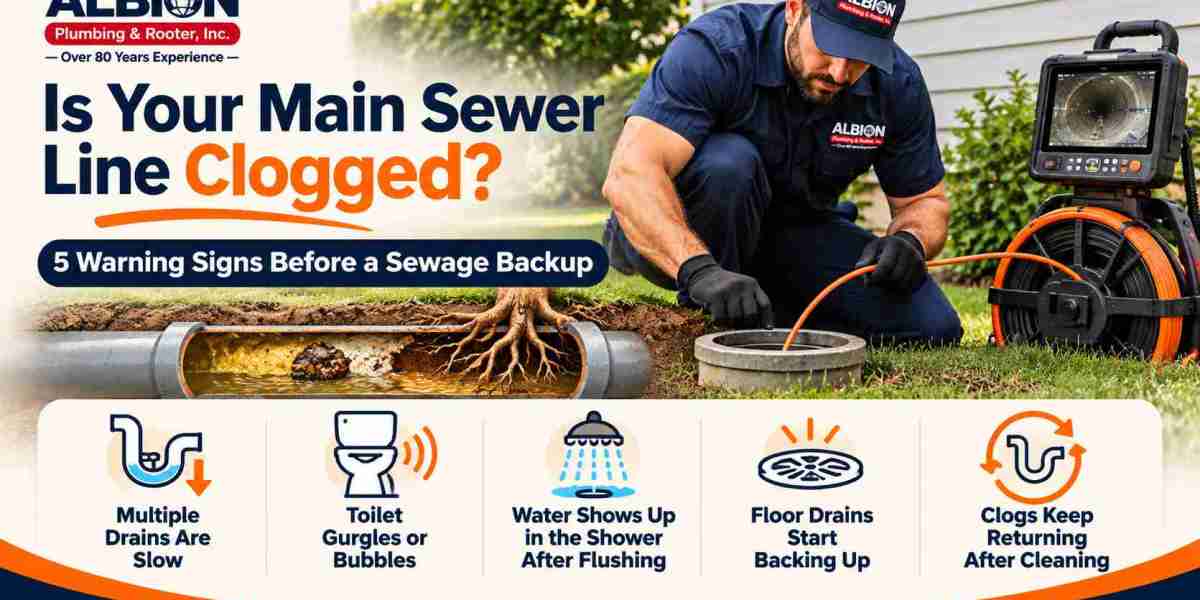
A main sewer line blockage often develops gradually, giving homeowners several warning signs before wastewater starts backing up into the house. You might notice a toilet bubbling when the washing machine drains, an unusual gurgling sound in the bathroom, or water collecting in the shower after flushing. Recognizing these symptoms early and knowing when to arrange a professional sewer cleaning service can help homeowners address drainage problems before they become more serious.
Why Main Sewer Line Blockages Are Different From Ordinary Clogs
Every sink, toilet, shower, and washing machine connects to a drainage system that eventually carries wastewater away from the property.
A blockage in an individual fixture's drain generally affects that fixture.
A main sewer line blockage can disrupt wastewater flow from several fixtures because they share the same drainage system.
This distinction is important when trying to determine where a plumbing problem originates.
1. Multiple Fixtures Begin Draining Slowly
One of the earliest warning signs of a main sewer obstruction is slow drainage affecting multiple fixtures.
For example, a kitchen sink may drain slowly while the bathroom shower also struggles to empty.
When several fixtures develop drainage problems around the same time, the obstruction may be located in a shared drain or main sewer line.
What to watch for:
Slow drainage in multiple bathrooms
Toilets that flush less effectively than usual
Water collecting in showers or bathtubs
Recurring drainage problems after basic cleaning
These symptoms deserve attention, particularly when they appear together.
2. Your Toilet Makes Gurgling Sounds
A toilet that gurgles when another plumbing fixture drains may indicate an issue with wastewater movement or air pressure inside the drainage system.
As wastewater encounters an obstruction, air can become displaced through connected plumbing fixtures.
This may produce bubbling or gurgling sounds.
However, similar symptoms can sometimes result from plumbing vent problems.
A professional inspection can help identify the actual cause.
3. Water Appears in the Shower When You Flush
One particularly concerning warning sign is wastewater appearing in a bathtub or shower after flushing a toilet.
This may happen when wastewater cannot flow freely through a shared drain.
Instead of moving toward the sewer connection, water may back up through another fixture.
Because showers and floor drains are often positioned relatively low within a home's plumbing system, they may show backup symptoms before higher fixtures.
What homeowners should do:
Stop using affected plumbing fixtures and arrange professional assistance.
Continuing to flush toilets or run water can make an existing backup worse.
4. Floor Drains Begin Backing Up
Floor drains are commonly found in laundry rooms, basements, garages, and utility areas.
When the main sewer line becomes significantly obstructed, wastewater may return through lower drainage openings.
A floor drain backup can create unsanitary conditions and damage surrounding materials.
Avoid contact with contaminated water and keep people and pets away from affected areas.
Professional inspection is advisable before normal water use resumes.
5. Sewer Problems Keep Returning After Cleaning
An individual drain may temporarily function better after basic cleaning, even when a deeper obstruction remains.
For example, tree roots entering an underground pipe can trap debris and contribute to repeated blockages.
Other possible causes include grease accumulation, damaged pipe joints, and deterioration of older sewer materials.
When drainage problems return frequently, simply repeating surface cleaning may not address the underlying issue.
A sewer camera inspection may help identify structural damage, root intrusion, or recurring obstructions.
What Causes Main Sewer Line Clogs?
Several conditions can contribute to restricted wastewater flow.
Grease accumulation: Fats and oils entering kitchen drains can collect inside pipes and trap additional debris.
Tree root intrusion: Roots may enter existing openings in underground sewer pipes and grow within the line.
Inappropriate flushed materials: Wipes, paper towels, and hygiene products can contribute to blockages.
Damaged sewer pipes: Cracks, displaced joints, corrosion, and other structural defects may interfere with normal drainage.
Accumulated debris: Waste and other materials can gradually restrict flow, particularly when an existing pipe defect traps them.
The appropriate solution depends on the condition and location of the obstruction.
What Happens During Professional Sewer Cleaning?
A plumbing professional begins by evaluating the symptoms and determining where the blockage may be located.
Depending on the situation, the assessment may include inspecting accessible cleanouts and using specialized diagnostic equipment.
Common cleaning methods include mechanical sewer cleaning and hydro jetting.
Mechanical equipment can help break through certain obstructions, while hydro jetting uses pressurized water to remove suitable types of buildup from compatible piping.
The condition of the sewer line must be considered before selecting a cleaning method.
If the pipe has structural damage, cleaning alone may not provide a lasting solution.
When Should Homeowners Contact a Sewer Cleaning Professional?
Arrange professional assistance when:
Multiple fixtures drain slowly.
Wastewater appears in showers or floor drains.
Toilets gurgle when nearby fixtures operate.
Sewer blockages occur repeatedly.
Sewage odors accompany drainage problems.
Basic maintenance no longer improves wastewater flow.
Albion Plumbing Rooter Inc. provides sewer cleaning, drain cleaning, and plumbing services for residential and commercial properties throughout San Leandro and surrounding Bay Area communities.
A professional assessment can help determine whether the problem requires sewer cleaning, further inspection, or pipe repair.
How Can You Reduce the Risk of Future Sewer Blockages?
Preventive maintenance begins with everyday household practices.
Avoid pouring cooking grease into sinks, dispose of wipes and hygiene products in the trash, and pay attention to recurring drainage symptoms.
Homeowners with older sewer systems or a history of root intrusion may benefit from discussing inspection and maintenance needs with a qualified plumber.
Regular attention to the drainage system can help identify developing problems before a major backup occurs.
Final Thoughts
Main sewer line problems often provide warning signs before a complete blockage develops.
Multiple slow drains, unusual toilet sounds, wastewater returning through lower fixtures, and recurring clogs can all indicate that further inspection is necessary.
Recognizing these symptoms and addressing the underlying cause promptly can help homeowners reduce the risk of serious sewer backups and property damage.



