Options are plentiful for any doctor who is searching for a fellowship in reproductive medicine. Some may require a tie between an academic organization and a university, while others are offered by medical training centres that are completely independent from universities. The course material taught may be very similar, as can the names of the courses. The academic merit of the qualifications awarded after taking the courses, however, may vary. This needs to be known before signing up for a course.
A doctor who completes a fellowship may utilise the certificate as part of their professional credentials, add it to their list of educational credentials, or submit it while applying for jobs that call for it. Naturally, one wants to know who gives the certificate and what it actually entails.
Does the fellowship's affiliation with a university matter, then? Before choosing an associated or non-affiliated program, what factors should the physician take into account?
Why Does the Institution Behind Your Certificate Matter?
Imagine finishing a reproductive medicine fellowship that lasts a year. You've taken lessons, finished the necessary modules, showed up for tests, and gotten your certificate. Later on, when you seek for a job, someone asks you the straightforward question, "Which institution awarded your qualification?
This is the point at which it becomes necessary to distinguish between the training facility and the school. An independent training facility may work to create, execute, and certify the fellowship program. A different organization may work with the university to deliver the training, and certification agreements will be linked to the university.
Both can offer beneficial instruction. However, they are not always comparable in terms of academic supervision, assessment, or even the institution whose name appears on the certification paper.
Details are critical, however, but the affiliation with the university may provide an additional academic background. The students should find out whether the organization is involved in certification, accreditation, assessment, or any other aspect of the program. Simply because a website uses the logo of a university does not mean that one is qualified to become its member.
Find out what institution grants the qualification and ask to see the format of the intended certificate. It is only fair to do so if the association plays a key role in one’s decision-making process.
What Is the Difference Between University-Affiliated and Non-Affiliated Fellowships?
This is the key difference in the academic framework that is used for administering the course as well as conferring the degree.
An educational scholarship that is linked to the university or any other educational institution is referred to as a university-linked scholarship. The university may have any role from the academic framework to the curriculum, examination process, certification, etc.
The independent non-affiliated fellowship is usually run independently from the educational institution itself. The educational institution has full discretion to choose the curriculum, design lessons, administer tests and confer diplomas to graduates.
It is inappropriate to think that all non-affiliated fellowships are not good enough and that the affiliated fellowships are always better. An independent school can offer qualified staff members as well as a relevant clinical training program. But an affiliate school should definitely offer relevant practical training to students.
The key issues to consider are:
- Who will be giving out the certificate in the end?
- What will the university’s role be in the programme?
- Is the affiliation valid for the particular fellowship and current batch?
- What mode will the evaluation of students be in?
- Does the programme involve any practical work?
- What will you be eligible to do professionally with this qualification?
Why This Matters in Reproductive Medicine
One specialty in the field of medicine includes reproductive medicine. Fertility diagnosis, reproductive endocrinology, stimulation of the ovaries, IUI, IVF techniques, male infertility issues, and many other aspects of ART could all be learned by a doctor during further training.
The information that would be gained from the training could benefit the professional career, although the certificate should be seen in regard to the existing qualifications of the doctor. To gain a better grasp of fertility examinations and treatment planning, for instance, a postgraduate physician in obstetrics and gynaecology can seek a fellowship. Advanced clinical ideas, case discussions, and hands-on training may be introduced within the program. The certificate is added to the doctor's educational record upon completion of the course. It is therefore worthwhile to look into its academic status and the organization that awarded it. A course that is sponsored by a university would be another example of an academic affiliation. It does not necessarily guarantee a specialized qualification, ability to act independently, or the existence of clinical jobs. This depends on the rules and requirements set forth by the potential employer.
In summary, a certificate is very important, but it is equally important to know what the certificate means.
What Does Medline Academics Offer?
Specialised courses in reproductive medicine and related topics including andrology, IVF, infertility, and embryology can be taken at Medline Academics.
The associations of Medline Academics with Sri Siddhartha Academy of Higher Education and Sri Balaji Vidyapeeth are provided in its published Fellowship in Reproductive Medicine programme. Future students are advised to approach Medline Academics for information on the specific certificate programme and awarding body of the chosen group.
This program targets eligible doctors with the set requirements that entail freshers with an MD/MS/DNB in Obstetrics and Gynaecology or MRCOG and experienced individuals with DGO.
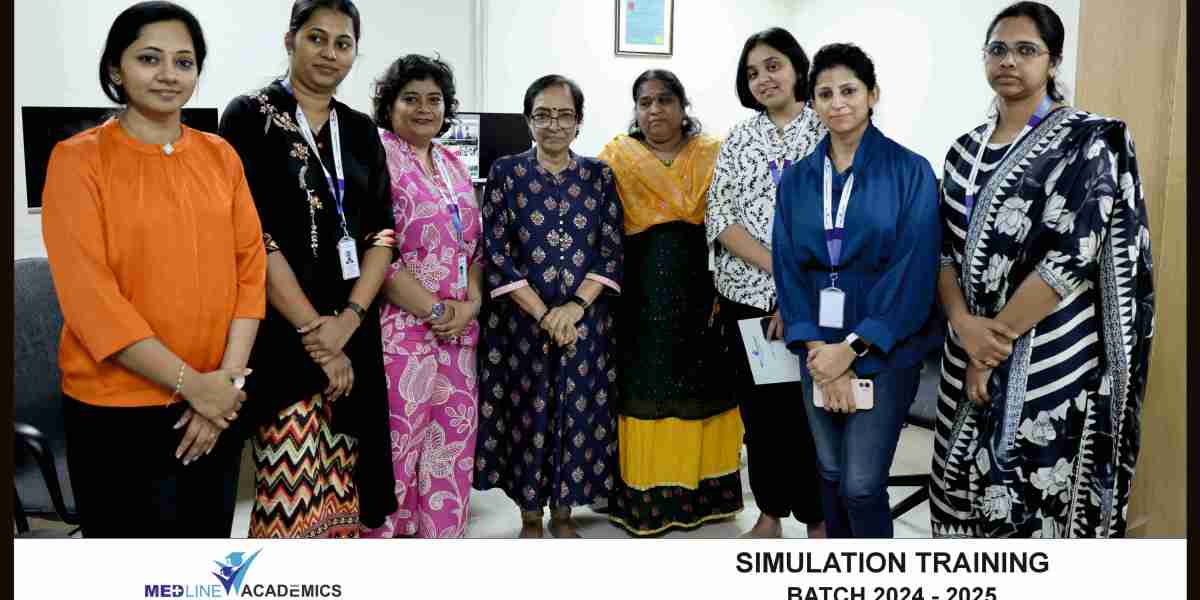
As per the currently available course webpage, the current course entails a hybrid model that involves online theoretical training to be accomplished in nine months, simulation training for five days and attachment training for 15-30 days, followed by revision classes. Also listed are the contact classes on a weekly basis.
Several topics related to fertility practice are included in the curriculum, such as:
- The principles of fundamental infertility and reproductive medicine.
- Evaluation of male and female infertility.
- The evaluation of ovarian reserve and reproductive endocrinology.
- IUI with ovulation induction.
- IVF stimulation techniques.
- The principles of andrology and embryology.
- Grading of oocytes and embryos.
- Recurrent implantation failure and associated clinical issues.
In addition to the academic affiliation of the program, medical doctors intending to pursue a fellowship in reproductive medicine need to consider this amalgamation of scheduled practical sessions and academic work.
It is advised that one gets the latest course brochure, understands the role of the university, and knows how the exam process works prior to applying.
Does University Affiliation Mean Better Clinical Training?
Not necessarily. The students need to understand this vital difference. There are two parts of the fellowship: clinical education and affiliation with a university.
The training institution and their clinical partners take care of the learning process, while the university is related to the academic part of the program.
Both factors are important for someone who wants to work in reproductive medicine. The experience of comprehending clinical situations and knowing how fertility therapy is administered cannot be replaced by a certificate with an academic affiliation, although it may bolster a program's educational credentials.
Take for instance the diagnosis of an infertile couple. The physician needs to analyze their health background, results of testing, causes that can lead to infertility, and then suggest the proper treatment methods. This implies knowledge about the subject in general and terms from medical books as well.
In the same way, practice in relation to patient care, observation, laboratory tests, and stimulation techniques is required to understand the process of IVF.
Separately evaluate the structure of the education system and practice when considering the courses. It is an intelligent step that takes into account both aspects.
Why the Choice of Training Institute Deserves Careful Thought
Doctors searching for Certificate Course in Reproductive Medicine will find programmes with different durations, teaching formats and eligibility requirements. Some focus on a particular procedure, while others provide a broader introduction to infertility and reproductive medicine.
Before choosing an institute, check the following:
- Academic affiliation: Make sure of the university affiliation and the body that will award the certificate.
- Instructors: Identify the instructors for the program and establish if they have the required qualifications.
- Curriculum: Ensure that the subjects of interest such as reproductive endocrinology, IUI, IVF and infertility testing are in the curriculum.
- Practical experience: Establish what type of experience the program will give; be it observational or practical exercises. It would not be proper to interchangeably view the two.
- Examinations: Understand the requirements for the examinations and the work that needs to be done to get the certificate.
- Career relevance: Consider how well the program will suit the qualifications you have and the kind of career you would like to pursue.
A course may not live up to your expectations even though it sounds intriguing on paper. By speaking with the admissions board and looking over the course materials, this mistake can be avoided.
Connecting Medical Education with Fertility Care
The need for specialised training becomes clearer when we consider the complexity of fertility treatment.
For couples seeking Infertility Treatment in Bangalore, care may involve reproductive medicine specialists, embryologists, nurses, counsellors and other professionals. Each contributes to a different part of the treatment process.
The field of reproductive medicine, fertility services, and women’s health is linked with Dr. Kamini Rao Hospitals. The cooperative nature of reproductive services, wherein the assessment of the patients, the treatment plans, and the process of tests have to work together, is seen in the clinical environment. The relationship between clinical knowledge and coordinated care of patients is an important part of professional development in this field.
Medline Academics focuses on providing structured medical education in reproductive medicine and related disciplines. Its Fellowship in IVF and Reproductive Medicine combines academic learning with simulation and clinical attachment components, while its wider course portfolio includes programmes in infertility, embryology and andrology.
With these options in hand, there is an emphasis on resources for education, affiliation with universities, and learning methods. Also, it is necessary to be aware that completing a course will not necessarily mean gaining employment or anything else.
Before You Enrol, Know What Your Certificate Represents
Selection of a fellowship is also something that requires time and money. It is always better to know the truth about the scholarship through proper research first. University-sponsored programs may provide an extra link of academia if it really matters to the course being pursued and the process of certification is well known. Independent programs may provide good training, but their academic standing must be evaluated separately.
Physicians who wish to learn more about reproductive medicine should take into account more than just comparing the price or duration of the courses. Examine who issues the certificate, what is taught, how students are assessed, and how practical learning is integrated.
A list of universities associated with a Fellowship in Reproductive Medicine is found on the official website of Medline Academics. Students seeking admission in the program can check out information regarding the program and its credentials, and find out whether the curriculum fits into their professional plans.
Check out the Fellowship in Reproductive Medicine program provided by Medline Academics and think over what education and credentials you want to acquire professionally.