


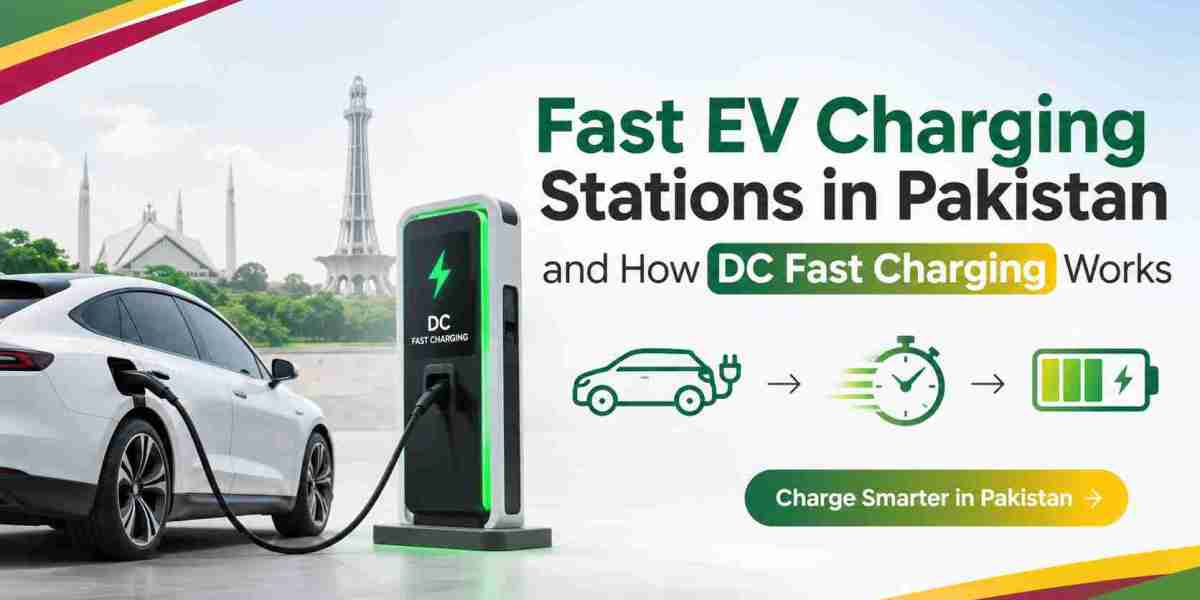
Electric vehicles (EVs) are gaining attention in Pakistan as consumers seek more efficient, sustainable transportation options. However, convenient charging remains essential for wider EV adoption. EV Charging Stations in Pakistan are becoming increasingly important, particularly along highways, motorways, and major urban routes. DC fast charging technology can reduce waiting times and make long-distance electric travel more practical.
Understanding EV Charging Stations in Pakistan
EV charging stations provide electricity to recharge electric vehicle batteries. These facilities can be installed at commercial locations, shopping centres, residential areas, highways, and existing petrol stations.
As electric mobility develops in Pakistan, expanding public charging infrastructure will be essential. Drivers need accessible charging points for everyday journeys as well as longer trips between cities. Strategically located charging facilities can improve convenience, reduce range anxiety, and encourage more people to consider electric vehicles.
What Is DC Fast Charging and How Does It Work?
DC Fast Charging is a technology that supplies direct current (DC) electricity to an electric vehicle's battery at a much higher power level than conventional AC charging.
The process begins when electricity from the grid enters the charging station as alternating current (AC). The charger's internal power conversion system converts this electricity into direct current. The converted DC power is then delivered directly to the vehicle's battery.
The Battery Management System (BMS) monitors important battery conditions, including temperature, voltage, and charging levels. It regulates the charging process to maintain safety and protect battery performance.
This technology allows compatible electric vehicles to recharge considerably faster, making DC fast chargers particularly useful at public charging locations and motorway service areas.
DC Fast Charging vs AC Charging: What's the Difference?
Both AC and DC charging technologies recharge electric vehicle batteries, but they differ in power delivery and charging speed.
Feature | AC Charging | DC Fast Charging |
Charging speed | Generally slowe | Generally faster |
Power conversion | Inside the vehicle | Inside the charger |
Installation | Homes and offices | Public charging locations |
Best suited for | Extended parking | Quick charging stops |
AC charging is commonly used when vehicles remain parked for several hours. In contrast, DC fast charging is more suitable for drivers who need to recharge during shorter stops, particularly when travelling between cities.
The Growing Importance of Fast EV Charging Infrastructure in Pakistan
Developing Fast EV Charging Stations in Pakistan can support the country's transition towards electric mobility. Public charging facilities along major highways and motorways will be particularly important for reducing range anxiety and enabling longer journeys.
Petroleum businesses also have an opportunity to participate in this transition by integrating EV charging facilities into their existing retail networks. This approach can transform conventional fuel stations into multi-energy service destinations, supporting both traditional vehicles and electric transportation.
Strategic investment in charging infrastructure, reliable power supply, and suitable charging technology will help build a more accessible EV ecosystem across Pakistan.
How Long Does DC Fast Charging Take?
Charging time depends on several factors, including battery capacity, charger output, vehicle compatibility, and battery temperature.
Many compatible electric vehicles can charge from approximately 20% to 80% within 20–40 minutes using suitable high-power DC chargers. However, this is not a universal charging time. Some vehicles require longer, depending on their battery specifications and maximum charging capability.
Charging speed may also decrease as the battery approaches a higher state of charge to protect battery health.
Sitara Petroleum Service Limited: Building Convenient EV Charging Points Across Pakistan
Sitara Petroleum Service Limited (SPSL) is positioning itself to support Pakistan's evolving mobility sector by integrating EV charging solutions into its nationwide network of fuel retail outlets. Its existing network of 68+ Fuel Stations across three provinces provides a foundation for developing convenient charging locations.
Through its EV charging initiative, SPSL plans to introduce fast and reliable DC charging technology at strategically selected locations. These developments aim to make charging more accessible for electric vehicle owners, particularly those travelling along major routes and highways.
By combining its established petroleum retail presence with future-focused energy solutions, Sitara Petroleum is working towards a wider network of convenient EV charging points across Pakistan.
FAQs
- What is a DC fast charging station?
A DC fast charging station converts AC electricity into DC power and supplies it directly to an electric vehicle's battery, allowing faster charging.
- How long does DC fast charging take?
Depending on the vehicle and charger capacity, charging from 20% to 80% may take approximately 20–40 minutes.
- Are DC fast charging stations available in Pakistan?
Pakistan's public EV charging infrastructure is developing, with businesses including Sitara Petroleum working towards expanding charging facilities at strategic locations.
Conclusion
DC fast charging can make electric mobility more practical by reducing charging times and supporting longer journeys. Expanding charging infrastructure across Pakistan will be essential for future EV adoption. Sitara Petroleum aims to contribute to this transition by developing convenient charging solutions across its retail network.



