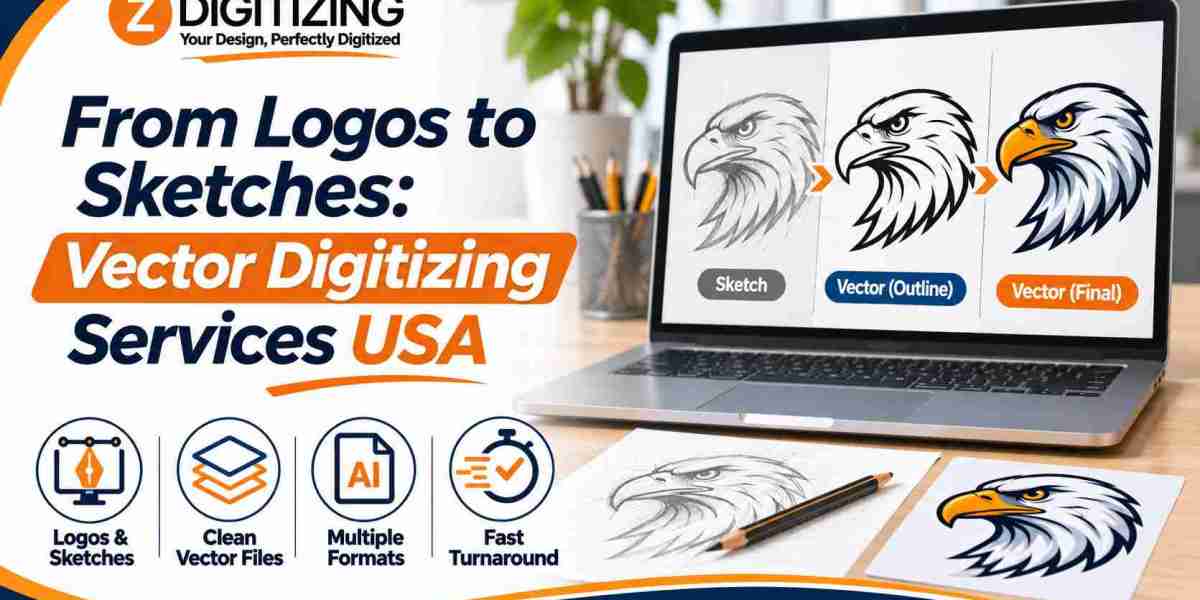
Different artwork sources need different vector-conversion decisions. A clean logo, a blurred web image, and a hand-drawn sketch may all need scalable artwork, but each requires its own approach. Our Professional Vector Digitizing Services USA cover conversion and refinement tasks that help prepare artwork for printing and design use.
When you order Professional Vector Digitizing Services USA, tell us what the source represents and how you plan to use the finished file. Include the best image you have, any approved logo reference, the final size if known, and the format your printer or designer requests. We can then assess whether tracing, cleanup, redraw, or color separation matches the brief.
Start with the artwork source
A clear source gives Vector Digitizing Services USA a stronger reference for preserving shapes, wording, and color relationships in the converted file.
The source gives a designer a visual reference for rebuilding the image. A high-resolution logo file can reveal curves, spacing, and colors more clearly than a screenshot. A scanned sketch may show the intended layout but lack consistent line weight. A compressed web image can contain blur or artifacts that make small details difficult to interpret.
Send the full design rather than a cropped fragment whenever possible. Include the background if it helps explain the original composition, and note if the background should be removed. If the artwork includes wording, provide the correct spelling separately. That gives us a reliable reference if a letter is distorted or difficult to read in the image.
At ZDigitizing, our vector art service includes raster-to-vector conversion, picture or logo conversion, hand-drawn artwork conversion, logo cleanup and redesign, image redraw, and color separation for printing. These are related but distinct tasks. Tracing recreates visible paths; cleanup refines existing artwork; a redraw reconstructs unclear or damaged areas; color separation divides a design into distinct color groups for a compatible printing process.
Which service fits which problem?
With Vector Digitizing Services USA, the right type of work depends on whether the source needs tracing, cleanup, a redraw, or color separation.
Choose the type of work based on what is wrong with the source and what you need from the result:
- Raster-to-vector conversion: Use this when you have a pixel-based image that needs scalable outlines.
- Logo cleanup: Use this when the logo is recognizable but has uneven lines, clutter, or minor defects to address.
- Image redraw: Consider this when important parts are damaged, unclear, or missing from the source.
- Hand-drawn conversion: Use this when a sketch or drawing needs to become digital vector artwork.
- Color separation: Request this when a print workflow needs colors organized into distinct areas.
These descriptions are starting points. A project can involve more than one task, and the production purpose may affect what is appropriate. For example, a logo for a large sign may need clean outlines and balanced spacing, while a multi-color print design may need separate color regions. Explain the deliverable you need instead of choosing a service label without context.
Prepare the brief without leaving room for guesswork
Describe what the design should look like after conversion. Note the exact wording, colors, alignment, relative size of elements, and whether any shape should be changed. If the source contains a mistake, identify it directly. If you want a faithful reproduction, say so and point out elements that should remain untouched.
A useful brief identifies the approved source, intended use and approximate size, recipient’s format or production specifications, and the requested tracing, cleanup, redraw, or color separation. Attach visual references when helpful. If a color or typeface must match an existing brand asset, share its name or a sample.
How the vector conversion process works
The order begins with the artwork and your written requirements. Our designers manually trace the visible artwork into paths and shapes, or redraw areas when the source needs reconstruction. If the order includes color separation or logo cleanup, the brief should identify those needs. After conversion, the file is prepared in the requested available format for delivery.
Our service page lists a typical turnaround of 4–12 hours and notes that complex designs may take longer. It also lists AI, EPS, PDF, SVG, WMF, and EMF formats. If your production partner needs a particular file type or has a deadline, include those details during ordering rather than waiting until after delivery.
Review the final file in context
After ordering Vector Digitizing Services USA, review the artwork against the approved reference before sending it into production.
A vector can look clean on a computer and still need a production check. Open it in compatible software, compare spelling, proportions, colors, outlines, and background with your reference, and review it at the intended size.
Then share the file with the printer or designer and ask whether it meets their requirements. Confirm the output format, colors, dimensions, and any setup steps. If the artwork will be used for a different purpose later, retain the source and ask whether a new export or adjustment is needed.
Keep vector art separate from embroidery digitizing
Vector art can help maintain clean outlines for print or serve as reference artwork for other design work. It does not contain embroidery machine stitch commands. If your project is embroidery, the design needs to be digitized into a machine-ready file with stitch types and sequence selected for the intended fabric and placement.
When you describe your request, mention whether the project is for printing, laser work, or embroidery. This distinction helps us understand whether you need scalable vector artwork, embroidery digitizing, or both as separate deliverables. Do not assume one file automatically covers every process.
Our Vector Digitizing Services USA support vector conversion, cleanup, redraw, and color-related work according to the service selected. For a smoother order, match the task to the source condition and production use, then check the format with the person who will use the final artwork.
At ZDigitizing, we offer vector art services for logos, images, and sketches. Our team can review the intended use and the conversion request when you send us the artwork.
Frequently asked questions
Can Vector Digitizing Services USA convert a hand-drawn sketch?
Yes. Our vector art service lists hand-drawn artwork conversion. Provide a clear scan or photograph, include the entire sketch, and explain any colors or shapes that should be preserved. If the sketch contains wording, provide the exact text separately so it can be checked against the source.
When should I request a redraw instead of tracing?
A redraw may be useful when the source is damaged, unclear, or missing important elements that cannot be traced confidently. Tracing follows the visible reference; redraw work reconstructs areas based on your instructions. Share the clearest version you have and identify what should be restored or changed.
What does color separation mean?
Color separation organizes a design into distinct color areas for a printing process that requires those separations. The setup depends on the artwork and the printer’s method. If a production partner has provided color or separation requirements, include them with your order so the artwork can be prepared against that brief.
Can one vector design be used at multiple sizes?
Vector paths can generally be resized while retaining crisp edges, which makes vector artwork useful for layouts ranging from small graphics to larger applications. However, tiny details or line weights may not suit every size. Review the artwork at its intended dimensions and confirm any production adjustments with your printer.
Do you need a vector file for embroidery?
A vector file is not an embroidery machine file. It can be supplied as source artwork, but embroidery production requires stitch instructions in a compatible machine format. Tell us whether your end use is print or stitching so you can request the correct service and deliverable.