
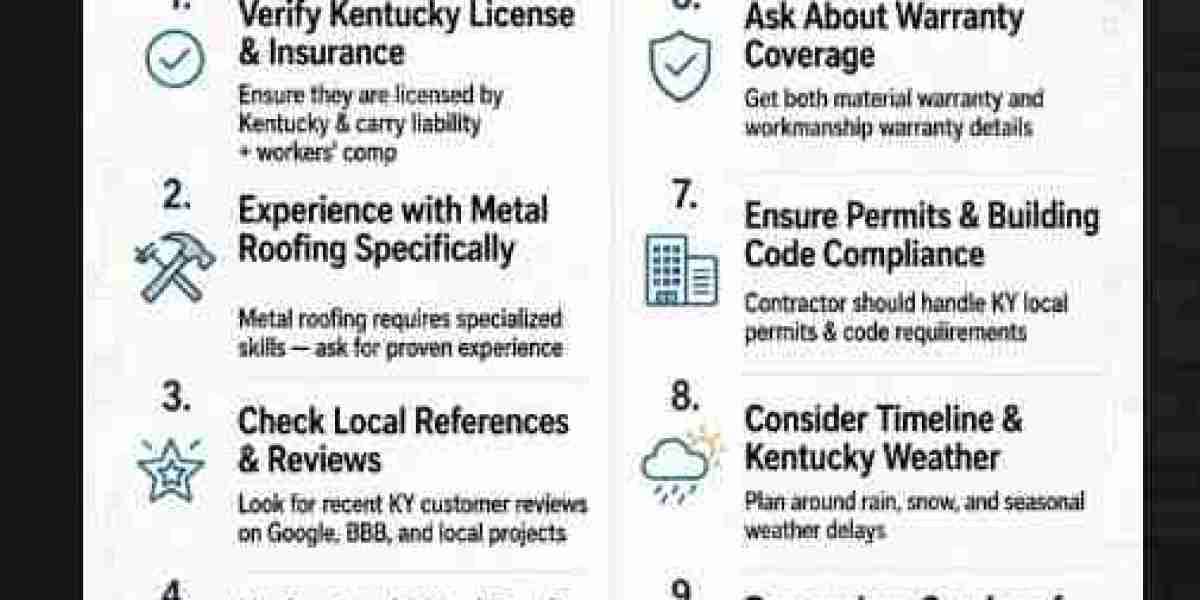
Choosing the right metal roof is an important investment for any homeowner or commercial property owner. Metal roofing offers durability, weather resistance, and a clean appearance, but the quality of the installation matters just as much as the material itself. Before selecting a contractor, it is worth understanding the available roofing systems, installation details, and long-term maintenance needs. Working with experienced metal roofing contractors can help property owners make informed decisions and avoid common roofing problems.
1. Understand the Different Types of Metal Roofing
Metal roofing is available in several styles, each designed for different building requirements and budgets.
Standing seam metal roofing: Features raised seams and concealed fasteners for a streamlined appearance.
Corrugated metal roofing: Uses wavy panels and is commonly found on barns, workshops, and agricultural buildings.
Exposed-fastener metal roofing: Uses visible screws with sealing washers to secure panels.
Metal shingles: Designed to provide the appearance of traditional shingles with the benefits of metal.
The right choice depends on roof slope, building design, weather exposure, and installation requirements.
2. Why Metal Roofing Is Popular in Kentucky
Kentucky properties experience changing seasonal conditions, including heavy rain, strong winds, temperature fluctuations, and occasional hail. These conditions make roof material selection especially important.
Metal roofing can provide several advantages:
Long service life when properly installed and maintained.
Resistance to many common weather-related roofing problems.
Lightweight construction compared with some traditional materials.
Multiple colors, finishes, and panel profiles.
Reduced need for frequent replacement.
However, performance depends on selecting a suitable roofing system and following the manufacturer's installation instructions.
3. Check the Contractor's Metal Roofing Experience
Not every roofing contractor specializes in metal roof installation. Metal panels require accurate measurements, suitable fastening systems, proper flashing, and careful attention to expansion and contraction.
Before hiring a contractor, ask:
How many metal roofing projects have you completed?
Do you have experience with standing seam and exposed-fastener systems?
Can you provide examples of previous projects?
Do you follow the manufacturer's installation guidelines?
What workmanship and material warranties are available?
A qualified contractor should be able to explain the proposed roofing system and provide a detailed written estimate.
4. Compare Metal Roofing Materials
Different metals offer different levels of durability, appearance, and cost.
Material | Main characteristics | Common application |
|---|---|---|
Galvanized steel | Protective zinc coating | Residential and agricultural roofs |
Galvalume steel | Aluminum-zinc coating | Residential and commercial buildings |
Aluminum | Lightweight and corrosion-resistant | Properties exposed to moisture |
Copper | Distinctive appearance and long service life | Premium architectural projects |
The best material depends on the property's environment, budget, structural requirements, and desired appearance.
5. Understand the Importance of Proper Installation
Even premium metal panels can develop problems when installation details are overlooked. Incorrect fastener placement, poorly sealed penetrations, or improperly fitted flashing can allow water to enter the roofing system.
A professional installation should address:
Roof deck condition and preparation.
Suitable underlayment.
Correct panel alignment and fastening.
Proper ridge caps and edge details.
Flashing around chimneys, vents, and roof penetrations.
Drainage and ventilation requirements.
These details help maintain the roof's weather resistance and support the manufacturer's warranty requirements.
6. Know When Metal Roof Repair Is Necessary
Metal roofs are durable, but they are not completely maintenance-free. Over time, weather exposure and normal aging may affect panels, seams, fasteners, and protective coatings.
Common warning signs include:
Loose or missing fasteners.
Rust or corrosion.
Damaged or lifted panels.
Water stains on ceilings.
Open seams or deteriorated sealant.
Damaged flashing around roof openings.
If these issues appear, arrange a professional inspection instead of relying on temporary fixes. A contractor can determine whether targeted repairs are sufficient or whether larger replacement work is necessary.
7. Consider Long-Term Maintenance Requirements
Routine inspections can help identify small problems before they become expensive repairs. The Insurance Institute for Business & Home Safety recommends following appropriate maintenance practices for metal roofing systems, including keeping debris away and checking sealants around roof openings.
A practical maintenance checklist includes:
Remove leaves and debris from roof drainage areas.
Inspect accessible gutters and downspouts.
Check visible flashing and roof edges.
Look for damaged panels or loose fasteners.
Address corrosion and coating damage appropriately.
Arrange an inspection after significant storms.
Avoid unnecessary foot traffic because walking on metal panels can cause damage if the roof is not designed for it.
8. Compare Metal Roofing Costs Before Starting
Metal roofing costs vary according to material, roof size, design complexity, labor, and the condition of the existing roof.
Cost factor | Why it matters |
|---|---|
Roofing material | Steel, aluminum, and copper have different prices |
Roof dimensions | Larger roof areas require more materials and labor |
Roof design | Steep slopes and complex layouts increase installation difficulty |
Old roof removal | Tear-off and disposal can add to project costs |
Flashing and trim | Custom details require additional materials and labor |
Structural repairs | Damaged decking may need replacement before installation |
Request written estimates that clearly separate materials, labor, removal, repairs, and cleanup. Comparing the full project scope is more useful than choosing a contractor based only on the lowest price.
9. Ask About Warranties and Project Documentation
Before signing an agreement, understand which warranties apply to your roofing project. Material warranties and workmanship warranties are not necessarily the same.
Ask the contractor to explain:
Manufacturer material warranty coverage.
Workmanship warranty duration.
Maintenance responsibilities.
Conditions that may affect warranty coverage.
Procedures for reporting installation defects.
Keep copies of the contract, product information, payment records, and completed-project photographs. Proper documentation can be useful for future maintenance and property ownership records.
10. Choose a Roofing Contractor That Explains Your Options
A dependable contractor should inspect the property, discuss suitable roofing materials, and explain the advantages and limitations of each option. Avoid making a decision based only on promotional claims or verbal promises.
Property owners looking for professional metal roofing installation and roofing solutions should prioritize clear communication, suitable materials, written project details, and installation quality.
A careful selection process helps reduce uncertainty and supports better long-term roofing performance.
Frequently Asked Questions
1. How long can a metal roof last?
A properly selected and installed metal roofing system can last several decades. Its actual lifespan depends on the metal type, protective finish, installation quality, and maintenance.
2. Is metal roofing suitable for Kentucky homes?
Yes. Metal roofing can be suitable for many Kentucky properties because it offers durable protection against rain, wind, and changing seasonal conditions. The system must be selected for the building and local requirements.
3. Does a metal roof require regular maintenance?
Yes. Although metal roofs generally require less maintenance than some traditional roofing systems, periodic inspections are important. Check panels, fasteners, flashing, drainage, and sealants.
4. Is standing seam roofing better than corrugated metal roofing?
Neither option is automatically better for every project. Standing seam systems use concealed fasteners, while corrugated systems often use exposed fasteners. The best choice depends on the building, budget, roof design, and performance requirements.
5. What should I ask before hiring metal roofing contractors?
Ask about previous metal roofing projects, installation methods, material options, insurance, written estimates, warranties, and project timelines. Request clear documentation before approving the work.
Conclusion
Metal roofing can be a valuable long-term investment for residential, agricultural, and commercial properties throughout Kentucky. Selecting suitable materials, understanding installation requirements, and arranging routine inspections all contribute to better roof performance. Before beginning a project, compare contractor experience, written estimates, warranties, and the complete scope of work. A well-planned roofing project can provide dependable protection and improve the property's overall appearance for years to come.