A doctor may be familiar with IVF protocols, understand the causes of infertility and know how different fertility treatments work. But when faced with a patient who has irregular menstrual cycles, a low ovarian reserve or a history of unsuccessful IVF attempts, applying that knowledge can be a different experience altogether.
Reproductive medicine involves decisions that are specific to each patient. A treatment approach that works for one couple may not be appropriate for another. Doctors must consider medical history, investigation results, age, previous treatment and several other factors before deciding what to recommend.
Clinical exposure is important during speciality training because of this. The foundation is provided by reading about infertility care, but learning is further enhanced by seeing how seasoned experts assess patients and make treatment recommendations.
When choosing a reproductive medicine program, practitioners thinking about a future in this sector should give careful thought to practical exposure.
The Difference Between Studying a Case and Seeing One
Think about a lady who has spent three years trying to get pregnant. An ultrasound indicates polycystic ovarian morphology, and her menstrual periods are erratic. Additionally, aberrant parameters are found in her partner's initial semen study.
A textbook could outline the tests that can be done and describe the potential reasons of infertility. However, the physician must combine these results in a clinical environment.
Does the patient have an ovulatory condition? Do further studies need to be done? Does the male partner require further assessment? Which therapeutic choices ought to be addressed with the couple?
These are the type of questions raised during consultations for infertile couples.
Medical practitioners can observe from actual clinical conversations on how expert doctors conduct themselves under such scenarios. They will be able to observe how medical history is taken, why certain tests are recommended, and how treatment decisions are discussed with the patients.
This will emphasize the point that not all patients fit the book description, an aspect that is sometimes overlooked during academic training.
What Should Clinical Exposure Include in Reproductive Medicine?
IVF procedure observation cannot be the only form of practical training for medical doctors. The knowledge of reproductive medicine of a medical professional develops during numerous stages from initial consultation to therapy and after that follow-up.
- Infertility evaluation and patient consultation
Key clues regarding possible causes of infertility often emerge at the first visit itself. History of menstruation, previous pregnancies, medical illnesses, duration of infertility, and previous treatments need to be known to the physician.
Observing experienced consultants helps trainees to know how to ask important questions without turning the session into an interrogation process. It also provides information on how to discuss sensitive issues such as previous miscarriages, male infertility, and treatment failures.
- Interpreting investigations
Infertility management involves several investigations, including semen analysis, tubal assessment, ultrasonography tests, and hormone testing.
There could be numerous numbers in a report, but there is a need to have a clinical background before interpreting them. The patient's age, fertility background, and ultrasonography results, among others, need to be incorporated together with the ovarian reserve measures. Similarly, there is a need to consider the semen analysis results when assessing the couple as a whole.
This could be accomplished through the discussion of cases and guided learning by doctors.
- Understanding ovarian stimulation and monitoring
Ovarian stimulation is an important part of assisted reproductive technology. Doctors need to understand the rationale behind different stimulation protocols, the role of medications, follicular monitoring and how treatment response is assessed.
Clinical observation can help trainees follow the progression of a treatment cycle and understand why monitoring findings may lead to changes in the management plan.
- Learning about IUI and IVF procedures
Understanding intrauterine insemination (IUI), ovum pick-up and embryo transfer requires familiarity with the procedures as well as the clinical considerations surrounding them.
Simulation exercises can introduce the sequence of procedural steps and help learners become familiar with relevant equipment. Clinical observation provides a broader understanding of how these procedures fit into the patient's treatment journey.
The type of participation permitted during training will depend on the programme, supervision arrangements and applicable clinical requirements.
Why Simulation Training Alone Is Not Enough
The process of medical education has become easier thanks to simulation, particularly where procedures that require cooperation and technical skills are concerned.
For example, a doctor who is learning how to carry out embryo transfer will be able to practice through simulation on how to grasp catheter handling and procedure execution. Procedural skills can also be taught through simulation using ovum pick-up simulation.
Simulation can never capture all aspects of patient care.
Simulation will not be able to simulate the communication skills needed for counselling couples, decision-making when a patient’s response to stimulation is unexpected, or the coordination between the clinical team and the embryology team when performing an IVF cycle.
None of this detracts from the value of simulation. What it means is that simulation must be seen as part of a broader training process.
In an ideal world, there would be academic teaching, case discussion, simulation, and even some clinical observation all going on at the same time.
Choosing a Reproductive Medicine Training Programme
Doctors researching a Certificate course in Reproductive medicine should look beyond the course title and find out what the programme actually includes.
While a longer fellowship will address more therapeutic concerns, the certificate course might be a good start for someone new to the therapy industry. Longevity of the course alone should not be the sole factor for deciding on either one of the two. What’s also important is the content of the course, teachers, assessment methods, and opportunities for practice.
Before registering for any of these courses, you should ask your institution the following questions:
Is there case study material in the course?
Does it have simulations?
Does it have observation and/or clinical attachment experience?
What clinical areas and procedures does it cover?
How many hours of practice are offered?
Who teaches the course?
What certificate is issued upon successful completion?
These questions are particularly relevant for doctors comparing Top 10 best IVF fellowship in India. Institutions may use similar descriptions such as hands-on training, practical exposure and clinical attachment, but the actual learning experience can differ considerably.
It is also important to understand the distinction between observing a procedure, practising on a simulator and performing a procedure under supervision. They are not equivalent, and completing a course does not automatically establish independent procedural competence.
How Medline Academics Combines Academic and Practical Learning
For qualified medical practitioners who wish to further their understanding of assisted reproductive technologies and infertility care, Medline Academics offers a Fellowship in Reproductive Medicine.
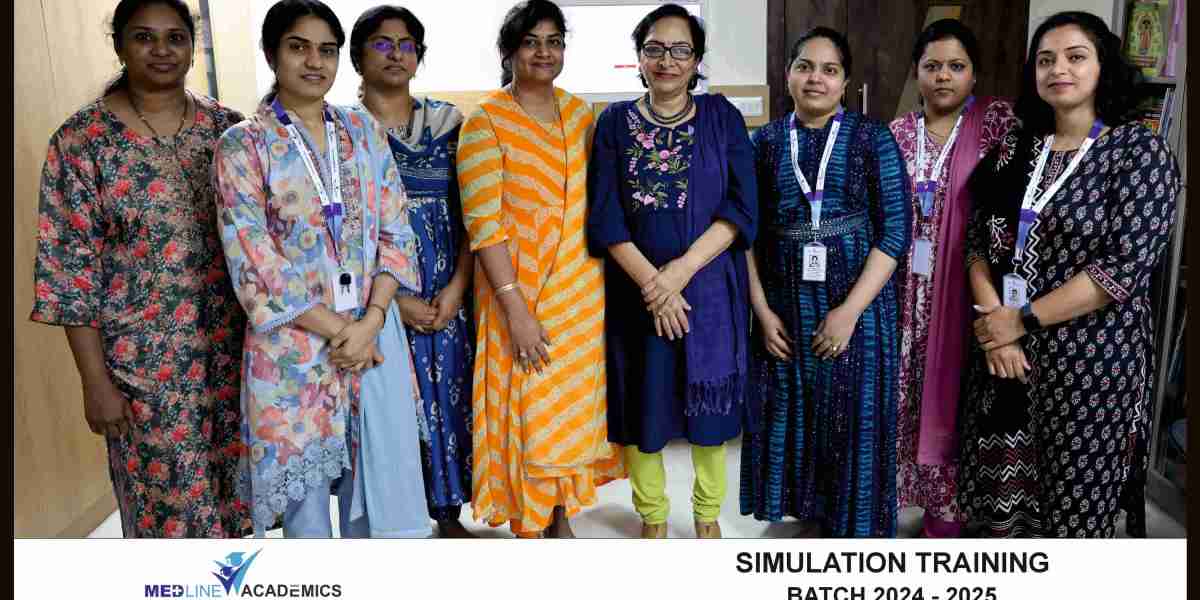
The fellowship uses a mixed format, according to its published course details. It incorporates structured simulation training, a clinical attachment, and online theoretical instruction.
The online theoretical component will take nine months to complete, followed by five days of simulation training, a 15- to 30-day clinical attachment, and review sessions. Additionally, there are weekly contact lessons.
Male and female infertility, reproductive endocrinology, ovarian reserve evaluation, ovulation induction, IUI, IVF stimulation protocols, recurrent implantation failure, and ART counselling are among the topics covered in the curriculum that are pertinent to reproductive medicine.
Simulation training includes exposure to procedural techniques such as ovum pick-up, embryo transfer and IUI, along with basic laparoscopic and hysteroscopic training using simulators.
The course is designed in such a way that the people currently working can get educated while attending the practical sessions. It is recommended to the candidates that they should take into account the schedule and type of the practical sessions of the present batch.
The aim of the course is professional growth, and the amount of clinical work and responsibility after the completion depends on the candidate's qualifications and requirements.
Understanding Fertility Care Beyond the Doctor's Consultation
Understanding the roles of the many experts involved in an IVF treatment cycle is a crucial component of training in reproductive medicine.
The patient is assessed and therapy is planned by the reproductive medicine expert. Specialised laboratory processes involving gametes and embryos are overseen by the embryologist. While therapists may assist couples coping with the psychological difficulties of infertility treatment, nurses manage drug regimens and patient care.
Reproductive medicine, fertility services, and women’s health are all connected with Dr. Kamini Rao Hospitals. The interdisciplinary nature of reproductive health is depicted through the clinical nature of reproductive medicine, in which laboratory work, treatment plan, and assessment work together. Physicians who want to gain a more complete understanding of fertility services may benefit from an understanding of this teamwork. Instead of viewing this experience as something assumed as part of the fellowship, each individual clinical rotation or job opportunity should be confirmed independently with the institution.
Medical education in reproductive medicine and allied fields, such as infertility, IVF, embryology, and andrology, is the main emphasis of Medline Academics. Depending on the course chosen, it offers medical professionals the chance to investigate these topics through organised academic learning and hands-on training components through its speciality programs.
For doctors planning a career in Infertility Treatment in Bangalore, understanding both the clinical and laboratory sides of fertility care can help them appreciate the responsibilities involved in managing patients.
Practical Exposure Should Be Part of the Decision, Not an Afterthought
It is easy to focus on the duration of the program, cost, and degree offered when thinking of fellowships in reproductive medicine. Though such details are vital, they should not be the sole determining factors.
Learn what this fellowships training can teach you. Find out about simulation, cycles, cases, and understanding of collaboration among the fertility team members.
A good theoretical framework is very important. However, it is also necessary that doctors get the opportunity to see how that information works clinically.
The connection between theoretical education and clinical practice makes practical training relevant for reproductive medicine consultants in the making. It is necessary to know more about the treatment of infertility and the decisions that need to be made in treating patients, rather than just gaining knowledge on how to perform IVF.
Consider the course, qualifications and practical training program of the Fellowship in Reproductive Medicine at Medline Academics in relation to your own professional development goals.