


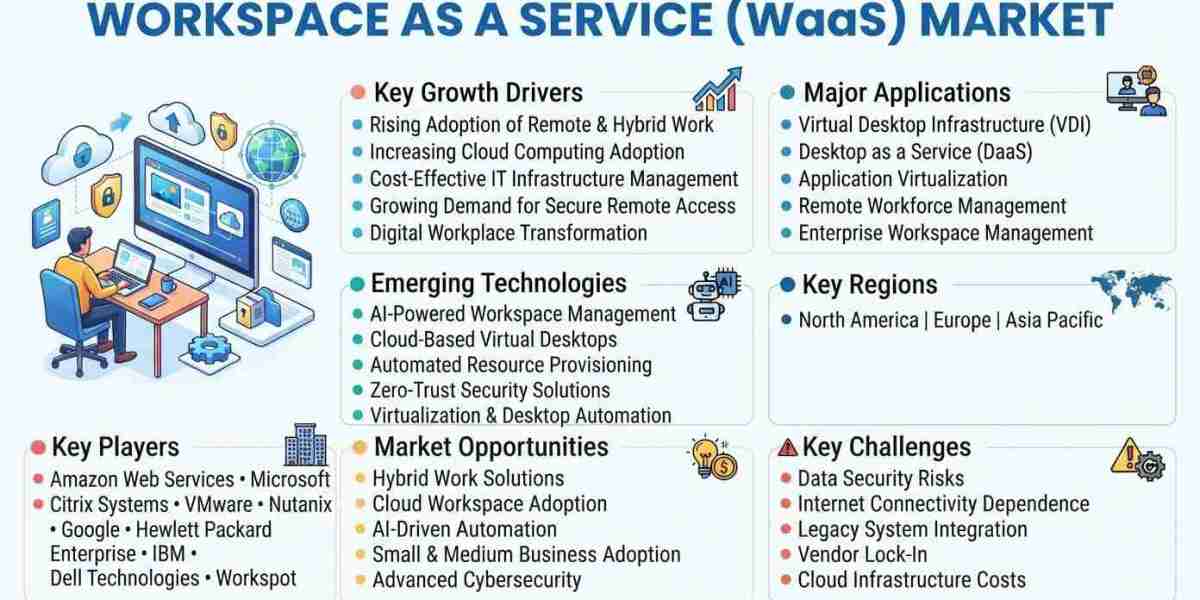
According to Transpire Insight, the Workspace As A Service (WaaS) Market size is estimated at USD 9.66 Billion in 2026 and is anticipated to reach USD 23.74 Billion by 2033, growing at a CAGR of 13.71% from 2026 to 2033. The growth will be fueled by the increasing adoption of remote and hybrid work models, rising demand for cloud-based workspace solutions, and the need for cost-effective IT infrastructure.
The market is expected to benefit from increasing interest in digital workplace transformation, secure remote access, and flexible enterprise IT services. Advancements in cloud computing, AI-powered workspace management, and automated resource provisioning are also creating new opportunities for manufacturers and service providers.
Why the WaaS Market Is Influencing the Digital Workplace Industry
The increasing adoption of remote and hybrid work models is reshaping how organizations manage their IT environments. Businesses are seeking solutions that allow employees to securely access desktops, applications, and company resources from different locations and devices. WaaS platforms support this requirement by providing centralized workspace management and consistent user experiences.
Additionally, cloud-based workspaces help organizations reduce hardware investments, simplify IT maintenance, and scale computing resources according to business needs. Small and medium-sized enterprises are also adopting these services to access enterprise-level digital infrastructure without maintaining expensive systems internally. This shift toward flexible and cloud-managed workplaces is a major factor supporting market expansion.
Read more: https://www.transpireinsight.com/report/workspace-as-a-service-market
Key Factors Supporting WaaS Market Growth
Rising Adoption of Remote and Hybrid Work
The continued growth of remote and hybrid working arrangements is increasing demand for virtual desktops and cloud-based workspace solutions. Organizations require secure and reliable access to business applications, files, and collaboration tools regardless of employee location. WaaS platforms help maintain workforce connectivity while supporting flexible working environments.
Cost Efficiency and Reduced IT Infrastructure Requirements
WaaS enables businesses to reduce spending on physical hardware, infrastructure maintenance, and software management. Subscription-based service models allow organizations to pay for resources according to their requirements. This flexibility is particularly valuable for startups and small businesses seeking to manage IT expenses while improving operational efficiency.
Growing Focus on Data Security and Centralized Management
As employees access corporate resources through multiple devices and networks, organizations are prioritizing data protection and access control. WaaS solutions offer centralized administration, authentication management, and security policies that help businesses manage digital workspaces more effectively. Increasing cybersecurity awareness is encouraging organizations to invest in managed workspace platforms.
Key Players in the Workspace As A Service (WaaS) Market
Amazon Web Services
Microsoft
Citrix Systems
VMware
Nutanix
Google
Hewlett Packard Enterprise
IBM
Dell Technologies
Workspot
Segmentation of the Workspace As A Service (WaaS) Market
Deployment Type
Public Cloud
Private Cloud
Hybrid Cloud
Organization Size
Small and Medium-Sized Enterprises
Large Enterprises
Service Type
Desktop as a Service (DaaS)
Application as a Service
Managed Workspace Services
End User
IT and Telecommunications
Banking, Financial Services, and Insurance
Healthcare
Retail
Education
Government
How Technological and Industry Developments Are Changing Demand
Cloud Computing and Virtual Desktop Advancements
Developments in cloud computing and virtualization technologies are improving the performance and accessibility of WaaS platforms. Virtual desktop infrastructure allows organizations to provide employees with centralized computing environments without requiring traditional desktop installations. Improved cloud infrastructure also supports faster deployment, resource scalability, and simplified workspace administration.
Artificial Intelligence and Automation
Artificial intelligence and automation are creating opportunities to improve digital workspace management. AI-powered monitoring can help identify performance issues, optimize resource allocation, and support IT operations. Automated provisioning and configuration tools also reduce manual administrative tasks, allowing IT teams to manage large numbers of users and devices more efficiently.
Regional Patterns and Emerging Demand in the WaaS Market
North America represents an important market for WaaS solutions, supported by strong cloud adoption, established technology providers, and widespread use of remote working arrangements. Europe is also experiencing demand as organizations prioritize digital transformation, workplace flexibility, and data security.
Asia-Pacific offers significant growth opportunities due to expanding IT infrastructure, increasing cloud adoption, and the growing number of businesses implementing hybrid work models. Countries such as India, China, Japan, and Australia are contributing to regional demand through investments in digital technologies and enterprise cloud services.
Challenges Companies Need to Consider in the WaaS Industry
Despite positive growth prospects, the WaaS market faces challenges such as cybersecurity threats, data privacy concerns, and dependence on reliable internet connectivity. Organizations operating in regulated industries must also ensure that cloud workspace providers meet applicable compliance and data protection requirements.
Additionally, integrating WaaS platforms with legacy IT systems can create technical difficulties. Subscription costs, service interruptions, and concerns about vendor dependency may also influence adoption decisions. Providers need to maintain reliable infrastructure, strong security measures, and effective customer support to address these challenges.
Future Opportunities in the WaaS Market
The WaaS market is expected to benefit from continued cloud adoption, growing hybrid work requirements, and increasing demand for flexible enterprise IT solutions. Advancements in AI-driven workspace management, zero-trust security, and automated desktop provisioning are creating new opportunities for service providers.
Furthermore, the expansion of small and medium-sized businesses adopting cloud services and the increasing need for secure access across distributed workforces are expected to support future demand. Companies investing in scalable platforms, improved user experiences, and advanced security capabilities will be better positioned to capitalize on emerging opportunities.
What This Means for the Workspace As A Service Industry
The expansion of the Workspace as a Service market highlights the growing importance of cloud-based infrastructure and flexible digital workplace solutions. Rising remote work adoption, cost optimization requirements, and increasing cybersecurity needs are continuing to shape industry development. Companies that invest in cloud innovation, automation, and secure workspace management will be well-positioned to strengthen their market presence. Going forward, monitoring cloud technology advancements, data protection requirements, and changing workforce expectations will remain essential for stakeholders aiming to stay competitive in the evolving WaaS landscape.
Latest Reports:
https://in.pinterest.com/pin/1083819466608251121/
https://in.pinterest.com/pin/1083819466608208476/
https://in.pinterest.com/pin/1083819466608124660/
https://in.pinterest.com/pin/1083819466608093791/
https://www.quora.com/What-is-the-difference-between-Nutanix-and-VMware/answer/Devashish-217
https://www.quora.com/What-are-the-benefits-brought-by-the-railways/answer/Devashish-217



