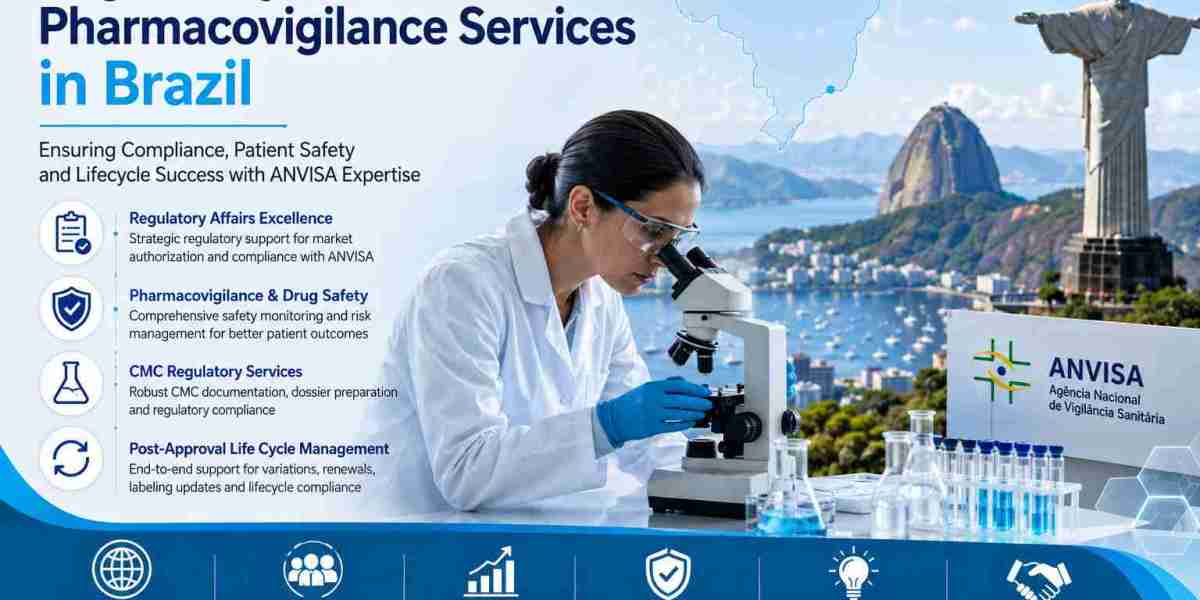
Regulatory Affairs and Pharmacovigilance Services in Brazil
Brazil is the largest pharmaceutical market in Latin America and one of the fastest-growing healthcare economies globally. With a robust regulatory framework, increasing investment in life sciences, and a strong demand for innovative medicines, the country presents significant opportunities for pharmaceutical, biotechnology, and medical device companies. However, entering and sustaining success in the Brazilian market requires navigating a complex regulatory landscape governed by the Brazilian Health Regulatory Agency (ANVISA).
From obtaining product registrations to ensuring post-market safety monitoring, organizations must comply with evolving regulatory requirements throughout a product's lifecycle. Regulatory Affairs (RA) and Pharmacovigilance (PV) have become essential business functions that not only facilitate market authorization but also safeguard patient safety, maintain regulatory compliance, and support long-term commercial success.
Today's pharmaceutical organizations must balance scientific innovation with regulatory excellence. This requires proactive planning, effective quality systems, continuous safety surveillance, and strategic lifecycle management. Many global companies therefore leverage Life Science Consulting Services to strengthen regulatory operations, optimize submissions, and support sustainable compliance across international markets.
This article explores the importance of Regulatory Affairs and Pharmacovigilance in Brazil, outlines ANVISA's regulatory expectations, and highlights best practices that can help pharmaceutical companies successfully navigate the Brazilian regulatory environment.
Understanding Brazil's Pharmaceutical Regulatory Framework
ANVISA's Role in Pharmaceutical Regulation
The Brazilian Health Regulatory Agency (ANVISA) is responsible for regulating pharmaceuticals, biologics, vaccines, medical devices, and other healthcare products in Brazil. It establishes standards that ensure medicinal products meet requirements for quality, safety, and efficacy before reaching patients.
ANVISA oversees several critical regulatory activities, including:
- Product registration and market authorization
- Good Manufacturing Practice (GMP) inspections
- Clinical trial approvals
- Pharmacovigilance oversight
- Product labeling compliance
- Post-market surveillance
- Regulatory inspections
- Import and export compliance
Given the complexity of these requirements, many organizations engage Regulatory Affairs Services in Brazil to support regulatory planning, dossier preparation, authority interactions, and ongoing compliance throughout the product lifecycle.
Why Regulatory Affairs Is Essential for Market Success
Regulatory Affairs is no longer limited to preparing submission documents. It has become a strategic function that influences product development, commercialization, and long-term business planning.
Regulatory professionals support organizations by:
- Developing regulatory strategies
- Preparing submission dossiers
- Coordinating interactions with regulatory authorities
- Managing labeling updates
- Supporting manufacturing changes
- Handling regulatory variations
- Monitoring evolving regulations
- Maintaining product registrations
Early regulatory engagement reduces development risks, shortens approval timelines, and improves submission quality.
Building an Effective Regulatory Strategy
A successful regulatory strategy considers:
- Product classification
- Applicable regulatory pathways
- Clinical evidence requirements
- Manufacturing readiness
- Market entry timelines
- Lifecycle planning
Strategic planning enables organizations to identify potential regulatory challenges before they impact product approvals or commercialization.
Pharmacovigilance: Protecting Patients After Market Authorization
The Growing Importance of Drug Safety Monitoring
Obtaining regulatory approval is only the beginning of a medicine's lifecycle. Once products reach patients, pharmaceutical companies must continuously monitor their safety and effectiveness.
Pharmacovigilance focuses on identifying, evaluating, understanding, and preventing adverse drug reactions while maintaining a favorable benefit-risk profile.
Core pharmacovigilance activities include:
- Individual Case Safety Report (ICSR) management
- Signal detection and assessment
- Literature monitoring
- Aggregate safety reporting
- Risk Management Plans (RMPs)
- Periodic Benefit-Risk Evaluation Reports (PBRERs)
- Regulatory safety submissions
Organizations operating in Brazil often utilize Pharmacovigilance Services in Brazil to strengthen safety monitoring systems, improve regulatory reporting efficiency, and support inspection readiness.
Common Pharmacovigilance Challenges
Pharmaceutical companies frequently encounter challenges such as:
- Increasing safety data volumes
- Global reporting obligations
- Evolving pharmacovigilance regulations
- Inspection preparedness
- Integration of global and local safety systems
A proactive pharmacovigilance framework helps organizations manage these challenges while protecting patient safety and maintaining regulatory compliance.
CMC Compliance: A Critical Component of Regulatory Success
Why Chemistry, Manufacturing, and Controls Matter
Chemistry, Manufacturing, and Controls (CMC) documentation is a cornerstone of pharmaceutical regulatory submissions. It demonstrates that a product is consistently manufactured to meet predefined quality standards.
CMC documentation typically includes:
- Drug substance information
- Drug product specifications
- Manufacturing processes
- Process validation
- Analytical methods
- Stability studies
- Packaging information
- Quality control procedures
Deficiencies in CMC documentation are among the most common reasons for regulatory questions and submission delays.
Many pharmaceutical companies seek specialized CMC Regulatory Services to ensure robust technical documentation, regulatory compliance, and efficient submission preparation.
Managing Compliance Beyond Approval
The Importance of Post-Approval Lifecycle Management
Regulatory compliance does not end with product approval. Companies must continuously manage regulatory obligations throughout the commercial lifecycle of their products.
Key post-approval activities include:
- Manufacturing changes
- Label updates
- Safety variations
- Product renewals
- Site transfers
- New indications
- Packaging modifications
- Regulatory commitments
A structured approach to Post-Approval Life Cycle Management enables organizations to maintain compliance while minimizing regulatory risks and operational disruptions.
Effective lifecycle management also supports business continuity, facilitates product expansion, and enhances long-term regulatory performance.
Digital Transformation in Regulatory Affairs and Pharmacovigilance
The pharmaceutical industry is embracing digital technologies to improve regulatory efficiency and data-driven decision-making.
Organizations increasingly implement:
- Regulatory Information Management Systems (RIMS)
- Electronic document management
- Artificial intelligence-assisted document review
- Workflow automation
- Regulatory analytics
- Cloud-based compliance platforms
The Value of Regulatory Intelligence
Staying informed about changing regulations is essential in a rapidly evolving regulatory environment.
Regulatory intelligence helps organizations monitor:
- ANVISA guideline updates
- International regulatory changes
- Regulatory inspection trends
- Competitor approvals
- Emerging scientific standards
Advanced Regulatory Intelligence Tools enable regulatory teams to monitor changes proactively, assess potential impacts, and support informed decision-making.
Lifecycle Management Through Integrated Regulatory Operations
Successful pharmaceutical companies adopt a holistic approach to compliance by integrating Regulatory Affairs with quality, manufacturing, clinical development, and pharmacovigilance.
Managing the Regulatory Affairs Lifecycle through coordinated processes helps organizations improve submission consistency, reduce compliance risks, and streamline post-approval activities across global markets.
Future Trends Shaping Regulatory Affairs and Pharmacovigilance in Brazil
Several trends are expected to influence Brazil's regulatory landscape in the coming years:
Digitalization of Regulatory Processes
Electronic submissions, digital documentation, and automated workflows are improving regulatory efficiency and reducing administrative burdens.
Artificial Intelligence in Regulatory Operations
AI-powered technologies are supporting regulatory intelligence, document review, safety signal detection, and compliance monitoring.
Increasing Regulatory Harmonization
Brazil continues to strengthen collaboration with international regulatory frameworks, encouraging greater alignment with global standards while maintaining national requirements.
Greater Focus on Patient-Centric Safety Monitoring
Real-world evidence, digital health technologies, and enhanced pharmacovigilance systems are enabling more comprehensive benefit-risk evaluations throughout the product lifecycle.
Expert Insights
Organizations that integrate Regulatory Affairs, Pharmacovigilance, CMC expertise, and lifecycle management into a unified compliance strategy are better positioned to navigate Brazil's evolving regulatory environment. Cross-functional collaboration, continuous regulatory intelligence, and proactive planning not only support successful market access but also strengthen long-term product sustainability and patient safety.
Conclusion
Brazil offers significant opportunities for pharmaceutical and medical device companies, but success requires more than scientific innovation. Navigating ANVISA's regulatory requirements demands strategic Regulatory Affairs planning, effective Pharmacovigilance systems, robust CMC documentation, and disciplined post-approval lifecycle management.
By adopting an integrated compliance approach, investing in regulatory intelligence, and maintaining continuous oversight throughout the product lifecycle, organizations can enhance operational efficiency, reduce regulatory risks, and support sustainable market growth. As Brazil's regulatory landscape continues to evolve, companies that prioritize regulatory excellence will be better equipped to deliver safe, effective, and compliant healthcare products to patients.
Frequently Asked Questions (FAQs)
- What is the role of Regulatory Affairs in Brazil?
Regulatory Affairs ensures pharmaceutical products comply with ANVISA regulations throughout development, registration, commercialization, and post-market lifecycle management.
- Why is pharmacovigilance important after product approval?
Pharmacovigilance continuously monitors the safety of approved medicines, detects adverse events, evaluates benefit-risk profiles, and supports regulatory actions that protect patient health.
- What does CMC stand for in pharmaceutical regulatory submissions?
CMC stands for Chemistry, Manufacturing, and Controls. It includes technical information demonstrating that pharmaceutical products are consistently manufactured to meet quality, safety, and efficacy requirements.
- What is post-approval lifecycle management?
Post-approval lifecycle management involves maintaining regulatory compliance after product approval through activities such as variations, renewals, labeling updates, manufacturing changes, and ongoing safety monitoring.
- How does regulatory intelligence benefit pharmaceutical companies?
Regulatory intelligence helps organizations monitor changing regulations, anticipate compliance requirements, improve strategic planning, reduce regulatory risks, and support timely market access decisions.